
Brazing vs Soldering: What You Need to Know
By PCBA PrototypePublished On: 2025-03-06Categories: Uncategorized0 Comments on Brazing vs Soldering: What You Need to Know
By PCBA PrototypePublished On: 2025-03-06Categories: Uncategorized0 Comments on Brazing vs Soldering: What You Need to Know
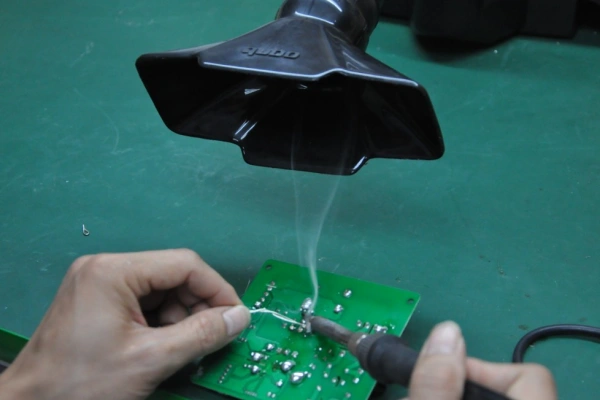
In the fields of metal processing and electronic manufacturing, brazing and soldering are both extremely important joining techniques. They each possess unique characteristics and application scopes. Mastering this knowledge is of great significance for practitioners and DIY enthusiasts. Next, let’s explore the mysteries of brazing and soldering together.
Principles and Operations of Brazing
Principle Analysis
Brazing utilizes a filler metal with a melting point lower than that of the base metal. Without melting the base metal, the filler metal is heated to a molten state. The liquid filler metal will, by means of capillary action, fill the gaps between the base metals and diffuse with the base metals, thus forming a firm connection. According to the melting point of the filler metal, brazing can be subdivided into hard brazing (with a melting point higher than 450°C) and soft brazing (with a melting point lower than 450°C).
Common filler metals for hard brazing include copper – based, aluminum – based, silver – based, nickel – based, etc., among which copper – based filler metals are the most common. During welding, brazing fluxes such as borax, boric acid, chlorides, fluorides, etc. need to be added. Heating methods include oxy – acetylene flame heating, resistance heating, induction heating, furnace heating, etc. It is suitable for workpieces with high working temperatures and large loads, such as the welding of cutting tools, which often adopts hard brazing.
Common filler metals for soft brazing include tin – lead filler metals (also known as solder), tin – silver filler metals, lead – based filler metals, cadmium – based filler metals, etc., among which tin – lead filler metals are widely used. The common brazing fluxes for soft brazing are rosin and zinc chloride solution. The workpieces can be heated using soldering irons, furnaces, etc. It is mainly used for workpieces with low working temperatures and small loads, such as the welding of electronic components.
Operation Steps
- Preparation: Carefully inspect and clean the surface of the metal parts to ensure they are clean, free of oil and oxides, so as to guarantee the welding quality.
- Positioning and Clamping: Accurately fix the metal parts in the appropriate position to prepare for the subsequent welding operation.
- Heating: Select a suitable heating method according to the characteristics of the metal parts and the filler metal, and strictly control the heating temperature.
- Adding Filler Metal: When the metal parts and the filler metal reach the appropriate temperature, place the filler metal on the contact surface. It can be done through a torch or by using brazing pastes.
- Cooling: After the filler metal fills the connection area, stop heating and let it cool naturally to solidify the filler metal and form a solid connection.
- Cleaning: After cooling is completed, clean the connection area to remove the remaining filler metal and oxides, making the welded part clean and aesthetically pleasing.
The Mysteries of Soldering
Characteristics of Soldering Materials
In soft brazing, the solder we often refer to is mostly a tin – lead alloy. For example, a common proportion is 37% Pb and 63% Sn. This eutectic solder has a low melting point of about 182°C, and the melting point is close to the solidification point. Eutectic solder has the advantages of good fluidity, low surface tension, and excellent wettability. It can make the solder joint solidify quickly, almost without going through a semi – solid state, effectively reducing the impact of vibration on the quality of the solder joint. At the same time, the flux inside the solder can remove the oxide film and reduce the surface tension of the solder, playing an important auxiliary role in welding.
Welding Tools and Operation Key Points
- Welding Tools:
- Constant – temperature Soldering Iron: It is commonly used. The soldering iron tip is mostly conical and generally has an anti – oxidation coating. Do not trim or grind the soldering iron tip with a file to avoid damaging the coating.
- Desoldering Pump: It is used to suck up excess solder and plays an important role in the desoldering process.
- Tweezers: They are convenient for picking up small electronic components and are essential in the welding operation.
- Operation Key Points:
- Preparation before Welding: Clean the residual solder on the high – temperature – resistant sponge and moisten it with water; set the soldering iron temperature to 350°C (for SMC and SMD components sensitive to temperature, the welding temperature is generally ≤ 390°C); keep the welding part of the workpiece clean; wipe the soldering iron tip or add flux to remove the oxide layer and dirt on the soldering iron tip to ensure good thermal conductivity of the soldering iron tip.
- Welding Process: Take the welding of surface – mount resistors, capacitors, transistors, etc. as an example. First, clean the solder pads. You can add solder to make them flat and shiny; clean the removed components to make the side of the component in contact with the solder pad flat. Use the soldering iron tip to remove the excess solder from the component leads from the bottom up; then use tweezers to hold the component, align it with the solder pad for positioning. First, heat one end to fix it, add solder to the other end, and then heat both ends back and forth to make the solder at both ends in a liquid state at the same time. Use the self – calibration effect of the liquid solder to correct the solder joint. During the operation, the tweezers should not protrude from the bottom of the component to prevent lifting the component; when positioning, wait for the solder to solidify before moving the tweezers away.
Comparison between Brazing and Soldering
Material Differences
Brazing has a rich variety of filler metals. Hard brazing includes copper – based, aluminum – based, silver – based, nickel – based, etc., and soft brazing includes tin – lead filler metals, tin – silver filler metals, etc. While solder is mainly a tin – lead alloy, among which the eutectic solder with a specific proportion (such as 37% Pb and 63% Sn) is the most common. In terms of fluxes, brazing uses borax, boric acid, chlorides, fluorides, etc., while solder mostly uses fluxes such as rosin and zinc chloride solution.
Temperature Requirements
Since brazing is divided into hard brazing and soft brazing, the temperature range is relatively large. The temperature of hard brazing is higher than 450°C, and the temperature of soft brazing is lower than 450°C. As a type of soft brazing, the welding temperature of solder is relatively low. The melting point of common eutectic solder is about 182°C, and the actual welding operation temperature is generally around 350°C (for temperature – sensitive components, the welding temperature ≤ 390°C).
Connection Strength
The connection strength formed by brazing is usually high, especially for hard brazing, which is suitable for connecting workpieces with high working temperatures and large loads. While the connection strength of soldering is relatively low, mainly used for the welding of electronic components with low working temperatures and small loads.
Process Complexity
Brazing operation is relatively complex, involving a variety of heating methods, such as oxy – acetylene flame heating, resistance heating, induction heating, furnace heating, etc. And under different brazing types, strict control requirements are placed on the filler metal, flux, and heating temperature. In contrast, the soldering operation is relatively simple, mainly using a soldering iron for heating, and the tools are also relatively common, such as a constant – temperature soldering iron, desoldering pump, tweezers, etc., which is suitable for beginners and electronic welding work with high precision requirements.
Application Fields of Brazing and Soldering
Wide Applications of Brazing
With its unique advantages, brazing has a wide range of applications in many fields. In the aerospace field, it is used to manufacture high – temperature and high – pressure components, such as engine turbine blades, combustion chambers, and nozzles. These components have extremely high requirements for connection strength and high – temperature resistance, and brazing can meet these stringent requirements. In ship and automobile manufacturing, it can be used to weld metal pipes, radiators, and body parts to ensure that the parts are firmly connected and have good sealing performance. In the manufacturing of electronic equipment and instruments, brazing is often used to weld circuit boards and fine devices to achieve high – precision connection.
The Key Role of Soldering in the Electronic Field
Soldering plays a crucial role in the electronics and electrical appliance industries. In the electronic manufacturing process, whether it is large – scale electronic equipment or miniature electronic components, solder is indispensable. It is widely used to weld electronic components and wires on circuit boards, providing accurate and stable welding results. At the same time, in the repair and debugging of electronic equipment, from household appliances to computer hardware, solder can exert its convenient, fast, and accurate characteristics to help maintenance personnel solve various welding problems.
Summary
As important joining techniques, although both brazing and soldering can achieve the connection of metals, there are many differences in principles, materials, operations, and application fields. Brazing is suitable for connecting various complex working conditions and different materials, while soldering plays an irreplaceable role in the electronic field. Understanding and mastering their characteristics and operation techniques can help us complete various welding tasks more accurately and efficiently in practical work and life. Whether engaged in professional manufacturing or DIY electronic production, this knowledge will become a powerful assistant for us. It is hoped that through the introduction of this article, everyone can have a deeper understanding of brazing and soldering.
Related Posts
PCBA Prototype
December 14, 2025
PCB Assembly
September 2, 2025