
What is Copper PCB ?
Copper PCB is composed of metal board, insulating medium layer and conductive layer (generally copper foil). That is, one or both sides of the treated metal substrate is covered with insulating medium and copper foil, which is combined by thermal pressure. Contrary to the conventional circuit boards,Metal Core PCB is based on heat dissipation.During circuit board operation, some electronic components generate heat.The goal is to transfer this heat from key circuit board components to less important ones.MCPCB The most commonly used metals in manufacturing are aluminum, copper, and steel alloy.Aluminum has the characteristics of good heat transfer and strong heat dissipation ability, and the price is relatively low; copper performance is better, but the price is relatively high. Steel can be divided into ordinary steel and stainless steel, which is harder than aluminum and copper, but has lower thermal conductivity.
The product constructions and material properties below describe different applications. GreatPCB manufacturing limits follow the Metal PCB Capability table: 1–4 copper circuit layers, 0.5–4.6 mm finished thickness, and 0.5–4 oz copper. Material properties require the selected grade’s datasheet; specialty thermal-pad geometry is reviewed against the drawing.

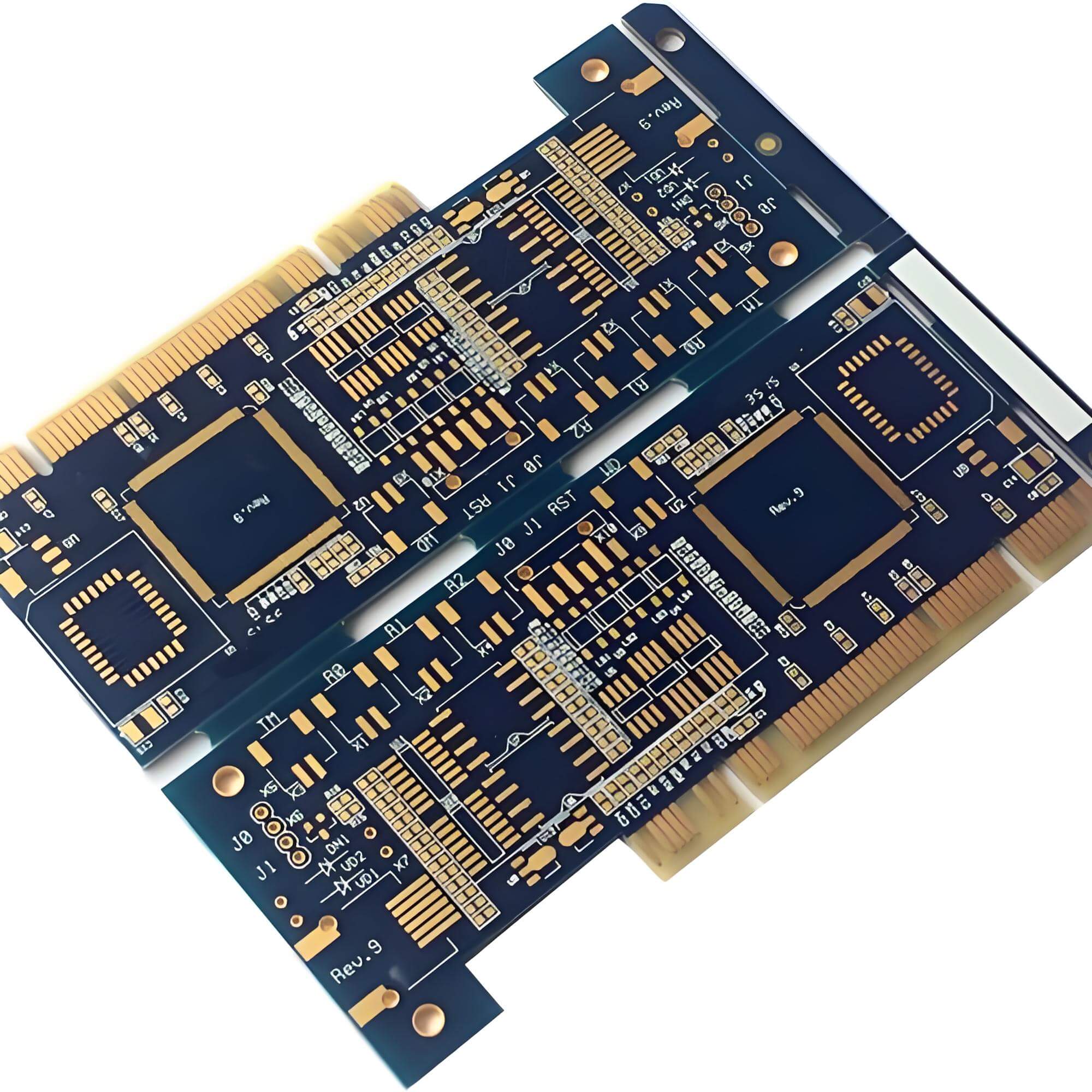
Single-sided aluminum substrate boards for automotive products

- The above comparison is based on the Datasheet display test conditions and typical values provided by the supplier.
- From the perspective of operability of metal substrate boards and long-term trust of products (glass conversion temperature, heat resistance), the performance from excellent to poor is Bergquist, Huazheng, Tenghui and Juding
- At present, the main aluminum substrate plate brand is Hua zheng, and the foreign aluminum substrate plate brand is Begus.
| Manufacturer | Material Model | Thermal Conductivity (W/m·K) | Breakdown Voltage (kV) | Peel Strength (N/cm) | Glass Transition Temperature (Tg/℃) | Heat Resistance Time (minutes) |
|---|---|---|---|---|---|---|
| Bergquist | HF-04503 | 2.2 | 5 | 11 | 150 | 325° C/40 seconds |
| Bergquist | MP-06503 | 3.0 | 7.5 | 13 | 150 | 325° C/40 seconds |
| huazheng | HA00-13 | 1.3 | 5 | 11 | 150 | 325° C/40 seconds |
| juding | JP-2 | 3.0 | Confirm in the material manufacturer’s datasheet | 13 | 150 | 325° C/40 seconds |
| tenghui | TC-2 (TCB-2A1) | 3.0 | Confirm in the material manufacturer’s datasheet | 13 | 150 | 298° C/40 seconds |
Aluminum-based single-sided double plate boards .
- The published metal PCB capability is 1–4 copper circuit layers; the metal base is not counted as a copper circuit layer. See the Metal PCB Capability table and confirm the construction during engineering review.
- The thermal conductivity of the insulation layer can be selected from 2-8W / (m.K).
- The base material can be converted from aluminum base to copper base.
- Mainly used in the field of power module and industrial control.

Copper-based single-sided thermoelectrical separation
- Thermal conductivity in the thermal sink area> 396W / (mK), and non-thermal conductivity 0.3-0.4W/ (mK)
- The height difference between the thermal pad and circuit copper must be specified on the drawing and confirmed during engineering review; no general ±0.03 mm tolerance is claimed.
- Suitable for non-thermal sink area without high-power heating device product applications;

Copper-based single-plane thermoelectric separation
- Thermal conductivity in thermal sink area is> 396W / (m·K), and thermal conductivity in non-thermal sink area is optional 2-8W / (m·K);
- There is no height difference between the copper surface in the hot sink area and the copper surface in the line;
- Suitable for non-thermal sink area with high-power heating device product applications;

Copper and aluminum-based single-surface thermoelectric separation.
- Use copper and aluminum composite materials to reduce the proportion of copper, reduce material procurement costs, and meet customers’ cost control needs;
- Thermal conductivity in the thermal sink area is> 217W / (m· K);
- Insulation materials can be converted into FR-4 and RCC according to the customer’s actual product requirements;
- Suitable for the finished product thickness of 1.5mm products;
Copper-based single-sided double-layer thermoelectric separation
- Thermal conductivity in the thermal sink area is> 396W / (m· K);
- The published metal PCB capability is 1–4 copper circuit layers. Integration and routing depend on the approved metal-core construction; see the Metal PCB Capability table.
- Suitable for high-power radiator devices and demand for a high degree of integration of components products;

Copper-based non-conductive double-sided thermoelectric separation
- Thermal conductivity in the thermal sink area is> 396W / (m· K);
- Insulation materials can be converted into FR-4 and RCC according to the customer’s actual product requirements;
- Suitable for the modified car lamp market, has the advantage of saving labor and material costs;
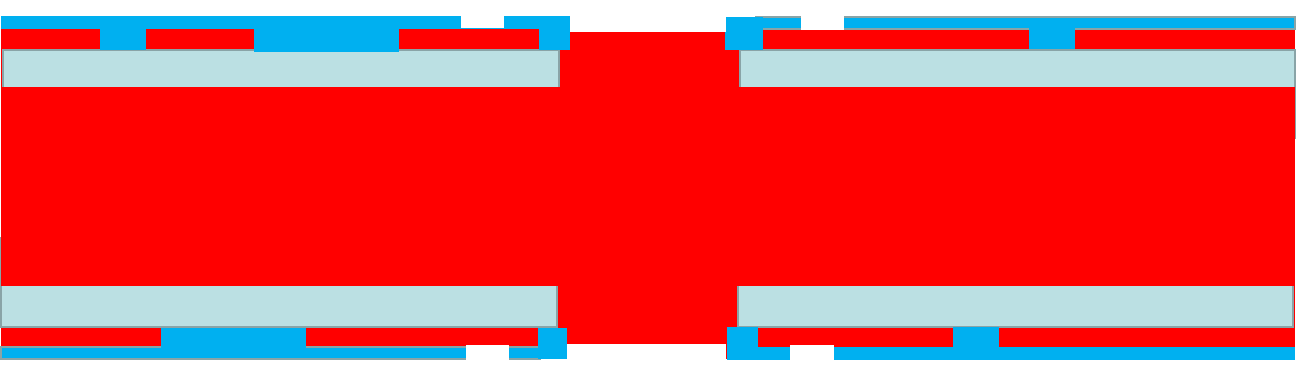
Copper-based conductive double-sided thermoelectric separation
- Thermal conductivity in the thermal sink area is> 396W / (m· K);
- Insulation materials can be converted into FR-4 and RCC according to the customer’s actual product requirements;
- Suitable for modified lamp market, with labor saving, increase reliability advantages;
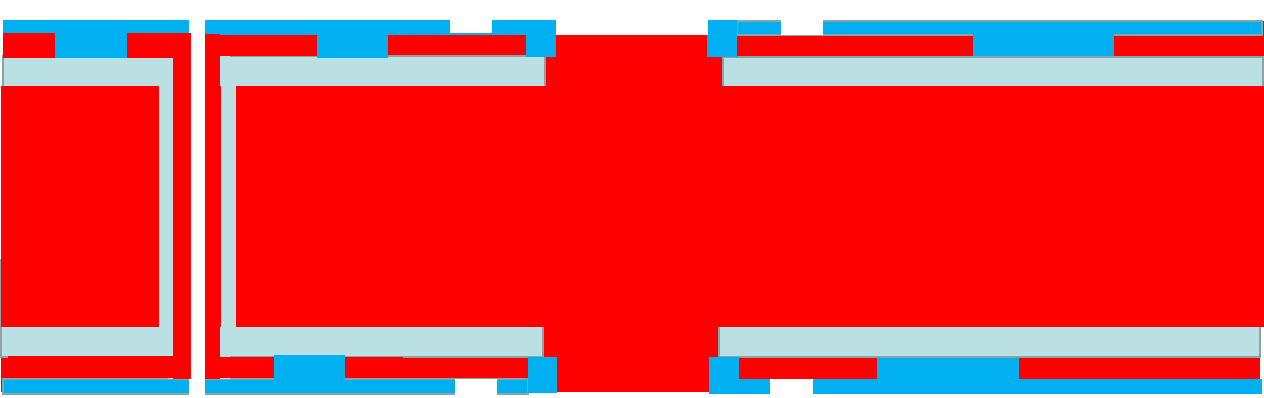
Soft and hard combined thermoelectric separation
- Thermal conductivity in the thermal sink area is> 396W / (m· K);
- The FPC can be bent;
- Suitable for fog lamp, daily running light, far and near light lamp;
