
How Much Does PCB Manufacturing Cost in 2026?
Introduction to PCB Manufacturing Costs in 2026
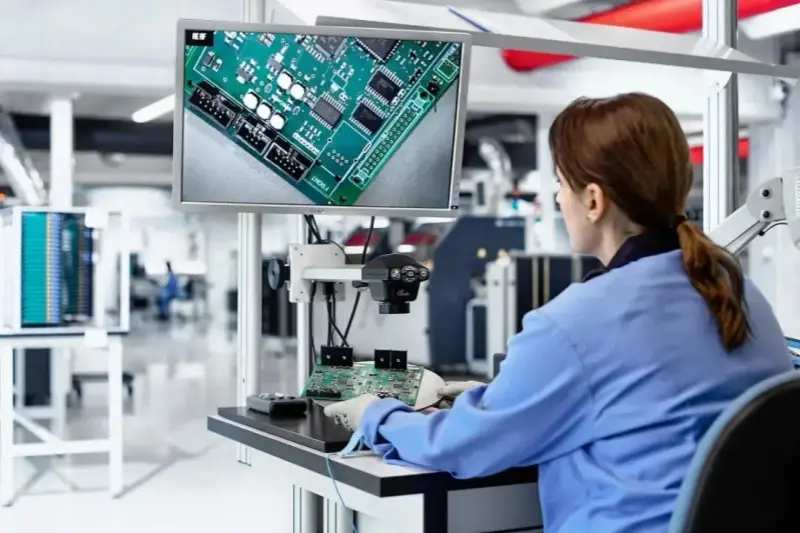
Printed circuit boards are the invisible backbone of modern technology—from smartphones in your pocket to industrial automation systems controlling manufacturing floors. As we navigate 2026, understanding PCB manufacturing cost has become more than an accounting exercise; it’s a strategic imperative that directly impacts product viability, time-to-market, and competitive positioning.
The global PCB market continues its robust expansion, driven by accelerating demand in automotive electronics, IoT devices, and renewable energy systems. Yet this growth comes with complexity. Manufacturing costs fluctuate based on a web of interdependent variables that extend far beyond raw material prices. Businesses that treat PCB procurement as a simple vendor transaction often discover hidden costs that erode margins—or worse, derail product launches entirely.
Why does PCB manufacturing cost matter so critically right now? The answer lies in three converging pressures. First, design complexity has intensified as products demand more functionality in smaller form factors, pushing layer counts higher and tolerance requirements tighter. Second, fixed monthly operational expenses for PCB facilities have reached approximately $122K, creating baseline pricing floors that manufacturers must recover. Third, supply chain volatility continues influencing material availability and lead times, creating cost variability that demands sophisticated planning.
Understanding what drives these costs—from substrate selection and layer count to volume economics and regional manufacturing differences—transforms procurement from reactive purchasing into strategic advantage.
Key Cost Components in PCB Manufacturing
Understanding PCB cost requires breaking down expenses into two fundamental categories: fixed costs that remain constant regardless of order volume, and variable costs that scale with production quantity. According to PCB Manufacturing Plant Cost data, this distinction becomes critical when evaluating whether to manufacture domestically or offshore.
Fixed vs. Variable Manufacturing Costs
Fixed costs include facility rent, equipment depreciation, utilities, and permanent staff salaries. A typical PCB manufacturing operation carries approximately $122,000 in fixed monthly operating expenses before producing a single board. These baseline costs mean low-volume orders inevitably carry higher per-unit pricing—you’re essentially subsidizing the entire operation with fewer boards.
Variable costs, on the other hand, fluctuate directly with production volume: raw materials (copper-clad laminates, solder mask, silkscreen), component procurement, labor hours for assembly, quality inspection time, and packaging materials. What typically happens is that economies of scale kick in around 500-1,000 units, dramatically reducing the per-board variable cost.
Primary Cost Drivers Beyond Volume
Material selection drives 40-60% of total manufacturing costs. FR-4 standard laminate costs considerably less than specialized materials like Rogers or polyimide substrates required for high-frequency or flexible applications. Copper weight matters too—standard 1 oz copper versus 2-3 oz for high-current applications represents a 30-50% material cost difference.
Design complexity multiplies labor and processing time. A simple 2-layer board with standard tolerances might require 2-3 manufacturing steps, while an 8-layer HDI (high-density interconnect) board with laser-drilled microvias demands 15+ discrete processes. Each additional layer increases material usage, drilling precision requirements, and alignment complexity—factors that compound rather than add linearly to pricing.
Comparison: Costs for Different PCB Types
The cost to manufacture PCB products varies dramatically based on complexity and layer count—a simple single-layer board might cost just $0.50 per unit at volume, while high-density interconnect (HDI) designs can exceed $50 per board. Understanding these pricing tiers helps manufacturers budget accurately and choose the right specifications for their application.
Simple PCBs: 1-2 Layer Boards Cost Breakdown
Single and double-layer boards represent the most economical option for straightforward electronics. Single-layer PCBs typically cost $0.50-$5 per unit depending on size and quantity, making them ideal for simple devices like remote controls or LED lighting systems. Double-layer boards add a second copper layer for more complex routing, increasing costs to approximately $2-$15 per unit. These boards use through-hole technology for component mounting and require minimal tooling investment—prototypes can be produced for as little as $25-$50 for a small run of five boards.
Complex PCBs: 4-Layer, HDI, and Rigid-Flex Board Costs
Four-layer boards introduce internal signal and power planes, raising manufacturing complexity significantly. Expect pricing between $15-$50 per board depending on specifications like trace width and via size. HDI boards with microvias and fine-pitch components command premium prices—often $40-$150 per unit—due to specialized drilling equipment and tighter tolerances. According to WifiTalents industry data, rigid-flex combinations represent the highest cost category at $100-$500+ per board, though they eliminate connectors and reduce overall system assembly costs for compact designs.
Flexible PCBs: Advantages and Pricing Considerations
Flexible circuits offer unique benefits for wearables and space-constrained applications, though they typically cost 30-50% more than rigid equivalents. Single-layer flex circuits start around $10-$30 per unit, while multilayer flex designs can reach $80-$200. The polyimide substrate drives higher material costs, but flexible boards reduce assembly labor and enable three-dimensional packaging that rigid designs cannot achieve—making them cost-effective for applications requiring repeated flexing or complex form factors.
What Are the Hidden Costs in PCB Manufacturing?
Beyond the quoted board price, PCB fabrication cost often conceals several expense categories that catch buyers off-guard—understanding these hidden charges prevents budget overruns and enables more accurate project planning.
Shipping, Duties, and Import Taxes
International PCB orders frequently incur substantial shipping costs, particularly for expedited delivery or small prototype batches where per-unit freight becomes disproportionately expensive. Import duties and taxes vary by destination country, with some regions adding 15-25% to the base cost. What appears as a competitive quote can balloon significantly once customs fees and express shipping charges apply, especially when dealing with overseas manufacturers.
The Prototyping Premium
The cost differential between prototyping and production runs can surprise first-time buyers. Prototype orders typically carry 3-5x higher per-unit costs compared to production volumes because manufacturers must complete the same setup procedures for 5 boards as they would for 5,000. However, this premium becomes justified when considering the expense of discovering design flaws in a full production run—a single iteration of 500 defective boards costs far more than three rounds of 10-board prototypes.
Tooling and Setup Fees
One particularly common hidden expense involves engineering charges and setup fees. Manufacturers often bill separately for creating custom stencils ($50-200), electrical testing fixtures ($200-800), and design-for-manufacturing reviews. These non-recurring engineering (NRE) costs get absorbed across large orders but significantly impact small-batch economics. A $500 tooling fee matters little when spread across 10,000 units but adds $5 per board to a 100-piece order—context that becomes crucial when evaluating true profitability thresholds in PCB manufacturing.
Is PCB Manufacturing Profitable?
The profitability of PCB manufacturing hinges on operational efficiency, market positioning, and the ability to balance PCB board cost against service value—while industry margins vary significantly, manufacturers that optimize their processes and target the right market segments can achieve healthy returns even in a competitive landscape.
Factors That Influence Profitability in PCB Manufacturing
Several critical elements determine whether a PCB manufacturing operation thrives or struggles. Fixed monthly operating expenses of approximately $122,000 create a baseline that manufacturers must cover regardless of production volume, making capacity utilization a primary profitability driver. Higher equipment usage rates spread these fixed costs across more units, dramatically improving margins.
Material costs represent another significant variable—manufacturers who negotiate favorable supply agreements and minimize waste through process optimization gain competitive advantages. Labor efficiency also plays a crucial role, as automated processes reduce per-unit costs while maintaining quality standards. The most profitable operations typically combine high-mix capabilities with efficient quick-turn services, allowing them to charge premium rates for specialized work while maintaining steady volume on standard orders.
Comparison with Past Trends and Future Outlook
The global PCB market’s projected growth from $90.2 billion in 2025 to $139.4 billion by 2032 signals expanding opportunities for well-positioned manufacturers. However, this 6.4% compound annual growth rate reflects both increasing demand and intensifying competition, particularly from low-cost Asian producers who’ve historically pressured Western manufacturers’ margins.
Strategies for Reducing PCB Manufacturing Costs
Smart design choices and strategic partnerships can substantially lower PCB production cost without sacrificing quality—focusing on design optimization, material selection, and manufacturer relationships delivers measurable savings.
Optimize Design for Manufacturability
Design decisions account for a significant portion of production expenses. Minimize layer count wherever possible—each additional layer increases material and processing costs exponentially. Standard board dimensions (multiples of common panel sizes) reduce waste and tooling charges. Avoid unnecessary design complexity: wider trace spacing, larger via sizes, and standard component footprints all translate to lower fabrication costs. One practical approach is designing with manufacturer capabilities in mind, using readily available materials and processes rather than pushing technical limits.
Consider Alternative Materials and Processes
Material substitution offers substantial cost reduction opportunities. FR-4 remains the most economical substrate for most applications, while specialty materials like polyimide or Rogers laminates can triple baseline costs. When high-frequency performance isn’t critical, standard FR-4 suffices. Similarly, evaluate whether advanced finishes like ENIG (Electroless Nickel Immersion Gold) are necessary—HASL (Hot Air Solder Leveling) costs significantly less for many applications. Industry data shows that material choices alone can shift unit costs by 30-50%.
Build Strategic Manufacturer Partnerships
Long-term relationships with cost-effective manufacturers create mutual benefits. Volume commitments often unlock preferential pricing tiers and priority production slots. What typically happens is manufacturers invest in understanding your specific requirements, streamlining processes and reducing per-unit costs over time. These real-world approaches set the foundation for evaluating specific cost scenarios across different production scales.
Example Scenarios: Real-World Cost Evaluations
Understanding PCB manufacturing costs becomes clearer when examined through specific production scenarios—ranging from startup prototypes to enterprise-scale manufacturing runs that each present unique financial considerations.
Scenario 1: Small-Scale Production for Startups
A typical startup developing an IoT device might order 100 units of a moderately complex 4-layer PCB (100mm x 75mm). In this scenario, expect PCB assembly cost between $15-25 per board, totaling approximately $2,000-2,500 for the complete run. According to PCB assembly industry data, small-batch production carries higher per-unit costs due to setup fees and tooling expenses that cannot be distributed across larger volumes. Startups often face an additional 20-30% premium for expedited turnaround times, as time-to-market frequently outweighs marginal cost savings.
Scenario 2: High-Volume Production for Established Firms
In contrast, an established consumer electronics manufacturer ordering 50,000 units of similar specifications achieves dramatically different economics. Per-unit costs drop to $3-5 per board through volume discounts, automation efficiencies, and negotiated supplier rates. Market analysis indicates that production runs exceeding 10,000 units benefit from economies of scale that reduce overall project costs by 60-70% compared to prototype quantities.
Expert Insights on Cost Management
Industry experts emphasize that successful cost management hinges on balancing quality requirements against volume commitments. A common pattern is negotiating annual purchase agreements that secure preferential pricing while maintaining flexibility for design iterations—a strategy that bridges the gap between startup constraints and enterprise advantages.
Limitations and Considerations
Accurate PCB cost forecasting in 2026 faces unprecedented challenges from evolving tariff policies and volatile supply chain dynamics—making precise predictions inherently limited despite industry data availability.
Unpredictability of Global Trade Policies
The tariff landscape continues shifting unexpectedly, with potential policy changes impacting material costs by 15-30% virtually overnight. Manufacturing cost estimates represent snapshots rather than guarantees, particularly when geopolitical tensions influence component availability. PCB design cost considerations must now factor in supply chain redundancy—adding 8-12% to baseline budgets as manufacturers maintain dual-sourcing strategies.
Domestic vs International Supplier Trade-offs
Choosing between domestic and overseas manufacturers involves nuanced calculations beyond simple per-unit pricing. Domestic suppliers typically charge 40-60% premiums but eliminate customs delays, reduce shipping costs by 25-35%, and provide stronger intellectual property protections. However, international partners—particularly Asian manufacturers—offer established expertise and economies of scale that domestic facilities cannot yet match at volume.
The “true cost” comparison requires evaluating total landed cost including shipping, duties, inventory carrying costs, and opportunity costs from extended lead times. One practical approach is blending strategies: using domestic partners for prototypes and time-sensitive runs while leveraging international suppliers for high-volume production. This hybrid model provides flexibility as market conditions shift throughout 2026.
Key Takeaways
Mastering PCB manufacturing costs in 2026 requires strategic navigation of complex variables and market dynamics—from material selection and design complexity to volume optimization and geopolitical factors. Organizations that understand the full spectrum of cost components—including often-overlooked elements like tooling fees, testing requirements, and logistics—gain significant budgeting accuracy and competitive positioning.
Proactive cost management transforms manufacturing from a reactive expense into a strategic advantage. Companies achieving optimal results typically implement design-for-manufacturing principles early, negotiate volume commitments strategically, and maintain diversified supplier relationships. With monthly operational expenses for PCB facilities averaging $122K, understanding fixed versus variable cost structures becomes essential for profitability forecasting and pricing decisions.
Staying current with industry trends provides crucial competitive edge in rapidly evolving markets. The printed circuit board market’s projected growth trajectory through 2032 signals both opportunities and challenges—particularly regarding supply chain resilience, advanced manufacturing capabilities, and tariff navigation. Organizations that monitor these shifts while implementing flexible procurement strategies position themselves to capitalize on cost advantages while mitigating emerging risks.
FAQ
What is the average cost per PCB unit in 2026?
Pricing varies dramatically based on specifications. Simple single-layer boards start around $1-$5 per unit in quantities of 100+, while complex multilayer designs with HDI technology can range from $50-$200+ per unit. Manufacturing operational costs remain substantial, with facilities typically carrying $122,000+ in fixed monthly expenses that influence per-unit pricing. Volume is the most significant cost lever—ordering 5,000 units versus 100 can reduce per-unit costs by 60-70%.
How long does PCB manufacturing take in 2026?
Standard lead times range from 5-10 business days for prototype quantities to 3-4 weeks for production runs exceeding 1,000 units. However, supply chain volatility and tariff considerations can extend timelines by 1-2 weeks during periods of regulatory uncertainty. Expedited services remain available at 50-100% premium pricing, with rush orders completing in 24-72 hours for simple designs.
Should I manufacture PCBs domestically or overseas in 2026?
The decision increasingly depends on total landed cost rather than unit price alone. Domestic manufacturing offers faster turnaround, easier communication, and potential tariff avoidance, though per-unit costs may be 20-40% higher. Overseas production provides lower base pricing but faces potential duty exposure, extended lead times, and quality consistency challenges. Many companies adopt hybrid strategies—prototypes domestic, high-volume production overseas—to balance cost optimization with risk management in today’s uncertain trade environment.
Table of Contents
- Bubuka kana Biaya Manufaktur PCB dina Taun 2026
- Komponen Biaya Kunci dina Manufaktur PCB
- Babandingan: Biaya pikeun Rupa-rupa Jenis PCB
- Sabaraha Biaya Anu Disumputkeun dina Pabrikasi PCB?
- Naha manufaktur PCB nguntungkeun?
- Strategi pikeun Ngurangan Biaya Manufaktur PCB
- Conto Skenario: Evaluasi Biaya Dunya Nyata
- Watesan jeung Pertimbangan
- Takeaways Key
- FAQ
Tags
Related Posts

PCBA Prototype
April 6, 2025

PCBA Prototype
March 25, 2025