PCB Fiducial Marks: Size, Placement and Design Guidelines
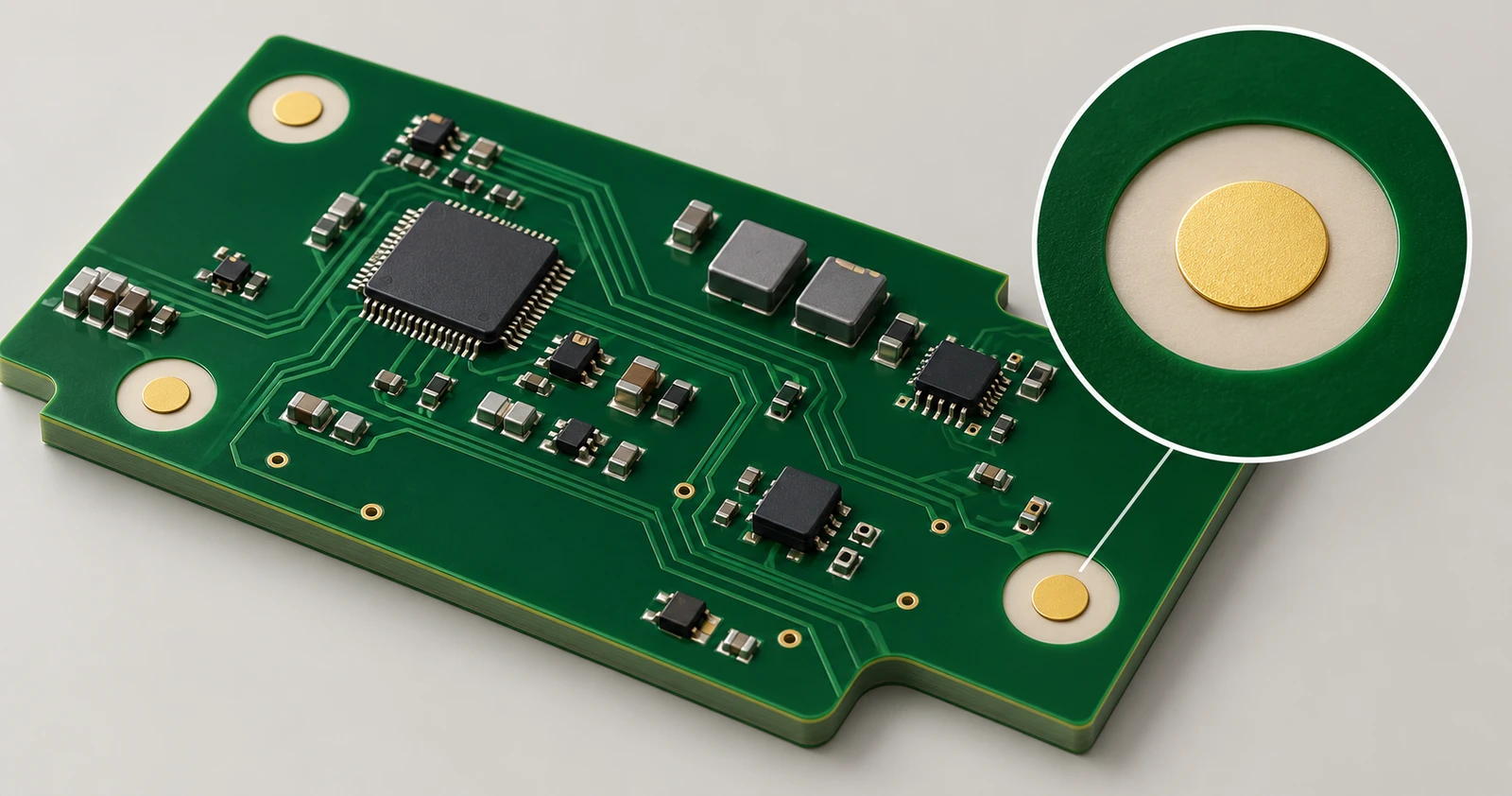
Understand global, local and panel fiducials, distinguish copper diameter from mask opening, and check your design before PCB assembly.
Understand global, local and panel fiducials, distinguish copper diameter from mask opening, and check your design before PCB assembly.
Learn how to estimate rigid-flex PCB bend radius, choose flex thickness and copper, plan bend zones, and validate static or dynamic designs.
Select high-frequency PCB materials by comparing dielectric data, copper, stackup, environmental stability and manufacturing options, then validate the complete RF path.
Plan HDI PCB stackups, microvia connections and BGA escape routing, then check manufacturing rules, assembly and reliability before fabrication.
Choosing between a 6-layer and an 8-layer PCB stackup is rarely about the dollar figure on the fabrication quote. It’s about whether your high-speed signals have a reliable return path [...]
1. Ground Wire All parts that are connected to ground are linked together through one common trace. This is common in old PCB designs and in simple PCB designs. 2. [...]
PCB grounding is a topic that PCB layout engineers always care about. For example, how should an effective grounding system be planned on a board? Should all the analog ground, [...]