
Microstrip vs Stripline in RF PCB Design
Introducing the Key Differences: Microstrip vs Stripline
When designing high-frequency RF circuits, choosing between microstrip vs stripline transmission lines fundamentally shapes your PCB’s electrical performance, manufacturing complexity, and signal integrity. These two routing topologies represent the most common approaches for controlled impedance traces in RF applications—from wireless communication systems to radar equipment and high-speed digital interfaces.
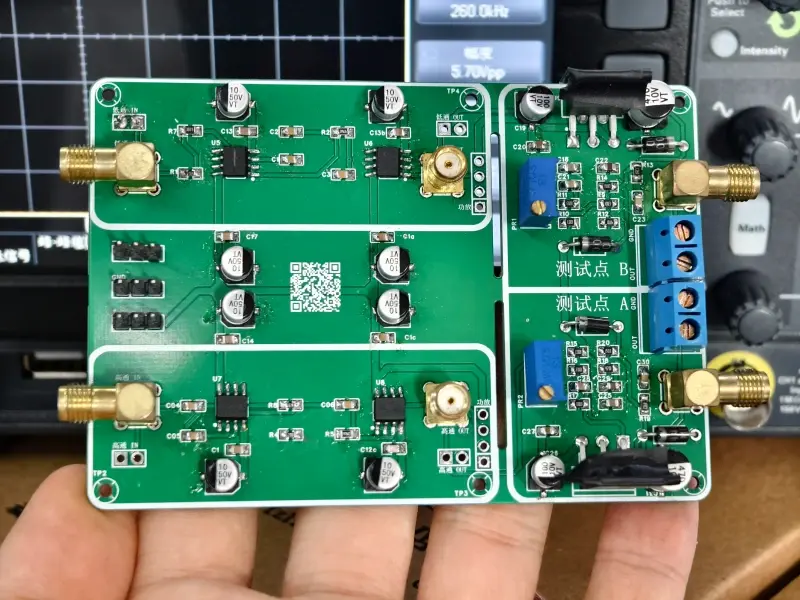
Microstrip consists of a conductive trace positioned on the outer layer of a PCB with a single reference plane beneath it. This asymmetric configuration places the signal trace directly against the dielectric material, with air (or solder mask) above. According to Sierra Circuits, microstrip lines are easier to manufacture and modify since they’re accessible on the board’s surface, making them popular for prototyping and applications where cost matters more than absolute signal containment.
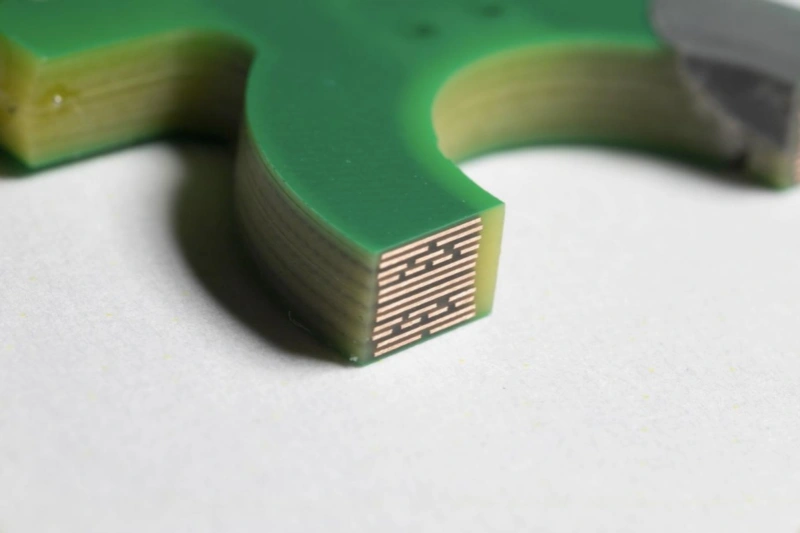
Stripline, by contrast, sandwiches the signal trace between two reference planes within the PCB stackup. This symmetric structure completely embeds the conductor in dielectric material, providing superior electromagnetic shielding. Altium notes that stripline configurations excel in environments demanding minimal electromagnetic interference (EMI) and consistent impedance control.
Both transmission line types serve critical roles in RF PCB design, but their physical differences create distinct trade-offs. Microstrip offers simplicity and accessibility, while stripline delivers containment and predictability. Understanding when to deploy each topology requires examining signal propagation speed, electromagnetic compatibility requirements, thermal management needs, and manufacturing constraints—considerations that directly impact your design’s performance at high frequencies.
Why Choose Microstrip? Advantages and Applications
Microstrip lines stand out as the go-to choice for cost-conscious RF PCB design, delivering a compelling combination of simplicity and performance. These single-layer transmission lines, positioned on the outer surface of a PCB with a ground plane beneath, offer approximately 20-30% faster signal propagation compared to stripline configurations—a critical advantage in timing-sensitive applications.
The economic appeal of microstrip is substantial. Manufacturing costs drop significantly since the trace resides on the outer layer, eliminating the need for additional internal layers and complex via structures. This accessibility makes microstrip ideal for prototype development, consumer electronics, and moderate-frequency applications where budget constraints outweigh absolute signal integrity requirements.
However, the trade-offs require careful consideration. The exposed nature of microstrip traces makes them inherently more susceptible to electromagnetic interference (EMI) and radiative losses. Without the symmetrical shielding provided by dual ground planes, microstrip lines can both emit and absorb unwanted signals, potentially compromising performance in electrically noisy environments.
Applications where microstrip excels include:
- GPS receivers and antenna feeds
- Low-power RF front-ends
- Cost-sensitive commercial products
- Single-sided impedance-controlled routing
The key consideration: microstrip delivers optimal value when radiation concerns are manageable and design simplicity accelerates time-to-market. Understanding these characteristics helps engineers make informed decisions about which transmission line topology best serves their specific RF PCB design requirements.
When to Opt for Stripline: Benefits and Use Cases
Stripline transmission lines deliver electromagnetic isolation that microstrip configurations simply cannot match. By sandwiching the signal trace between two ground planes, stripline routing creates a completely shielded environment where electromagnetic fields remain contained within the dielectric layers. This architecture achieves up to 20 dB better EMI suppression compared to surface-mounted microstrip transmission line designs—a critical advantage when regulatory compliance margins are tight.
The case for stripline becomes compelling in high-density, multi-layer RF boards operating above 5 GHz. Medical imaging equipment, aerospace radar systems, and advanced telecommunications infrastructure routinely specify stripline routing to prevent signal crosstalk between adjacent channels. When designing boards with multiple high-speed differential pairs running parallel, the superior isolation prevents one signal from corrupting another—a scenario where microstrip’s exposed field structure creates measurable performance degradation.
However, stripline’s benefits carry significant trade-offs. Fabrication complexity increases substantially due to the additional layer count required, typically adding 15-30% to manufacturing costs for equivalent board area. Thermal management presents another challenge: heat generated by the buried conductor dissipates more slowly than surface traces, potentially limiting power handling in high-current applications.
The design process itself demands more sophisticated simulation tools and expertise. Impedance control becomes less forgiving because you’re managing relationships between three layers rather than two. Yet for applications where signal integrity trumps budget constraints—think 5G base stations or satellite communications—stripline’s performance envelope justifies every additional dollar spent. The question you’ll soon face: does conventional wisdom about these trade-offs always hold true?
Conventional Wisdom vs. Reality: Challenging Common Assumptions
The RF design community perpetuates a persistent myth: microstrip lines inherently produce unacceptable EMI and should be avoided whenever possible. This oversimplification ignores decades of real-world implementation data showing otherwise.
In practice, properly designed microstrips deliver comparable EMI performance to striplines across a surprising range of applications. The difference lies in understanding design trade-offs rather than accepting blanket rules. A microstrip with adequate ground plane clearance, controlled trace geometry, and strategic shielding can match a stripline transmission line’s EMI characteristics in frequencies below 10 GHz—covering most commercial RF applications.
Cost constraints often favor microstrip implementations in scenarios where conventional wisdom pushes designers toward stripline. Consider single-sided RF modules operating at 2.4 GHz: microstrip configurations routinely achieve -40 dB isolation between adjacent traces with simple design rules, eliminating the need for additional dielectric layers and their associated fabrication costs.
What typically happens is designers overestimate EMI risk while underestimating the signal integrity benefits of microstrip’s exposed geometry. Direct access to the signal trace simplifies impedance tuning, enables straightforward component mounting, and accelerates troubleshooting. These practical advantages translate to faster time-to-market—a critical factor that theoretical EMI concerns shouldn’t automatically override.
Technical Deep Dive: How Microstrips and Striplines Work
Electromagnetic Field Distribution: The Fundamental Difference
The electromagnetic field behavior distinguishes microstrip and stripline at the most fundamental level. Microstrip lines generate asymmetric field distributions, with electromagnetic energy concentrated between the signal trace and the ground plane below, while fringing fields extend into the air and dielectric above the trace. This asymmetry creates an inhomogeneous dielectric environment where the effective permittivity lies somewhere between the PCB substrate and air.
Stripline configurations produce symmetric, tightly confined fields entirely within the dielectric material. The signal trace sits equidistant between two ground planes, creating a homogeneous electromagnetic environment. According to Altium’s routing guidelines, this symmetry eliminates fringing fields and produces more predictable wave propagation characteristics.
When comparing microstrip vs coplanar waveguide arrangements, field distribution becomes even more critical—coplanar designs place ground planes on the same layer as the signal trace, creating yet another electromagnetic profile that designers must account for in impedance calculations.
Impedance Control: The Engineering Imperative
Characteristic impedance consistency determines signal integrity in RF designs. Microstrip impedance depends on trace width, substrate height, dielectric constant, and the air interface above—making it inherently sensitive to manufacturing variations and environmental factors. JLCPCB’s layout analysis demonstrates that achieving ±10% impedance tolerance requires careful attention to these variables.
Stripline impedance calculations prove more straightforward because the homogeneous dielectric eliminates air-interface uncertainties. The symmetric geometry produces tighter impedance tolerances—typically within ±5%—critical for maintaining return loss specifications below -20 dB in high-frequency applications.
Dielectric Material Impact on Performance
Material selection directly affects signal velocity and loss characteristics. Lower dielectric constants (εr = 2-4) reduce capacitance and increase signal velocity, while higher constants (εr > 4) provide better impedance control in space-constrained designs. However, loss tangent values become equally important—materials like Rogers 4350B with tan δ = 0.0037 significantly outperform standard FR-4 in applications above 5 GHz.
Designing with Microstrip and Stripline: Best Practices
Critical Design Considerations for Each Line Type
Successful microstrip implementation hinges on controlled ground plane proximity and trace width calculations. The exposed nature of microstrip traces demands precise impedance matching through width adjustments, typically requiring wider traces than equivalent striplines to achieve the same characteristic impedance. Designers must account for air’s lower dielectric constant above the trace, which affects field distribution and propagation velocity.
PCB stripline design prioritizes symmetrical dielectric spacing and layer stack-up balance. The sandwiched configuration requires careful attention to dielectric thickness uniformity between ground planes—asymmetry introduces impedance variations and mode conversion issues. According to industry layout guidelines, maintaining consistent copper weight across internal layers proves essential for predictable performance.
Routing Techniques for EMI Mitigation
Microstrip routing benefits from strategic guard traces and via fencing. Placing grounded vias along trace edges at quarter-wavelength intervals creates effective containment barriers, reducing radiation at critical frequencies. However, excessive via proximity introduces unwanted parasitic capacitance.
Stripline inherently suppresses EMI through shielding, but inter-layer coupling demands attention. Route sensitive striplines on non-adjacent internal layers when possible, avoiding direct overlap with power planes that create coupling paths. Multilayer configurations benefit from alternating routing directions between adjacent signal layers—orthogonal traces minimize crosstalk by 15-20 dB compared to parallel routing.
One practical approach for mixed-signal designs: reserve outer layers for microstrip critical paths requiring easy access, while allocating internal layers for stripline clock distribution and high-speed differential pairs needing superior isolation. This partitioning naturally leads to optimized layer stack planning.
Example Scenarios: Choosing the Right Line for Your Project
Cost-Sensitive Consumer Electronics with Moderate Frequency Requirements
Example scenario: A wireless sensor network operating at 2.4 GHz with impedance control PCB requirements faces budget constraints typical of high-volume consumer products. Microstrip becomes the obvious choice here—single-sided ground plane access simplifies manufacturing while enabling straightforward impedance adjustments through trace width modifications. Manufacturing costs typically decrease by 15-20% compared to stripline implementations, and testing access remains convenient throughout development cycles. The moderate frequency range tolerates microstrip’s inherent radiation characteristics, making the EMI trade-off acceptable for commercial compliance standards.
High-Frequency Defense Systems Requiring Robust EMI Protection
A military radar application operating above 10 GHz demands stripline architecture despite increased complexity. Enclosed field containment prevents signal leakage in dense electromagnetic environments—critical when adversaries employ sophisticated intercept capabilities. Stripline’s symmetrical construction delivers consistent impedance across temperature extremes (-55°C to 125°C), while dual ground planes provide superior shielding effectiveness exceeding 40 dB. The controlled environment between reference planes ensures predictable performance during mission-critical operations where signal integrity cannot compromise system reliability.
Mixed-Signal Integration in Modern RF Transceiver Designs
Contemporary wireless infrastructure often demands hybrid approaches. The power amplifier output stage benefits from microstrip’s heat dissipation characteristics and component accessibility, while sensitive low-noise amplifier routing leverages stripline’s noise immunity. This partitioning strategy optimizes each functional block according to its dominant requirements—cost efficiency where acceptable, maximum isolation where necessary.
Limitations and Considerations in RF PCB Design
High-Frequency Constraints of Microstrip Lines
While microstrips dominate cost-sensitive designs, their open structure creates fundamental limitations above certain frequency thresholds. Radiation losses increase proportionally with frequency, becoming problematic beyond 10-20 GHz depending on substrate properties. The exposed trace acts as an unintentional antenna, compromising signal integrity RF circuits through EMI susceptibility and reduced efficiency. Microstrip designs experience greater signal degradation in dense board environments where crosstalk between adjacent traces becomes unavoidable.
Environmental sensitivity compounds these issues. Temperature variations affect the dielectric constant of air differently than the substrate material, creating unpredictable impedance shifts. Humidity absorption in the board material similarly impacts characteristic impedance—a critical concern for precision RF applications requiring ±1% impedance tolerance.
Stripline Implementation Challenges
Stripline’s superior electrical performance comes with significant practical trade-offs. Manufacturing complexity increases substantially when routing between internal layers, requiring additional fabrication steps and precision drilling. The buried structure makes debugging nearly impossible without destructive testing, raising concerns about yield rates and rework costs.
Layer count directly impacts both material costs and lead times. What appears as a simple four-layer board becomes six or eight layers when stripline routing demands additional reference planes. Design teams often face difficult decisions: accept microstrip’s electrical compromises or absorb 40-60% higher fabrication costs for stripline implementation.
Key Takeaways
The choice between microstrip and stripline transmission lines fundamentally depends on your specific application requirements. Microstrips dominate cost-sensitive designs where moderate RF performance suffices—their single-sided routing reduces layer count, simplifies manufacturing, and provides easy access for testing and modifications. Striplines excel where signal integrity is non-negotiable: aerospace, military, and precision instrumentation applications justify their additional cost through superior EMI shielding and consistent impedance control across temperature variations.
However, the perceived disadvantages of each topology aren’t absolute constraints. Modern PCB design tools and techniques—including controlled dielectric materials, conformal coatings for microstrips, and optimized via structures for striplines—can significantly narrow performance gaps. A microstrip line calculator enables precise impedance matching even in cost-constrained designs, while advanced stackup planning reduces stripline complexity.
The practical decision framework balances three variables: manufacturing cost, design complexity, and performance requirements. A 2.4 GHz IoT device rarely justifies stripline’s 30-40% cost premium, while a 28 GHz 5G base station cannot tolerate microstrip’s EMI susceptibility. Understanding these tradeoffs transforms transmission line selection from an arbitrary choice into a strategic engineering decision.
FAQ
Q: Can I mix microstrip and stripline on the same PCB?
Yes, hybrid designs are common in complex RF systems. Microstrips typically handle less sensitive signals or controlled sections, while striplines route critical high-frequency traces requiring maximum isolation. The transition between these structures requires careful impedance matching using via transitions or tapered structures to minimize reflections.
Q: Which transmission line type is more suitable for millimeter-wave applications?
Striplines generally perform better at millimeter-wave frequencies (30-300 GHz) due to their inherent shielding, which minimizes radiation losses that become increasingly problematic as wavelengths shrink. However, microstrips remain viable when surface-mount components must connect directly to the transmission line, as stripline routing requires additional via transitions.
Q: How do I choose substrate material for each transmission line type?
Material selection depends on your frequency range and loss budget. Low-loss substrates like Rogers 4003C or PTFE-based materials benefit both structures, but microstrips show greater sensitivity to substrate dielectric constant variations since half the electromagnetic field propagates through air. Striplines require consistent dielectric properties throughout the layer stack.
Q: What’s the minimum layer count needed for stripline routing?
Striplines require at least four layers: two reference planes sandwiching the signal layer, plus room for component placement and routing on outer layers. This fundamental requirement drives the higher cost compared to two-layer microstrip designs.
Table of Contents
- Présentation des principales différences : Microbande vs Ligne à bandes
- Pourquoi choisir la microbande ? Avantages et applications
- Quand opter pour le Stripline : avantages et cas d’utilisation
- Sagesse conventionnelle contre réalité : remettre en question les idées reçues
- Analyse technique approfondie : Fonctionnement des microbandes et des lignes striplines
- Conception avec les technologies microruban et stripline : bonnes pratiques
- Exemples de scénarios : Choisir la bonne ligne pour votre projet
- Limitations et considérations relatives à la conception de circuits imprimés RF
- Points clés à retenir
- QFP
Tags
Related Posts

PCBA Prototype
March 27, 2026
PCBA Prototype
March 22, 2026