Rogers 4350B vs. FR4: Which is Better for High-Frequency Designs?
Introduction to High-Frequency PCB Materials
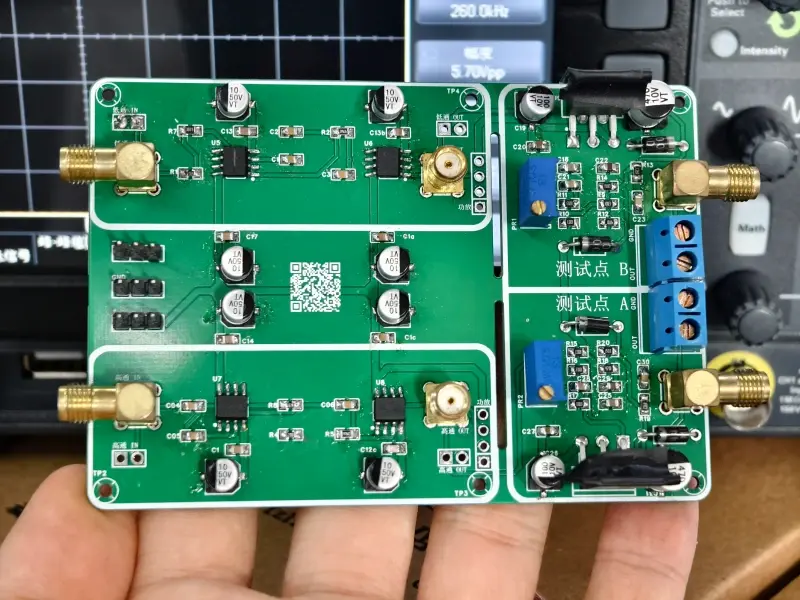
Choosing the wrong PCB material for high-frequency applications can derail an entire project—signal losses mount, impedance control falters, and performance specs slip out of reach. The Rogers 4350B vs FR4 debate sits at the heart of this decision, separating designs that merely function from those that excel at gigahertz frequencies.
High-frequency circuits demand materials that maintain signal integrity across the frequency spectrum. As digital speeds push past 1 GHz and RF designs operate at even higher frequencies, standard materials often struggle with increased losses, unpredictable dielectric behavior, and thermal instability. FR4, the industry workhorse for decades, works brilliantly for general-purpose designs but faces limitations when frequencies climb.
Specialized laminates like Rogers 4350B emerged to address these constraints. Where FR4’s dielectric constant varies with frequency and temperature, advanced materials offer tighter tolerances and lower loss tangents—critical parameters for applications like 5G infrastructure, automotive radar systems, and high-speed digital interfaces. The performance gap becomes measurable: Rogers materials typically exhibit dissipation factors below 0.004 at 10 GHz, while standard FR4 can exceed 0.020.
Yet this performance advantage comes with tradeoffs in cost, availability, and fabrication complexity. Understanding when to specify premium materials versus standard laminates requires balancing electrical requirements against practical constraints—a decision that shapes everything from prototype costs to production scalability.
Overview of Rogers 4350B and FR4
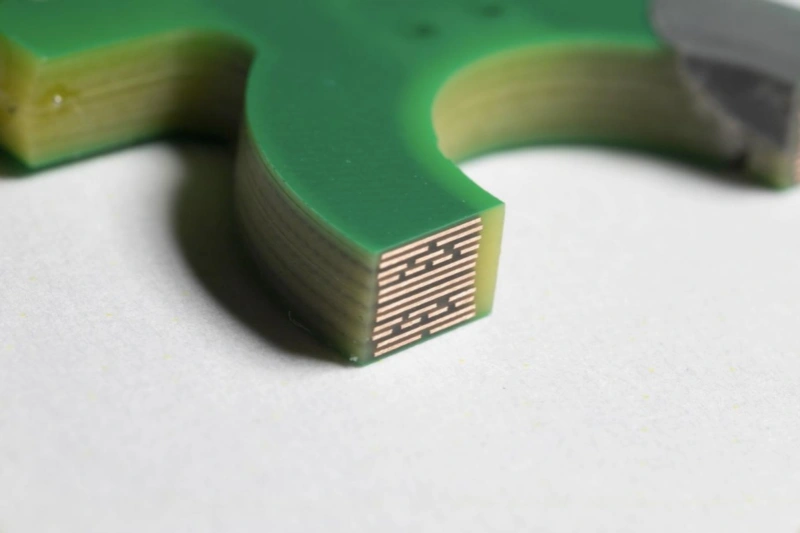
Understanding the fundamentals of RO4350B vs FR4 starts with recognizing their distinct material compositions and intended applications. FR4, the workhorse of the PCB industry, is a woven fiberglass cloth laminate with an epoxy resin binder. It accounts for approximately 90% of PCB materials used globally, making it the default choice for consumer electronics, industrial controls, and general-purpose designs operating below 1 GHz.
Rogers 4350B represents a different approach entirely. This hydrocarbon ceramic-filled laminate maintains a tightly controlled dielectric constant (Dk) of 3.48 at 10 GHz, compared to FR4’s variable 4.2-4.8 range. The material uses no glass reinforcement, eliminating the “weave effect” that can cause signal skew in high-speed traces. However, this performance comes at a premium—Rogers materials typically cost 5-10 times more than standard FR4.
A practical comparison reveals their core differences: FR4 suits cost-sensitive applications where signal integrity isn’t critical, while Rogers 4350B targets RF communications, radar systems, and designs requiring stable performance across temperature extremes. The choice between these materials ultimately depends on your frequency requirements, budget constraints, and thermal management needs—factors we’ll examine in detail as we establish evaluation criteria.
Key Criteria for Evaluating PCB Materials
When comparing Rogers vs FR4, several critical performance metrics determine which material suits your high-frequency design. Understanding these evaluation criteria helps engineers make informed decisions that balance electrical performance, thermal management, and cost constraints.
Signal integrity stands as the primary consideration for high-frequency applications. This encompasses dielectric constant stability, loss tangent (dissipation factor), and impedance control across the operating frequency range. Materials that maintain consistent electrical properties prevent signal degradation and ensure reliable circuit performance.
Thermal performance directly impacts long-term reliability. Key factors include the coefficient of thermal expansion (CTE), glass transition temperature (Tg), and thermal conductivity. Materials with lower CTE values reduce stress at solder joints and via connections during temperature cycling, while higher Tg values indicate better dimensional stability under heat.
Manufacturing compatibility affects both production yield and total cost. This includes ease of drilling, plating adhesion, dimensional stability during fabrication, and compatibility with standard PCB processes. Some specialized materials require modified manufacturing techniques that can increase lead times and costs.
Environmental stability ensures consistent performance across operating conditions. Moisture absorption rates, chemical resistance, and mechanical strength under varying humidity and temperature conditions all factor into material selection. These properties become especially critical for applications in harsh environments where performance degradation cannot be tolerated.

Dielectric Properties: Rogers 4350B vs. FR4
The dielectric characteristics of high-frequency PCB materials fundamentally determine signal integrity at elevated frequencies. RO4350B maintains a tightly controlled dielectric constant (Dk) of 3.48 ±0.05 across its operating range, ensuring predictable impedance control. FR4’s Dk varies widely between 4.2 and 4.8, fluctuating with frequency, temperature, and even humidity exposure—introducing unpredictable phase shifts in RF circuits.
Dissipation factor reveals an even starker contrast. RO4350B’s loss tangent of 0.0037 at 10 GHz minimizes signal attenuation, while FR4’s dissipation factor ranges from 0.02 to 0.03—nearly ten times higher. This difference compounds exponentially as frequency increases; at millimeter-wave frequencies, FR4’s losses render it practically unusable.
The stability advantage extends across environmental conditions. RO4350B’s dielectric constant shifts minimally across temperature ranges, maintaining impedance consistency critical for filter and antenna designs. FR4’s temperature-dependent Dk variation introduces measurable phase distortion that compromises timing-sensitive applications like radar systems or 5G base stations, where nanosecond precision matters for beamforming accuracy and carrier synchronization.
Thermal Management: Conductivity and Expansion
Thermal performance becomes critical in high-frequency circuits where power dissipation and temperature fluctuations impact reliability. Rogers RO4350B demonstrates superior thermal conductivity at 0.69 W/m·K compared to standard FR4’s 0.3-0.4 W/m·K, enabling more efficient heat dissipation from active components and high-power RF traces.
The coefficient of thermal expansion (CTE) presents another crucial differentiator. RO4350B exhibits a Z-axis CTE of 32 ppm/°C—closely matched to copper at 17 ppm/°C—which minimizes stress on plated through-holes during temperature cycling. FR4 materials typically show Z-axis CTE values of 50-70 ppm/°C, creating mechanical stress that can lead to barrel cracking in high-reliability applications.
For designs subjected to thermal cycling or operating in extreme environments, RO4350B’s stable dimensional properties reduce warpage and maintain electrical performance across temperature ranges. However, this thermal advantage adds complexity to manufacturing processes. The tighter CTE match requires careful lamination profiles and bondply selection to ensure reliable layer-to-layer adhesion—considerations that influence both fabrication time and overall design complexity as you evaluate cost-performance tradeoffs.
Cost Considerations: Balancing Budget and Performance
The economic reality of material selection becomes immediately apparent when comparing Rogers RO4350B to standard FR4 PCB substrates. RO4350B typically costs 3-5 times more than conventional FR-4, with pricing varying based on copper weight, thickness, and order volume. This substantial premium makes material selection a critical decision point that extends beyond technical specifications.
However, the cost equation isn’t purely about material price per square foot. Ultra Librarian notes that FR-4’s lower tooling requirements and widespread fabrication capabilities often translate to faster turnaround times and reduced manufacturing complexity. Most PCB fabricators maintain FR-4 processes as their standard offering, while Rogers materials may require specialized handling or vendor qualification.
The break-even analysis depends heavily on application requirements. For consumer electronics operating below 1 GHz or prototypes requiring rapid iteration, FR-4’s cost advantage often proves decisive. Conversely, high-frequency applications where signal integrity directly impacts product performance—such as 5G infrastructure or aerospace systems—justify the Rogers premium through reduced signal loss and improved reliability.
One practical approach involves hybrid designs: using Rogers materials only in critical RF sections while implementing FR-4 for digital control circuitry and power distribution, optimizing cost without compromising performance where it matters most.
Limitations and Considerations
While RO4350B delivers exceptional high-frequency performance, it’s not the universal solution for every design challenge. Manufacturing complexity presents the first hurdle: the material requires specialized drilling parameters and handling procedures that not all fabrication shops can accommodate. Standard FR4 processing equipment often needs adjustment or replacement to work with Rogers substrates effectively.
Material availability creates another constraint. FR4 remains the industry standard with ubiquitous supply chains and minimal lead times, while Rogers materials—even popular grades like RO4350B—may face longer procurement cycles, particularly during supply chain disruptions. This reality impacts project timelines and inventory planning.
The substrate thickness options for Rogers RF PCB materials are also more limited compared to FR4’s extensive range. While this rarely impacts standard designs, it can constrain mechanical packaging in compact assemblies where precise board thickness matters.
Additionally, RO4350B’s processing requires careful attention to via plating and layer-to-layer registration. The material’s different thermal expansion characteristics mean standard FR4 fabrication processes don’t translate directly—shops need specific expertise with Rogers substrates to maintain yield rates and reliability.
For designs operating below 1 GHz or where cost dominates performance requirements, these limitations often outweigh the benefits, making the material selection decision about matching capabilities to actual circuit demands.
Example Scenarios in Industry
Understanding when to deploy RO4350B versus FR4 becomes clearer through real-world applications. In 5G base station designs, engineers consistently select RO4350B for power amplifier boards operating above 3 GHz. The substrate’s stable dielectric constant ensures consistent antenna performance across temperature variations—critical for outdoor infrastructure where ambient conditions fluctuate dramatically throughout the day.
Automotive radar systems represent another compelling use case. Advanced driver-assistance systems (ADAS) operating at 77 GHz demand the precision that microwave laminates like RO4350B provide. The material’s low loss tangent translates directly to extended detection range, potentially adding 10-15 meters of visibility for collision avoidance systems.
Conversely, FR4 remains the practical choice for wireless routers and consumer IoT devices operating below 2.4 GHz. A typical smart home hub processing Wi-Fi and Bluetooth signals sees negligible performance degradation with FR4, while enjoying 60-70% cost savings compared to Rogers materials.
The aerospace sector splits the difference—using Rogers materials for critical RF frontends while relegating digital control circuitry to FR4 substrates. This hybrid approach optimizes both performance and budget, demonstrating how material selection should align with specific circuit requirements rather than blanket specifications.
Comparison Table: Rogers 4350B vs. FR4
A side-by-side comparison clarifies the performance gaps between these materials across critical parameters:
| Parameter | Rogers RO4350B | FR4 (Standard) |
|---|---|---|
| Dielectric Constant (Dk) | 3.48 ± 0.05 | 4.2–4.8 |
| Dissipation Factor (Df) | 0.0037 @ 10 GHz | 0.02+ @ 10 GHz |
| Frequency Range | DC to 40+ GHz | DC to 3 GHz |
| Thermal Coefficient (Dk) | +40 ppm/°C | ±400 ppm/°C |
| CTE (Z-axis) | 32 ppm/°C | 50–70 ppm/°C |
| Moisture Absorption | 0.06% | 0.1–0.3% |
| Cost Factor | 3–5× FR4 | Baseline |
| Processing Temperature | Standard | Standard |
This snapshot reveals why hybrid Rogers FR4 designs increasingly dominate complex circuits—engineers place RO4350B only where signal integrity demands justify the premium, relegating FR4 to low-frequency sections. The dissipation factor differential alone explains why insertion losses diverge dramatically above 5 GHz, making material selection a straightforward equation once you map your frequency spectrum. This comparison underscores that choosing between these materials isn’t subjective preference—it’s engineering math backed by measurable performance metrics.
Key Rogers 4350b Vs Fr4 Takeaways
Selecting between Rogers 4350B and FR4 ultimately depends on your application’s frequency requirements, performance tolerances, and budget constraints. For designs operating below 1 GHz with moderate signal integrity needs, FR4 remains a practical and cost-effective choice. However, when your project demands consistent performance above 2 GHz—whether in 5G infrastructure, automotive radar, or aerospace communications—Rogers 4350B delivers the thermal stability and low-loss characteristics that FR4 simply cannot match.
The critical decision factors are clear: Consider RO4350B when signal integrity is non-negotiable, when operating frequencies exceed conventional ranges, or when thermal cycling poses reliability risks. Choose FR4 when budget limitations dominate, frequencies stay below the gigahertz threshold, or when your design can tolerate higher loss tangents. The best material choice isn’t always the highest-performing one—it’s the one that optimally balances your project’s technical requirements with commercial realities.
As high-frequency designs become increasingly prevalent across consumer electronics and industrial systems, understanding these material trade-offs positions engineers to make informed decisions that deliver both performance and value.
Table of Contents
- Введение в высокочастотные материалы для печатных плат
- Обзор моделей Rogers 4350B и FR4
- Основные критерии оценки материалов для печатных плат
- Вопросы стоимости: баланс между бюджетом и производительностью
- Ограничения и соображения
- Примеры сценариев в промышленности
- Сравнительная таблица: Rogers 4350B против FR4
- Основные выводы по сравнению Rogers 4350b и FR4
Tags