
PCB Failure Analysis Technologies
By PCBA PrototypePublished On: 2025-07-13Categories: Uncategorized0 Comments on PCB Failure Analysis Technologies
By PCBA PrototypePublished On: 2025-07-13Categories: Uncategorized0 Comments on PCB Failure Analysis Technologies

As the carrier of various components and the hub for circuit signal transmission, PCB has become the most important and critical part of electronic information products. Its quality and reliability determine the quality and reliability of the entire equipment. However, due to cost and technical reasons, a large number of failure problems occur in PCBs during production and application.
To address such failure issues, we need to use some common failure analysis technologies to ensure a certain level of quality and reliability of PCBs during manufacturing. This article summarizes ten major failure analysis technologies for reference.
Visual Inspection
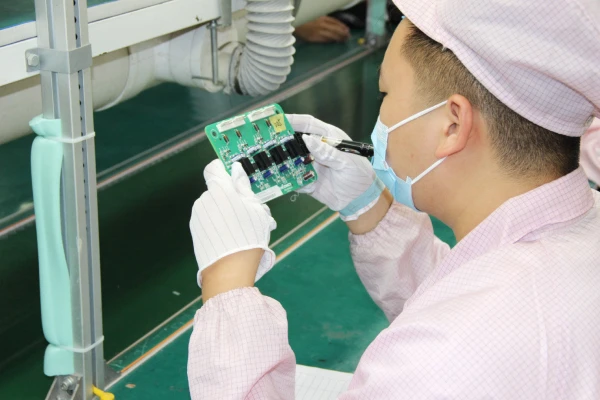
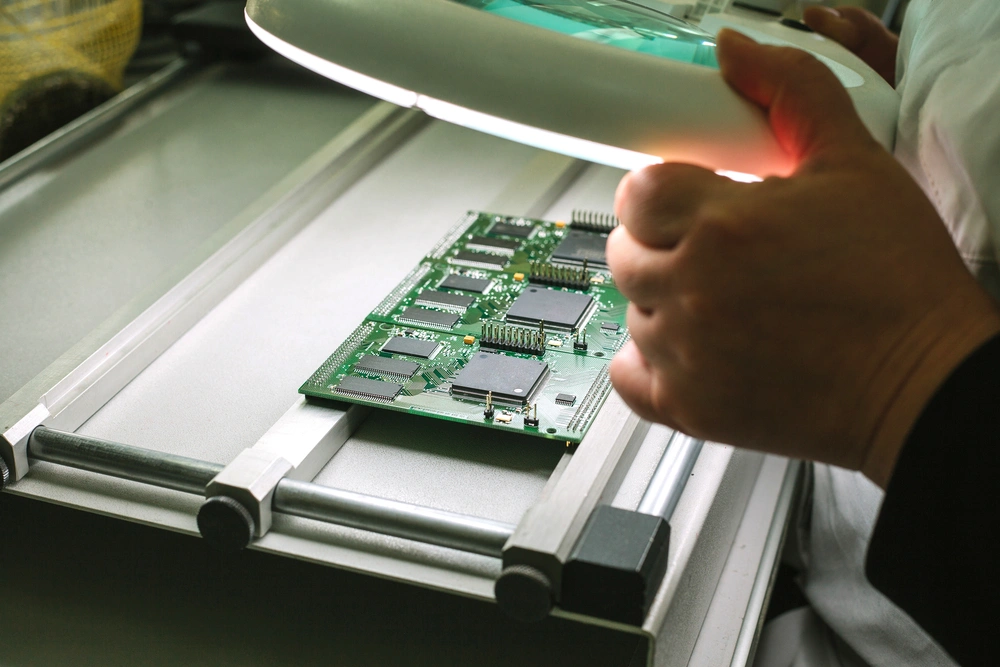
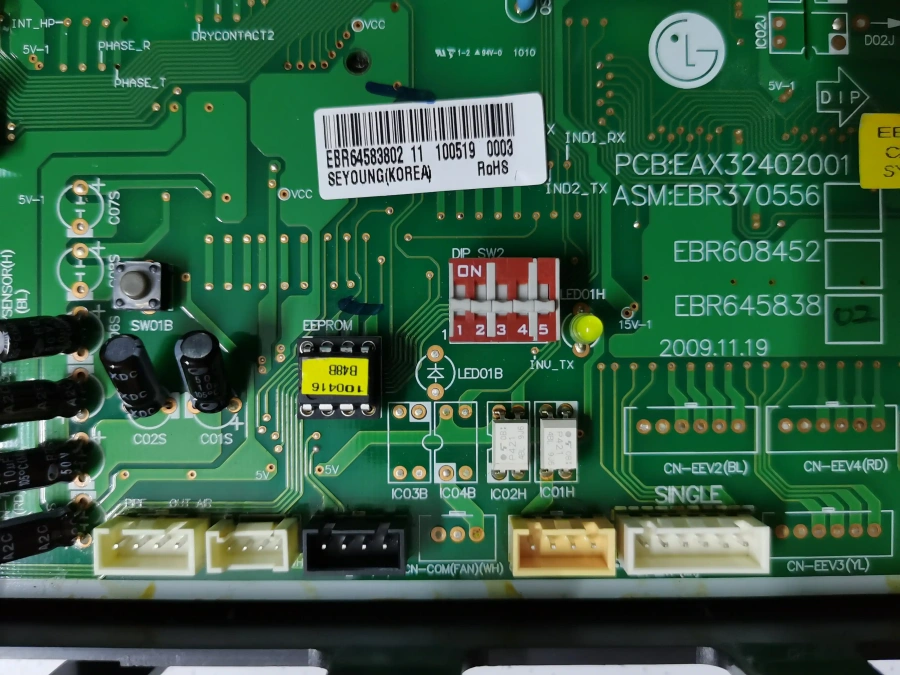
Visual inspection involves examining the appearance of PCBs with the naked eye or using simple instruments such as stereomicroscopes, metallographic microscopes, or even magnifying glasses to find failure locations and related evidence. Its main role is to locate failures and make a preliminary judgment on the failure mode of PCBs. Visual inspection mainly checks for contamination, corrosion, board popping positions, circuit wiring, and the regularity of failures—such as whether they are batch or individual, and whether they are always concentrated in a certain area. In addition, many PCB failures are only discovered after assembly into PCBA. It is also necessary to carefully check the characteristics of the failure area to determine if the failure is caused by the assembly process or the materials used in the process.
X-ray Fluoroscopy Inspection
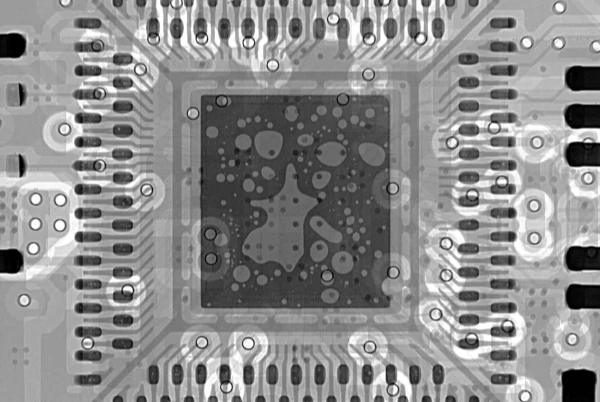
For parts that cannot be inspected through visual inspection, as well as internal defects in PCB through-holes and other internal flaws, an X-ray fluoroscopy system has to be used. The X-ray fluoroscopy system forms images based on the principle that different material thicknesses or densities have different absorption or transmission rates of X-rays. This technology is mainly used to inspect internal defects in PCBA solder joints, internal defects in through-holes, and locate defective solder joints in high-density packaged BGA or CSP devices. Currently, the resolution of industrial X-ray fluoroscopy equipment can reach below one micrometer, and it is transitioning from 2D to 3D imaging equipment. There are even 5D equipment used for package inspection, but such 5D X-ray fluoroscopy systems are very expensive and rarely have practical applications in industry.
Cross-Section Analysis
Cross-section analysis is a process that obtains the cross-sectional structure of PCBs through a series of steps including sampling, mounting, sectioning, polishing, etching, and observation. Through cross-section analysis, abundant information on the microstructure reflecting the quality of PCBs (such as through-holes, coatings, etc.) can be obtained, providing a good basis for subsequent quality improvement. However, this method is destructive—once sectioning is performed, the sample will inevitably be damaged. Meanwhile, this method has high requirements for sample preparation, which is time-consuming and requires well-trained technicians to complete. For detailed cross-section operation procedures, reference can be made to the processes specified in IPC standards IPC-TM-650 2.1.1 and IPC-MS-810.
Scanning Acoustic Microscopy
Currently, the main type used for electronic packaging or assembly analysis is the C-mode ultrasonic scanning acoustic microscope. It uses the principle that high-frequency ultrasonic waves reflect amplitude, phase, and polarity changes at discontinuous interfaces of materials to form images, and its scanning method is to scan X-Y plane information along the Z-axis. Therefore, scanning acoustic microscopy can be used to detect various defects inside components, materials, PCBs, and PCBA, including cracks, delamination, inclusions, and voids. If the frequency bandwidth of the scanning acoustics is sufficient, it can also directly detect internal defects in solder joints. Typical scanning acoustic images use red as a warning color to indicate the presence of defects. Due to the large number of plastic-encapsulated components used in SMT processes, a large number of moisture reflow sensitivity issues have arisen during the transition from leaded to lead-free processes. That is, moisture-absorbing plastic-encapsulated devices will experience internal or substrate delamination and cracking when reflowed at higher lead-free process temperatures. Ordinary PCBs also often experience board popping at the high temperatures of lead-free processes. At this time, scanning acoustic microscopy highlights its special advantages in non-destructive testing of multi-layer high-density PCBs. In contrast, generally obvious board popping can be detected by visual inspection.
Microscopic Infrared Analysis
Microscopic infrared analysis is a method that combines infrared spectroscopy with microscopy. It uses the principle that different materials (mainly organic substances) have different absorption of infrared spectra to analyze the compound composition of materials. Combined with a microscope, it allows visible light and infrared light to share the same optical path. As long as it is within the visible field of view, trace organic pollutants to be analyzed can be found. Without the combination of a microscope, infrared spectroscopy can usually only analyze samples with a relatively large amount. In electronic processes, in many cases, trace contamination can lead to poor solderability of PCB pads or lead pins. It is conceivable that infrared spectroscopy without a matching microscope is difficult to solve process problems. The main purpose of microscopic infrared analysis is to analyze organic pollutants on the soldered surface or solder joint surface, and to determine the causes of corrosion or poor solderability.
Scanning Electron Microscope Analysis
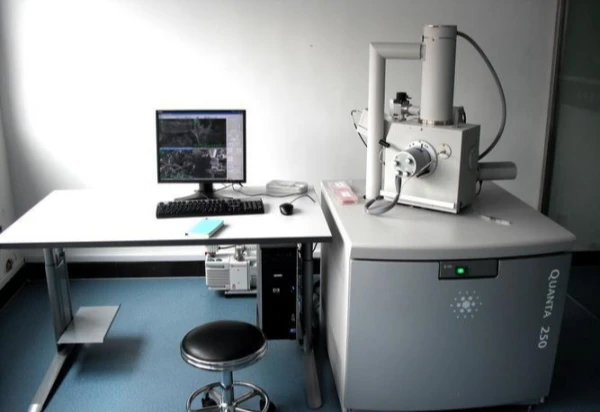
The Scanning Electron Microscope (SEM) is one of the most useful large-scale electron microscopic imaging systems for failure analysis. Its working principle is that the electron beam emitted by the cathode is accelerated by the anode, focused by a magnetic lens to form an electron beam with a diameter of tens to thousands of angstroms (A). Under the deflection of the scanning coil, the electron beam scans the sample surface point by point in a certain time and space sequence. This high-energy electron beam bombarding the sample surface will excite a variety of information, which can be collected and amplified to obtain various corresponding images on the display screen. The excited secondary electrons are generated within 5-10nm of the sample surface, so they can better reflect the morphology of the sample surface and are therefore most commonly used for morphological observation. The excited backscattered electrons are generated within 100-1000nm of the sample surface, and different elements emit backscattered electrons with different characteristics depending on their atomic numbers. Therefore, backscattered electron images have the ability to distinguish morphology and atomic numbers, and thus can reflect the distribution of chemical element compositions. The function of current scanning electron microscopes is very powerful, and any fine structure or surface feature can be magnified hundreds of thousands of times for observation and analysis.
In terms of failure analysis of PCBs or solder joints, SEM is mainly used for analyzing failure mechanisms, specifically for observing the morphological structure of pad surfaces, the metallographic structure of solder joints, measuring intermetallic compounds, analyzing solderable coatings, and analyzing and measuring tin whiskers. Unlike optical microscopes, the images formed by scanning electron microscopes are electron images, so they are only in black and white. In addition, SEM samples need to be conductive. Non-conductors and some semiconductors need to be sprayed with gold or carbon; otherwise, charge accumulation on the sample surface will affect the observation. In addition, the depth of field of SEM images is much larger than that of optical microscopes, making it an important analysis method for uneven samples such as metallographic structures, micro-fractures, and tin whiskers.
X-ray Energy Dispersive Spectroscopy Analysis
The aforementioned scanning electron microscopes are generally equipped with an X-ray energy dispersive spectrometer. When a high-energy electron beam hits the sample surface, inner-shell electrons in the atoms of the surface material are knocked out, and outer electrons transition to lower energy levels, exciting characteristic X-rays. Different elements have different atomic energy level differences, resulting in different characteristic X-rays. Therefore, the characteristic X-rays emitted by the sample can be used for chemical composition analysis. At the same time, according to whether the detected X-ray signal is characteristic wavelength or characteristic energy, the corresponding instruments are called wavelength dispersive spectrometers (WDS) and energy dispersive spectrometers (EDS), respectively. WDS has a higher resolution than EDS, while EDS has a faster analysis speed than WDS. Due to its fast speed and low cost, EDS is generally equipped with scanning electron microscopes.
Depending on the scanning mode of the electron beam, EDS can perform surface point analysis, line analysis, and area analysis to obtain information on the distribution of different elements. Point analysis obtains all elements at a point; line analysis performs analysis of one element along a specified line each time, and multiple scans obtain the line distribution of all elements; area analysis analyzes all elements within a specified area, and the measured element content is the average value within the measured area.
In PCB analysis, EDS is mainly used for component analysis of pad surfaces and element analysis of contaminants on the surface of pads and lead pins with poor solderability. The accuracy of quantitative analysis by EDS is limited, and contents lower than 0.1% are generally difficult to detect. The combination of EDS and SEM can obtain information on surface morphology and composition simultaneously, which is why they are widely used.
X-ray Photoelectron Spectroscopy (XPS) Analysis
When a sample is irradiated by X-rays, inner-shell electrons of surface atoms will escape from the 束缚 of the atomic nucleus and escape from the solid surface to form electrons. By measuring their kinetic energy Ex, the binding energy Eb of the inner-shell electrons of the atom can be obtained. Eb varies with different elements and different electron shells, and it is a “fingerprint” identification parameter of the atom. The formed spectral line is X-ray Photoelectron Spectroscopy (XPS). XPS can be used for qualitative and quantitative analysis of elements on the shallow surface (several nanometers) of the sample surface. In addition, information about the chemical valence state of elements can be obtained based on the chemical shift of binding energy. It can provide information such as the valence state of atoms in the surface layer and the bonding with surrounding elements; the incident beam is an X-ray photon beam, so it can analyze insulating samples, perform rapid multi-element analysis without damaging the analyzed sample; it can also perform longitudinal element distribution analysis of multiple layers under argon ion sputtering (see the following case for reference), and its sensitivity is much higher than that of EDS. In PCB analysis, XPS is mainly used for analyzing the quality of pad coatings, contaminants, and oxidation degree to determine the deep-seated causes of poor solderability.
Thermal Analysis – Differential Scanning Calorimetry (DSC)
It is a method that measures the power difference between a substance and a reference substance as a function of temperature (or time) under programmed temperature control. DSC is equipped with two sets of compensation heating wires under the sample and reference containers. When a temperature difference ΔT occurs between the sample and the reference due to thermal effects during heating, the current in the compensation heating wires can be changed through a differential thermal amplification circuit and a differential heat compensation amplifier to balance the heat on both sides, eliminate the temperature difference ΔT, and record the relationship between the thermal power difference of the two electric heating compensations under the sample and the reference as a function of temperature (or time). Based on this relationship, the physical, chemical, and thermodynamic properties of materials can be studied and analyzed. DSC has a wide range of applications, but in PCB analysis, it is mainly used to measure the curing degree and glass transition temperature of various polymer materials used in PCBs, which determine the reliability of PCBs in subsequent processes.
Thermomechanical Analyzer (TMA)
Thermomechanical Analysis (TMA) is used to measure the deformation properties of solids, liquids, and gels under heat or mechanical force under programmed temperature control. Common loading methods include compression, penetration, tension, and bending. The test probe is supported by a cantilever beam and a coil spring fixed on it. The motor applies a load to the sample. When the sample deforms, the differential transformer detects this change, and together with data such as temperature, stress, and strain, processes it to obtain the relationship between the deformation of the substance and temperature (or time) under negligible load. Based on the relationship between deformation and temperature (or time), the physical, chemical, and thermodynamic properties of materials can be studied and analyzed. TMA has a wide range of applications, and in PCB analysis, it is mainly used to measure two key parameters of PCBs: linear expansion coefficient and glass transition temperature. PCBs with a substrate with an excessively large expansion coefficient often lead to fracture failure of metallized holes after welding and assembly.
Due to the development trend of high-density PCBs and the environmental requirements of lead-free and halogen-free, more and more PCBs have various failure problems such as poor wetting, board popping, delamination, and CAF. The application of these analysis technologies in actual cases will be introduced. Obtaining the failure mechanism and causes of PCBs will be beneficial to the quality control of PCBs in the future, thereby avoiding the recurrence of similar problems.
When a failure mode must be confirmed in production, connect the analysis workflow to PCB testing methods and assembly testing methods as appropriate.
Table of Contents
Related Posts
PCBA Prototype
September 8, 2026
PCBA Prototype
August 7, 2026