
Why is the PCB required to be baked before SMT Assembly? An article reveals the key reasons!
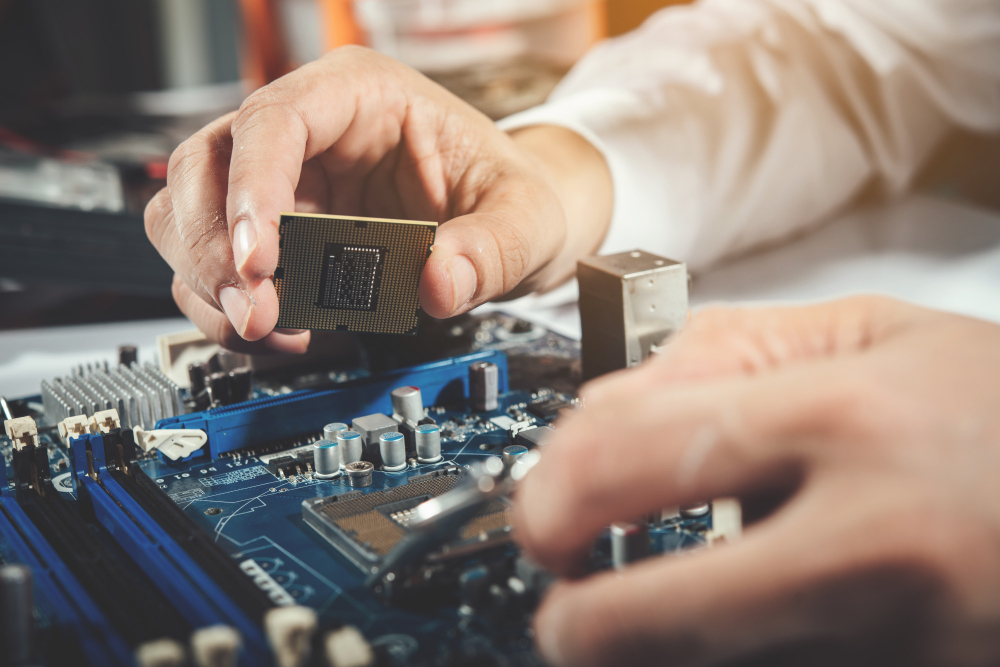
The primary reasons for pre-baking PCB boards before SMT assembly are as follows:
1. Moisture Removal: During storage and transportation, PCB inevitably come into contact with air and absorb moisture. If this moisture isn’t removed, when the PCB enters the high-temperature environment above 200℃during SMT soldering, the moisture will rapidly vaporize into steam. When the steam cannot be released in time, it will generate pressure inside the PCB, potentially causing the board to swell, leading to broken vias, delamination, and even bubbling, warping, or exploding. Even if there is no visible surface phenomenon, the internal circuits may already be damaged, resulting in unstable product functionality and ultimately failure.
2. Prevent soldering bubbles: Moisture in PCB boards can evaporate and form bubbles at high temperatures during soldering, without pre-baking, moisture may form bubbles at high temperatures during the soldering process. Weakening solder joints and compromising electrical connections. Pre-baking can significantly reduce this risk.
3.Enhance component adhesion: Baking improves the bonding of components on the PCB surface, ensuring reliable connections and stable product performance during SMT assembly.
4.Avoid thermal shock: Thermal shock due to temperature fluctuations can damage electronic components. Controlled pre-baking allows the PCB to acclimate to temperature changes, mitigating thermal shock during subsequent processing.
5.Remove volatile organic compounds(VOCs):During PCB manufacturing, residual VOCs from adhesives and solvents on the PCB can cause soldering issues like bubbles and excessive soldering when they volatilize during assembly. Baking effectively removes these VOCs, preventing various soldering defects during assembly.
6.Improve surface wetting: During the SMT process, the solder paste must fully wet both the PCB surface and component leads to ensure reliable soldering connections. Moisture or VOCs on the PCB surface can hinder solder paste wetting, leading to poor soldering. Baking removes these contaminants, enhancing solder paste wetting for reliable connections.
7.Enhance dimensional stability: Unbaked PCB may expand excessively during SMT process, causing component misalignment and pin spacing issues. Baking stabilizes the PCB dimensions, ensuring consistent component placement and reliable products.
The Necessity of PCB Baking and Processing
PCB baking is usually necessary in SMT assembly, especially for PCB with high moisture risk or strict soldering quality requirements. However, it may be skipped if the PCB is taken out of a dry sealed package and processed immediately. When baking, the following points should be noted:
1.Baking parameter settings
Temperature: Different materials and thicknesses of PCB require different baking temperatures. For common FR-4 PCB, the baking temperature is usually set between 100℃and 120℃.Too low a temperature cannot effectively remove moisture and volatile substances, while too high a temperature may cause the PCB to deform, discolor, or even damage the internal insulation layer and circuit.
Time: The baking time depends on the thickness of the PCB, the degree of moisture, and the oven’s performance. Generally, a common PCB with a thickness of about 1.6mm has a baking time of 4-8 hours. Thicker or more severely damp PCB may require longer baking time, but it is generally not advisable to exceed 24 hours to avoid adverse effects on the PCB.
Raising temperature rate: To prevent thermal stress in the PCB due to sudden temperature changes, the rising temperature rate should not be too fast, usually controlled at 5℃/min-10℃/min.
2. Baking equipment selection
Oven types: There are two common types, namely hot air circulation oven and vacuum oven. Hot air circulation ovens ensure uniform airflow within the chamber, guaranteeing even heating of PCB. Vacuum ovens, on the other hand, effectively remove moisture at lower temperatures, making them ideal for temperature-sensitive or moisture-prone PCB.
Oven size: Choose an oven of appropriate size based on the size and quantity of the PCB to ensure that the PCB has enough space inside the oven and the hot air can circulate fully to avoid uneven heat distribution caused by overcrowding.
3. PCB Board Placement and Protection
Placement method: The PCB should be placed flat on the tray or support inside the oven, avoiding stacking to ensure that hot air can fully contact all parts of the PCB for uniform baking effect.
Protective measures: To prevent pollution of the PCB during baking, it can be placed in a dedicated tray or fixture, or the surface of the PCB can be covered with heat-resistant protective film.
4. Post-baking treatment
Cooling method: After baking, the PCB should be cooled naturally inside the oven or by slow air cooling to avoid condensation on the surface of the PCB or thermal stress due to rapid cooling.
Storage environment: After cooling, the PCB should be immediately placed in a dry environment, such as a dry cabinet or a sealed bag, with desiccant added to prevent it from absorbing moisture from the air again. At the same time, SMT assembly should be carried out as soon as possible to avoid long-term exposure to the air. Before baking, it is necessary to refer to the technical specifications and recommendations provided by the PCB manufacturer and combine them with the actual production situation to develop a reasonable baking process to ensure the quality of the PCB and the smooth progress of SMT assembly.
Consequences of Inadequate PCB Baking
If a PCB is not properly baked, it may lead to the following issues during SMT assembly and subsequent use:
1. Soldering Quality Issues
Bubbles and Voids: Residual moisture in the PCB will rapidly vaporize under high-temperature soldering, creating bubbles and voids within solder joints. This not only makes the solder joints look uneven and rough, but also reduces their mechanical strength and conductivity, making them prone to cracking and de-soldering over time, which can interrupt circuit connections.
Weak Soldering and False Soldering: The presence of moisture and volatile substances can affect the wetting properties of solder paste, preventing solder from properly spreading and adhering to the PCB pads and component leads, resulting in weak and false soldering. These solder joints may seem normal in initial tests but can easily cause intermittent failures in electronic products due to vibration and temperature changes, making troubleshooting and repair difficult.
Tin ball Splashing: The sudden evaporation of internal moisture in inadequately baked PCB during soldering creates pressure that forces molten solder to splash out of the solder joints, forming Tin balls. These Tin balls can land on other parts of the PCB, causing short circuits and reducing the reliability of electronic products by attracting dust and other contaminants.
2. PCB Performance Issues
Unstable Electrical Performance: Residual moisture and impurities can lower the insulation properties of the PCB, leading to leakage and short circuits between adjacent traces, which can cause signal interference and attenuation, affecting the stability of the electrical performance of electronic products. For example ,in high-frequency circuits, reduced insulation may lead to signal distortion and increased noise, degrading communication quality.
PCB deformation: Uneven moisture distribution within the PCB can cause different parts to evaporate at different rates under high-temperature soldering, generating uneven thermal stress and causing the PCB to deformation. Deformed PCB may not fit well with other components, affecting the overall assembly accuracy of electronic products, and in severe cases, can lead to circuit trace breaks and permanent damage.
- Product Reliability Issues
Early Failure: Due to soldering quality issues and unstable PCB performance, electronic products may experience various failures early in their use, known as early failure. This not only increases after-sales repair costs but also severely impacts the product’s brand image and customer satisfaction.
Reduced Lifespan: Over the long term, issues such as bubbles, voids, and weak soldering in inadequately baked PCB will gradually worsen under thermal cycling and mechanical stress, leading to solder joint failure. Additionally, the decline in insulation performance and deformation of the PCB will also intensify over time, ultimately shortening the lifespan of electronic products.
Table of Contents
Related Posts
PCBA Prototype
September 8, 2026
PCBA Prototype
August 7, 2026