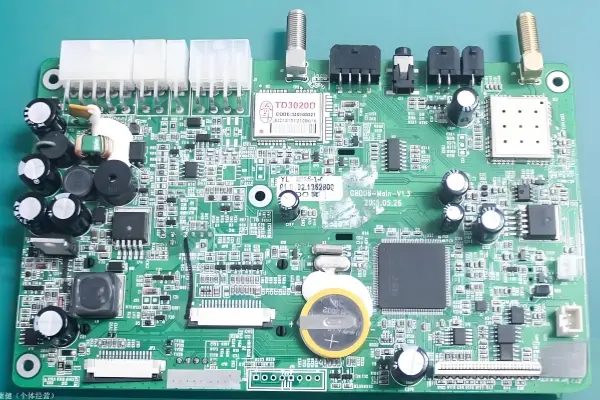
BGA Packaging & SMT: Ensuring Reliable Solder Joints
By PCBA PrototypePublished On: 2025-08-11Categories: Uncategorized0 Comments on BGA Packaging & SMT: Ensuring Reliable Solder Joints
By PCBA PrototypePublished On: 2025-08-11Categories: Uncategorized0 Comments on BGA Packaging & SMT: Ensuring Reliable Solder Joints

The Connection Between Technological Progress and Electronic Technology
Continuous advances in science and technology have made modern society closely connected with electronic technology. There are strict requirements for the miniaturization and lightweight of electronic products such as mobile phones, portable computers, memory devices, hard drives, CD-ROM drives, and high-resolution TVs. To achieve such goals, research must be done in manufacturing technologies and components. SMT (Surface Mount Technology) fits this trend. It lays a solid foundation for the miniaturization of electronic products.
In the 1990s, SMT entered a mature stage. But higher requirements were put forward for electronic assembly technology. Electronic products developed rapidly towards portability, miniaturization, networking, and multimedia. Among them, BGA (Ball Grid Array) packaging is a high-density assembly technology that has entered the practical stage. Solder joint quality plays a vital role in determining the reliability and performance of SMT components. So, the quality of BGA solder joints should be focused on. Thus, this article will provide some effective measures to ensure the solder joint quality of BGA components. In this way, the final reliability of SMT components can be achieved.
Introduction to BGA Packaging Technology
BGA packaging technology started as early as the 1960s. It was first applied by IBM. However, BGA packaging technology did not enter the practical stage until the early 1990s.
As early as the 1980s, people put forward higher requirements for electronic miniaturization and the number of I/O pins. Although SMT has the characteristic of miniaturization, it has stricter requirements for high I/O pin count, fine-pitch components, and lead coplanarity. But due to limitations in manufacturing accuracy, manufacturability, cost, and assembly technology, the minimum pitch of QFP (Quad Flat Package) components is 0.3mm. This limits the development of high-density components. In addition, fine-pitch QFP components have strict requirements for assembly technology. This makes their application face restrictions. So, component manufacturers turned to R&D on BGA components, which have more advantages than QFP components.

The limitation of fine-pitch components is that their leads are easy to bend, break, and get damaged. They put high requirements on lead coplanarity and installation accuracy. BGA packaging technology uses a new design thinking mode. That is, round or cylindrical solder balls are hidden under the package. So, the lead pitch is larger and the leads are shorter. Thus, BGA packaging technology can solve the problems of coplanarity and warpage that usually occur in fine-pitch components.
Therefore, the reliability of BGA components and the performance of SMT assemblies are better than ordinary SMD (Surface Mount Devices). The only problem with BGA components is that their solder joint testing is difficult. It is hard to ensure quality and reliability.
Solder Joint Issues of BGA Components
Up to now, reliable electronic assemblers, such as PCBCart, find welding defects of BGA components through electronic testing. Other methods to control the quality of the assembly process and identify defects during BGA component assembly include paste screening, AXI sample testing, and analysis of electronic test results.
Meeting quality assessment requirements is a challenging technology. This is because it is difficult to access test points under the package. In terms of defect detection and identification of BGA components, electronic testing is often not feasible. This increases the cost of defect elimination and rework to some extent.
In the process of detecting defects in BGA components, electronic testing can only judge whether the current is on or off after the BGA components are connected. If non-physical solder joint testing is implemented as an auxiliary, it will be beneficial to the improvement of the assembly process and SPC (Statistical Process Control).
BGA component assembly is a basic physical connection process. To confirm and control the quality of the process, it is necessary to know and test the physical elements that affect its long-term reliability. These include solder paste volume, alignment of leads and pads, and wettability. Otherwise, modifying based on the results of electronic testing is worrying.
Inspection Methods for BGA Assemblies
It is very important to test the physical characteristics of BGA component solder joints. It is also important to determine how to consistently contribute to reliable connections during assembly in process research. The feedback information provided by all tests is related to the modification of each process or solder joint parameter.
Physical testing can mark changes in the situation of solder paste screening and the connection of BGA components during reflow soldering. In addition, it can show the situation of all BGA components on the same circuit board and the board. For example, during reflow soldering, extreme humidity changes with cooling time. This can be reflected in the number of cavities and the size of BGA solder joints.
In fact, for the entire process of BGA component assembly, there are not many testing devices that can perform accurate measurements and quality inspections. Automatic laser testing equipment can test the solder paste printing situation before component installation. But they run at low speed. They cannot inspect the reflow soldering quality of BGA components.
X-ray detection uses devices. The solder paste on the pads shows a shadow image because the solder paste is above the solder joints. For non-collapsible BGA components, shadows can also be seen due to the pre-existing solder balls. This certainly makes it difficult to determine. This is because the shadow effect caused by solder paste or pre-existing solder balls prevents X-ray detection equipment from working. These devices can only roughly reflect the process defects of BGA packages. In addition, peripheral inspection also faces challenges such as insufficient solder paste or open circuits caused by contaminants.
Cross-sectional X-ray detection technology can overcome the above limitations. It can check the hidden defects of solder joints and show the connection of BGA solder joints.
Basic Defects of BGA Solder Joints
• Open Circuits
Due to pad contamination, open circuits always occur in non-collapsible BGA solder joints. Because the solder paste cannot wet the pads on the PCB (Printed Circuit Board), it will climb to the component surface through the solder balls. As mentioned above, electronic testing can determine open circuits. But it cannot distinguish whether the open circuit is caused by pad contamination or solder screening defects. X-ray detection equipment also cannot indicate open circuits. This is due to the shadow effect of pre-existing solder balls.
Cross-sectional X-ray detection technology can capture slice images between the pads of the component. Then, it can confirm open circuits due to contaminants. Because open circuits caused by contaminants result in a fine pad diameter and a relatively large component diameter, the difference between the component diameter and the pad diameter can be used to determine whether an open circuit occurs due to contamination. As for open circuits caused by insufficient solder paste, only cross-sectional detection devices can identify them.
• Voids
Voids in collapsible BGA component soldering are generated because flowing vapor is trapped at the eutectic point of the solder joint. Voids can be regarded as the main defect occurring in collapsible BGA components. During reflow soldering, flotation caused by voids focuses on the component surface. So, most solder joint failures also occur there.
The problem of voids can be eliminated by preheating and increasing the transient preheating time and lowering the preheating temperature during the reflow soldering process. Once voids exceed a certain size, quantity, or density range, reliability will definitely decrease. However, another school of thought holds that voids should not be restricted. Instead, their cracking and expansion should be accelerated. This is to find their failures as soon as possible and eliminate them.
Related Posts

PCBA Prototype
December 14, 2025
PCB Assembly
September 2, 2025