How to Choose PCB Core Materials
By PCBA PrototypePublished On: 2026-01-28Categories: PCB Design, PCB layout0 Comments on How to Choose PCB Core Materials
By PCBA PrototypePublished On: 2026-01-28Categories: PCB Design, PCB layout0 Comments on How to Choose PCB Core Materials
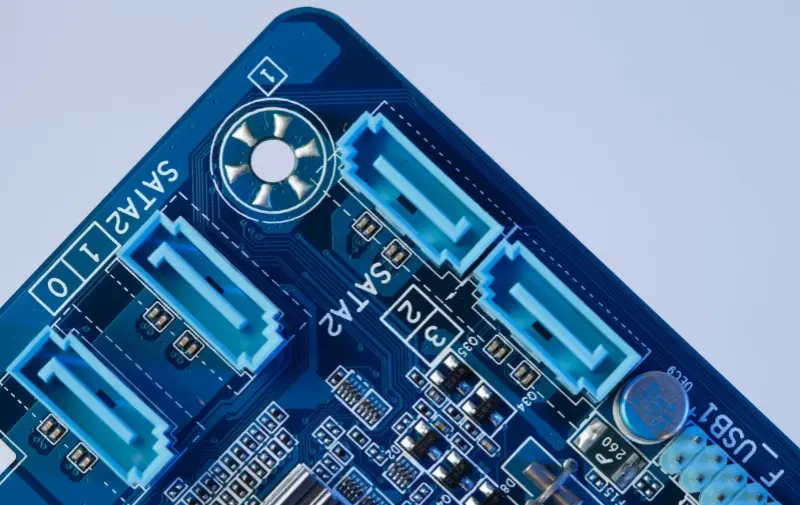
When a printed circuit board (PCB) maker gets a quote request for a multilayer design and the material instructions are missing or not clear, picking the PCB core thickness becomes a problem. Sometimes this happens because the mix of core materials used does not matter for the end result. If the total board thickness is met, the final user may not care about each layer’s thickness or type.
But at other times, performance matters more. Then thickness must be tightly controlled for the board to work its best. If the PCB designer states all needs clearly in the documents, the maker will know what to use and can choose the right materials.
What PCB designers should think about
It helps designers to know what materials are available and what is commonly used. That way they can set design rules that make building the PCB faster and correct. Below is a short description of the material types makers like to use. It also explains what materials a maker might need on hand to do quick turn jobs without slowing your project.

Know about laminate cost and stock
It is important to know that PCB laminate materials are sold and used as a “system.” Makers usually keep cores and prepreg from the same system in stock so they work together right away. In other words, a system is all the parts that make up a product, but parts may vary by thickness, copper weight, or prepreg style. Besides familiarity and repeatability, there are other reasons to stock only a limited set of laminate types.
Prepreg and core systems are formulated to work together. They may not work correctly with parts from a different product. For example, you would not use an Isola 370HR core in the same stack as Nelco 4000-13 prepreg. They might sometimes work together, but more often they will not. Mixing systems moves you into unknown territory where materials that behave one way in a homogeneous system do not behave the same when mixed. Careless or uninformed mixing of materials can cause serious failures. So, no maker will mix and match unless the mix is proven to work for that stack.

#image_title
Another reason to keep a narrow material stock is the high cost of UL certification. PCB makers usually limit certified materials to a small range. Makers will make boards with laminates they do not stock, but note they cannot give UL certification with QC documents for such boards. If you disclose this need early and agree with the maker, and the maker knows how to process the laminate system, this is fine for non-UL designs. For UL work, find a maker that stocks the materials you need and design to match that stock.
Greatpcb — UL-Certified PCB & PCBA
We offer UL-certified PCB/PCBA solutions with in-stock UL-approved laminates, ensuring stable quality and on-time delivery for global clients.
- Stocked UL Materials: Quick-turn production with standard laminates/prepregs
- Full QC Docs: Complete UL compliance records
- Engineering Support: IPC/UL material matching
IPC-4101D and foil construction
Given these facts, know two more things before you start the design. First, it is better to specify laminates by the industry standard IPC-4101D rather than by naming a product not everyone keeps in stock. Second, foil construction is the easiest way to build multilayers.
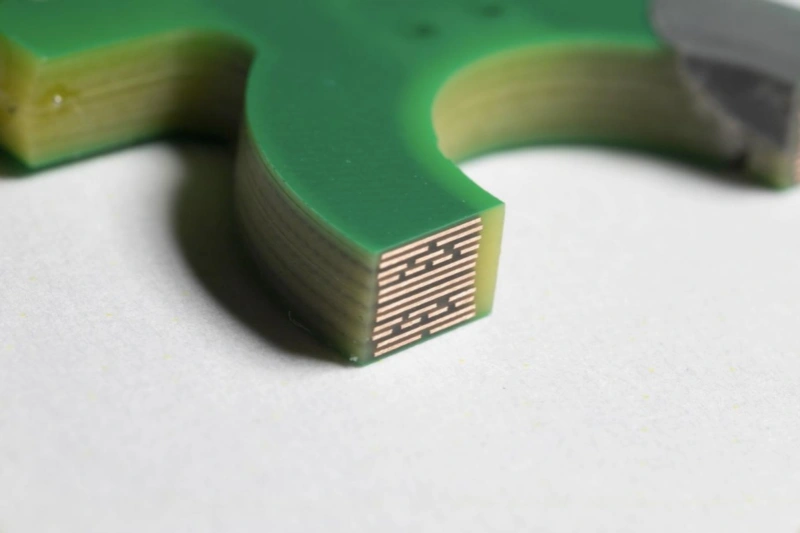
Foil construction means the outer layers — top and bottom — are made from a single copper foil and are laminated to the inner layers using prepreg. It may seem simple to build an eight-layer PCB from four double-sided cores. But it is better to use foil on the outside and then use three cores for L2-L3, L4-L5, and L6-L7. In other words, plan the multilayer stack so the number of cores equals (total layers minus 2) divided by 2. Next, it is useful to know some facts about core properties.
Cores are available as fully cured FR-4 with copper plated on both sides. Core thickness covers a wide range. The most common sizes are stocked more often. Remember these thicknesses, especially when you need a fast turn order. This helps avoid waiting for non-standard material to arrive from a distributor.
Common core and copper thicknesses
The core thicknesses most used to build a 0.062 inch thick multilayer are 0.005 inch, 0.008 inch, 0.014 inch, 0.021 inch, 0.028 inch, and 0.039 inch. A 0.047 inch core is also common because it is sometimes used to build two-layer boards. Another common core is 0.059 inch because it is used to make 0.062 inch two-layer boards, but that core is only suitable for thicker multilayers, such as 0.093 inch. For this article, we limit the range to cores that fit a final nominal thickness of 0.062 inch.
Copper thickness ranges from half ounce to three or four ounces, depending on the maker’s product line. But most stock is two ounces or less. Keep in mind that almost all stock uses the same copper weight on both sides of a core. Try to avoid designs that require different copper on each side of a core. That usually needs a special buy, may cost an expedite fee, and sometimes the distributor’s minimum order may block it.
For example, if you want 1 oz copper on a plane layer and plan to use H oz copper for the signal layer, consider making the plane H oz as well or increase the signal copper to 1 oz so the core uses the same weight on both sides. This only works if you still meet the electrical needs and you have enough board area to widen traces and spacing rules to meet the minimums for 1 oz on the signal layer. If you meet those conditions, it is better to use the same copper weight for both sides of the core. Otherwise, expect a few extra days for special delivery.
Building the dielectric stack
Once you pick a suitable core thickness and available copper weight, you use various prepreg sheets to fill the remaining dielectric positions until the needed total thickness is met. For designs that do not need impedance control, you can leave the prepreg choice to the maker. They will use their preferred “standard” version. On the other hand, if you do have impedance requirements, state them in the documents so the maker can adjust the amount of prepreg between cores to meet the required values.

Impedance control
Whether you need impedance control or not, do not try to mark the prepreg type and thickness at each position in the document unless you know how to do that well. Usually, such a detailed stack will need tuning. That can cause delays. Instead, show the core thickness for the internal layer pairs in your stack drawing and note “prepreg position as required for impedance and total thickness.” This lets the maker create the ideal stack to match your design.
Summary
Choosing a core size that matches existing stock is key to avoiding delays in fast-turn orders. Most PCB makers use multilayer structures similar to those of their competitors, based on the same cores. Unless the PCB is highly custom, there is no magic or secret build. It is worth learning which materials are preferred for each layer count and designing to match them where you can. There will always be exceptions for special needs, but in general, standard materials are best.
Practical notes and tips
If you have a firm need for a particular laminate product, state that need and the IPC reference number in your purchase documents. Give the maker time to confirm availability.
If you need UL certification, confirm the maker stocks the certified laminate before you design. A change late in the process can add time and cost.
For fast turn jobs, design with common core thicknesses and common copper weights in mind. This keeps the job in stocked material and reduces lead time.
If you are not sure about impedance, describe the target impedances and the layer pair assignment for signal traces. Let the maker choose the prepreg to meet the impedance and the overall thickness.
Avoid asking for different copper weights on the two sides of a single core. Ask whether the maker can meet the need from stock or if special ordering is required.
If you must mix different product systems, do tests first. Prove the stack-up works before you order production. Many failures happen when parts from different systems are mixed without testing.
A design path that helps production
When you create a multilayer design, use a clear stack drawing with these items: final board thickness, core thickness for each internal pair, copper weight per layer (if necessary), which layers are signal and which are plane, and the target impedance values for the critical nets. Add a note that prepreg placement will be set by the manufacturer to meet impedance and total thickness, unless you are an expert and can specify the exact prepreg sheets and thicknesses.
With this method, the manufacturer can pick cores and prepreg sheets from stock and make the board quickly. If you do specify exact prepreg types and thicknesses, know that the maker may need to buy non-standard materials. That can slow the job and raise cost.
Why foil construction helps
Foil outer layers reduce the number of cores needed and reduce the number of core-to-prepreg surfaces. They make lamination simpler. For many layer counts, foil outside with cores inside is a standard approach. It reduces surprises in copper balance and in lamination behavior. That is why many makers prefer it.
On quality and repeatability
Using standard systems that a maker knows improves repeatability. The maker can rely on known cure schedules, press cycles, and testing results. Unknown mixes need extra work and testing. That effort costs time and money, and it may not be covered if you did not agree to the extra steps up front.
Final thought
Designers who learn the preferred stock materials and plan their stack to match can get faster turnaround and fewer surprises. If you must use special materials, talk to the maker early. Share the exact product data and allow time for proofing. In short, match your design to the maker’s stocked systems when you can. When you cannot, be ready to prove and accept the extra work needed to get the board to spec.
Table of Contents
- Mida peaksid trükkplaatide disainerid arvestama
- Tea laminaadi hinna ja laoseisu kohta
- Greatpcb — UL-sertifitseeritud trükkplaadid ja trükkplaadid
- IPC-4101D ja fooliumkonstruktsioon
- Tavalised südamiku ja vase paksused
- Dielektrilise virna ehitamine
- Impedantsi juhtimine
- kokkuvõte
- Praktilised märkused ja näpunäited
- Disainitee, mis aitab tootmist
- Miks fooliumkonstruktsioon aitab
- Kvaliteedi ja korduvuse kohta
- Lõplik mõte