
Understanding Flexible Circuit Boards and Their Role in Modern Electronics
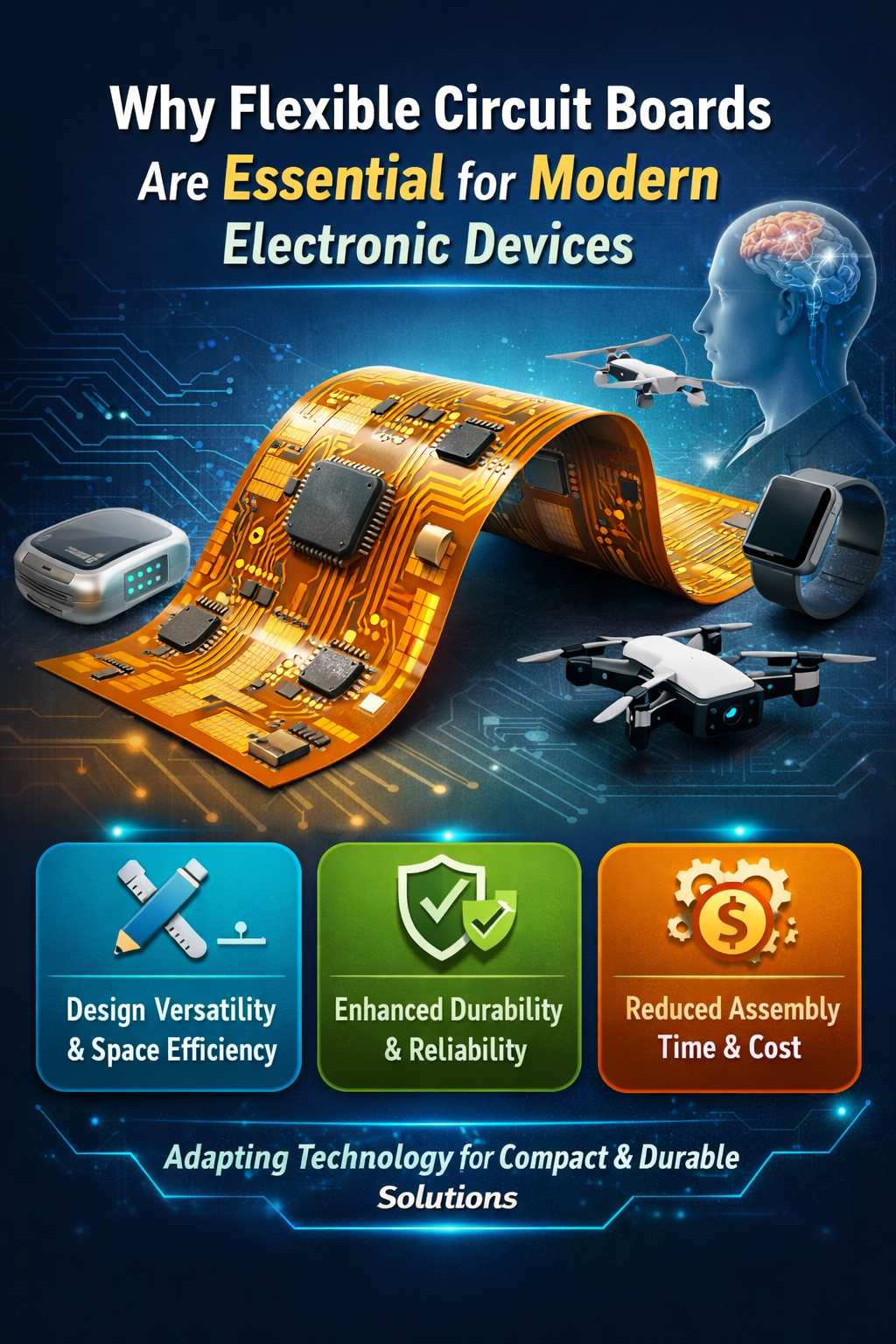
In today’s fast-moving technological landscape, electronic devices are steadily becoming smaller, lighter, and easier to carry. From wearable technology to medical and electrical equipment, products are now designed to be compact yet strong enough to perform reliably in demanding environments.
One innovation that has strongly supported this shift is the flexible circuit board. As people notice how modern devices have become more portable and durable, a common question arises: why is there a growing need for flexible circuit boards?
To answer this, this post aims to explain not only how compact and portable devices benefit from this technology, but also the key reasons behind its increasing use.
So, without further delay, let’s begin.
Flexible circuit boards
What is a flexible circuit board?
A flexible circuit board is specially designed to bend, twist, and adapt to different shapes while continuing to function effectively. Unlike traditional rigid boards, it offers a high level of adaptability, making it suitable for modern applications where space and movement are critical.
Because of this flexibility, such boards are widely used in advanced electronic systems where performance and reliability must be maintained even under physical stress.
Now that the concept is clear, let’s move on to the main reasons for using flexible circuit boards.
Reasons Why There Is a Need for Flexible Circuit Boards
The reasons are many, but some of the most important ones include the following:
Better design flexibility and efficient use of space
One of the strongest advantages of flexible circuit boards is their exceptional design flexibility. These boards can be shaped to fit complex layouts and tight spaces, allowing designers to create compact products without compromising functionality. This results in efficient designs that are well suited for modern electronic devices.
Improved durability and reliability
Another key reason for choosing flexible circuit boards is their durability. They are built to withstand repeated bending and movement. Rigid-flex PCB designs further enhance reliability by combining flexible circuits with rigid sections, providing better structural support and long-term performance.
Reduced assembly time and overall cost
Using flexible circuit boards can also help lower assembly time and manufacturing costs. Since fewer connectors and mechanical parts are required, the overall system becomes simpler and lighter. This efficiency helps reduce material usage and production effort.
As a result, many manufacturers now provide end-to-end PCB production services, covering design, prototyping, and large-scale manufacturing.
Conclusion
The points discussed above clearly show how electronic devices continue to evolve alongside technological advancements. Flexible circuit boards play an important role in this progress by supporting compact designs, enhancing durability, and improving overall performance.
For those seeking deeper insights or professional guidance on flexible circuit boards, connecting with experienced PCB service providers such as GREATPCB can help in understanding suitable solutions based on specific requirements.
Table of Contents
Related Posts

PCBA Prototype
March 27, 2026
PCBA Prototype
March 22, 2026