
What Is Flux in PCB Soldering? Types, Uses, and Safety
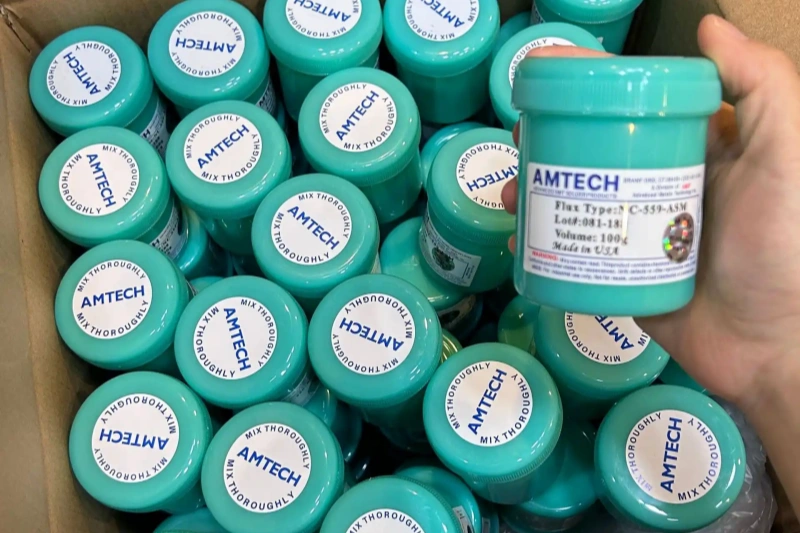
Soldering Flux
Soldering flux is a chemical agent used in soldering to prepare and protect metal surfaces. It helps join metals by cleaning surface oxides and preventing new oxidation during heating[1][2]. Flux improves the flow of molten solder by reducing its surface tension, allowing the solder to wet and spread evenly across pads and leads[3][1]. In practice, flux is applied in various forms – for example as a solid core in solder wire, as a liquid spray or gel, or even as a gas/vapor[2]. These forms all deliver reactive chemicals (such as pine resin or organic acids) that become active when heated. When activated, flux removes oxides and other contamination and creates a temporary protective layer so that the clean metal does not re-oxidize before the solder flows[1][4].
Flux has several key functions in soldering: it removes metal oxides, prevents further oxidation of the surface during heating, and enhances wetting by the solder[1][3]. This combination of effects leads to stronger, more reliable solder joints. For example, one source notes: “Flux is an essential component in electronic soldering. It removes oxides, promotes wetting, enhances solder flow, and prevents re-oxidation, all of which contribute to strong and reliable solder joints”[1]. In addition, flux can help conduct heat into small joints and may remove light oils or contaminants on the metal, further improving solderability[2][1]. For instance, flux aids soldering by “removing oxides from metal surfaces” and “prevent[ing] re-oxidation” so that solder can “spread evenly across pads and component leads”[4][1].
Flux Classifications
Fluxes are classified by their chemistry and activity level. The most common system is the IPC J-STD-004 standard (formerly MIL or QQ standards), which divides fluxes into four basic groups by major composition: RO (rosin-based), RE (resin or synthetic resin), OR (organic), and IN (inorganic)[5]. In other words, under IPC-J-STD-004 a flux is one of:
- RO (Rosin)– Flux based primarily on pine resin.
- RE (Resin)– Flux based on synthetic or natural resins (other than pure rosin).
- OR (Organic)– Flux whose major solid component is an organic acid or similar.
- IN (Inorganic)– Flux containing inorganic acids or salts as main ingredients.
For example, Chemtronics explains the IPC-J-STD-004 categories: “Types: RO (rosin), OR (organic), IN (inorganic), RE (resin/synthetic resin)”[5]. Fluxes are also given an activity level (e.g. low, moderate, high) and a halide content (0 for none, 1 for some) in this scheme. For instance, “ROL0” means a Rosin flux (low-activity, no halide)[6].
Each category has distinct behavior:
- Organic (Water‑Soluble) Fluxes:These fluxes are based on mild organic acids (such as citric or lactic acid) mixed with solvents. They are moderately active cleaners: stronger than pure resin flux but less corrosive than inorganic acids[7]. Organic acid fluxes are effective at removing oxide films and are typically water-soluble (hence the name)[7]. They tend to leave more residue than “no-clean” fluxes, so boards soldered with water‑soluble flux are usually rinsed or cleaned after soldering. For example, one reference notes: “Organic acid flux… made from organic acids such as citric, lactic and stearic acids… [are] effective in removing metal oxides. They also have high soldering activity and are easy to clean”[7].
- Inorganic Acid Fluxes:These use strong inorganic acids or salts (for example hydrochloric acid, zinc chloride, ammonium chloride, etc.). They provide very aggressive cleaning (they are “highly active”) but are extremely corrosive. In practice they are usually avoided for electronics. One source describes inorganic flux as “the strongest corrosives, … consist of chlorinated acids (ZnCl₂, NH₄Cl, HCl) … active from room temperature to 300–400°C”[8]. Inorganic flux is most suitable for soldering tough metals (copper, brass, stainless steel) in plumbing or heavy-metal work, but if used on a PCB the board must be thoroughly cleaned immediately to remove the corrosive residues[8]. In short, inorganic acid fluxes clean very well but can quickly damage circuitry if left in contact.
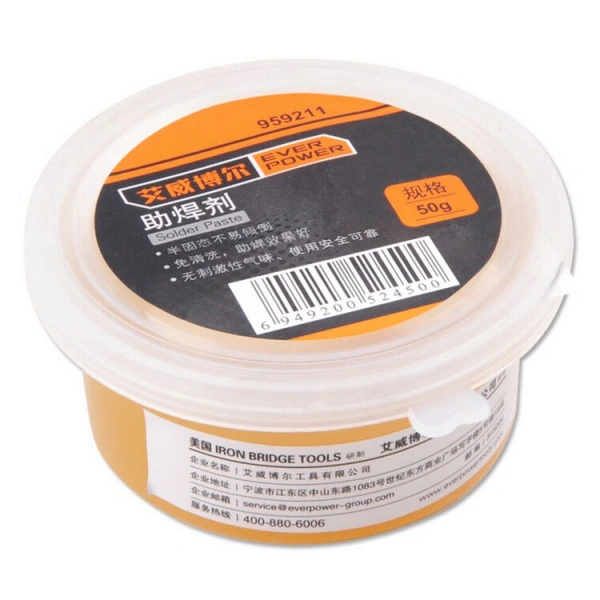
- Rosin/Resin Fluxes:Rosin flux is the classic electronics flux made from pine tree resin. In its pure (inactive) form it is electrically inert. When heated above its melting point (~125°C) the rosin activates and helps clean the joint. Standard rosin flux (Type R) has no added activator; “Rosin Mildly Activated” (RMA) and “Rosin Activated” (RA) fluxes contain progressively stronger cleaning agents. For instance, Chemtronics notes: “Rosin flux, derived from pine tar resin, is the most basic soldering flux… When dissolved in a solvent… and used without activators, it is classified as Type R rosin flux. Activators can be added… including RMA (rosin mildly activated) and RA (rosin activated)”[9]. Rosin flux works well on clean or lightly oxidized surfaces; RMA and RA are used for heavier oxidation. Importantly, once solidified, rosin is non-corrosive and electrically non‑conductive. One source says rosin flux “is acidic, but when it solidifies, it becomes inert and can stay on the weld surface without damaging”[10]. This is why rosin-based fluxes are widely used in electronics: they are easy to handle and the residue does not harm circuits (although many engineers still clean it off for appearance). Modern “no‑clean” fluxes are usually based on rosin or similar resins but formulated to leave minimal residue[11][12].
Types of Flux by Application
In practical soldering, flux comes in various formats. Common types include:
- Liquid Flux:A flowable flux (often an alcohol or water-based solution). It is usually applied by brushing, spraying, foaming or use of a flux pen. Liquid flux cleans the surfaces immediately before soldering. For example, wave soldering uses liquid flux sprayed onto the PCB just before entering the solder wave[13]. Chemical companies note: “Liquid flux is a common form… often thinned with isopropyl alcohol… applied to solder joints or components before soldering to clean surfaces, improve solder flow, and enhance joint quality”[14]. It is also widely used in hand soldering (applied with a brush or pen) and in selective soldering machines.
- Flux Core (Cored Solder):Here the flux is contained in a hollow core within solder wire. When the solder melts, the flux is released and cleans the joint as the solder flows. This is convenient for hand soldering because it combines solder and flux. One source explains: “Flux core solder is a solder wire with a hollow core filled with flux. As the wire melts, the flux is released, cleaning the surfaces and aiding solder flow”[15].
- Solder Paste:For surface-mount work, solder paste is used. Solder paste is a semi-solid mixture of fine solder alloy particles and flux (usually a rosin or synthetic flux vehicle). The flux in paste cleans the pad and helps solder wet the metal when heated. Chemtronics notes: “Solder paste is a semi-solid mixture of solder alloy particles and flux… It helps clean solder pads and components, promote wetting, and hold components in place prior to reflow soldering”[16].
- Tacky or Gel Flux:These are thicker, gel-like fluxes that adhere well to vertical or overhead joints. They prevent the flux from running off before soldering. (For example, when soldering a vertical wire, a tacky flux keeps in place.) One resource notes: “Tacky flux… has a thicker, gel-like consistency… well suited for applications where flux must not run or drip”[17].
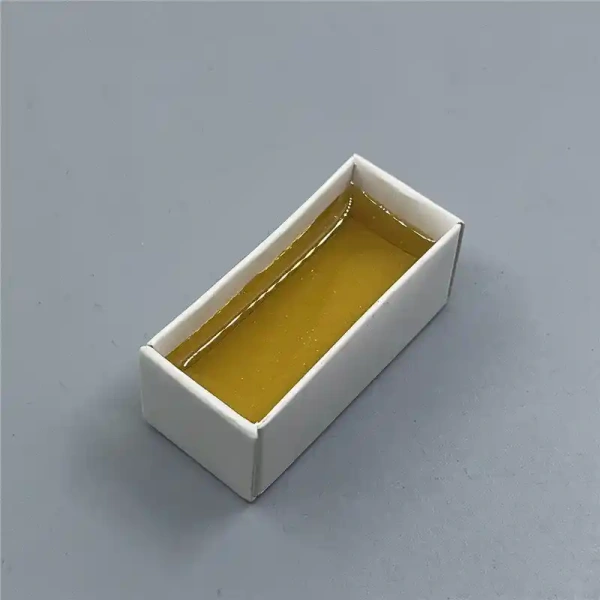
- Paste Flux:Sometimes called solder paste flux, this is like a thick solder paste but without metal solder particles. It is a flux carrier paste used to apply flux to a large area or in rework.
Flux Selection
Choosing the right flux depends on the metals to be soldered and the cleaning/throughput requirements. In general, the goal is to ensure a good solder joint by removing oxides and allowing the solder to wet the metal. As noted above, fluxes range from mild (no-clean rosin flux) to aggressive (water-soluble organic or inorganic acid flux). A no-clean rosin flux might leave behind a small, harmless residue, while a water-soluble or inorganic flux requires thorough cleaning afterwards.
A key selection criterion is residue and the need for cleaning. High-activity flux (e.g. inorganic or highly activated rosin) may give better immediate solderability but demands that the circuit be washed after. No-clean fluxes (typically ORL0 or ROL0 in the IPC scheme) require little or no cleaning and are used when cleaning is difficult or undesirable[12][11]. However, no-clean residues, while benign, can be slightly sticky or dust-attracting over time[18]. By contrast, water-soluble flux (organic acid flux) gives very active cleaning and must be rinsed off completely to avoid corrosion[7][19].
In electronics work, rosin-based fluxes (rosin or low-activity “no-clean” types) are most common because they balance performance with low corrosion risk. If a circuit board is already coated in a rosin solution (as a solderability enhancer), extra flux may not be needed when soldering components. For hand soldering small parts or component tinning, rosin (pine resin) flux is usually recommended. In contrast, paste or flux-oil types (often containing stronger activators) are generally reserved for larger joints or non-electronic hardware, since their residues can be corrosive to fine electronics[20][8].
Soldering with Flux: Application Steps
When soldering by hand, the typical procedure is: (1) Clean the metal surfaces to be joined (wipe with alcohol or solvent) to remove dust, grease, and heavy oxides. (2) Apply flux evenly on the joint or tin the wire tip with flux. (3) Heat the joint with the soldering iron. The flux should melt, flow over the surfaces, and chemically remove the oxide layer. (4) Feed solder into the joint. The molten solder will now be able to bond to the clean metal. Finally (5) Clean the joint if required (removing any remaining flux residue once it has cooled) to ensure reliability[20].
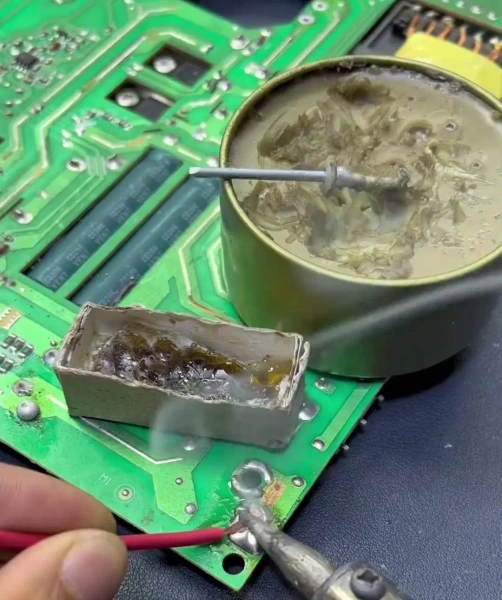
For example, one soldering guide lists these steps: “1. Before using flux, clean the metal area with solvent… 2. Apply flux evenly to the surface… 3. When the iron tip is hot, heat the area with flux, which melts and spreads over the surface, removing the oxide film… 4. Once the flux has evaporated, insert and melt solder wire to bond before re-oxidation”[20]. In practice, this means you should not solder directly on a dirty or oily pad – first clean and flux it – and you should apply solder shortly after the flux has done its job and before the metal re-oxidizes. It is generally good practice to wipe away any visible flux residue (with alcohol or a commercial flux cleaner) after soldering, especially if the flux is acidic. For example, rosin-based flux residue can be removed with 90–99% isopropyl alcohol[21]. Water-soluble flux, which is very corrosive, must be thoroughly rinsed with hot water or a special cleaning agent immediately after soldering[19].
In mass soldering processes the application method varies. In wave soldering, the circuit board is typically preheated, then a spray of liquid flux is applied to the leads and pads before the board passes over the solder wave. As one source explains: “Fluxes used for wave soldering… are sprayed onto the PCB before passing through the solder wave. After application, the flux cleans the components to be soldered, removing any oxide film that has formed”[13]. In reflow soldering, flux is usually built into the solder paste, so that no separate flux spray is needed; the flux in the paste holds components in place and interrupts oxygen, preventing oxidation until soldering is complete[22].
Formats of Flux
Some common flux formats include:
- Bottled Liquid Flux:Usually applied by brush, pipette, or flux pen. Good for local application or touch-ups. Many wave-soldering lines spray liquid flux over large boards. As noted above, bottled liquid flux is often rosin or synthetic resin based and cleans well[14].
- Flux Paste:A thick, gel-like flux. Often used for hand-soldering large joints or pipes. (Note: many “pipe flux” products are strongly acidic and not suitable for PCB work without careful cleaning.)
- Flux Pens and Sticks:Solid flux sticks or felt-tip pens impregnated with flux. Useful for precise application on components or leads.
- Flux in Solder Wire (Flux Core):As mentioned, solder wire with a flux core releases flux as it melts[15].
- Flux in Solder Paste:Used in SMT assembly; contains flux to aid soldering as described above[16].
Safety and Storage
Flux usually contains solvents (often alcohols) and activators that can be hazardous. Flammability: Many fluxes use volatile solvents like isopropanol or ethanol. They should be handled in well‑ventilated areas away from open flames or sparks. Always cap flux containers when not in use to prevent vapor buildup. Shelf Life: Solvent-based flux can evaporate over time, changing its composition. A typical shelf life is on the order of 1–2 years if sealed and stored properly. For example, Indium’s data sheet notes a “shelf life [of] 2 years in an unopened container stored at less than 32.2°C”[23], and advises that once opened one should “replace [the] cap to reduce alcohol evaporation and store in a cool, dry environment”[23]. In other words, keep flux in a cool (roughly 18–25°C), dry place and tightly sealed to avoid solvent loss. The Chinese guideline of storing at ~18–25°C and 75–85% humidity is consistent with this advice.
Avoid Contamination: Do not let flux (or fingers) contaminate bare circuit surfaces before soldering. Protect component leads and PCBs from oils, sweat, or grease. After soldering, keep the board clean until the flux has fully dried or been cleaned off, to prevent finger oils from sticking to residue.
Application on Wave Soldering Machines: In a wave or spray system, flux is kept in a sealed tank and is continuously pumped. The spray amount and pressure must be set for the specific machine and product. Over time, insoluble solids may settle at the bottom of the flux tank. To maintain performance, machine operators should clean the tank and filters regularly (e.g. weekly) and replace excess flux solids. (If the flux concentration increases due to solvent evaporation, the flux can be thinned or replaced.)
Preheat Temperatures: Typical PCB soldering processes preheat the boards before applying the solder wave. For single-sided PCBs, preheat temperatures might be on the order of 60–110°C on the top side and 60–120°C on the bottom side for tin-lead solder[24]. For lead-free wave soldering, higher preheat is common; for example, one flux datasheet recommends about 85–120°C on the PCB surface and 85–125°C on the bottom for lead-free alloys[24]. (The Chinese guideline of ~60–90°C top and 75–105°C bottom for single-side, and ~70–95°C top and 85–120°C bottom for double-side, is in a similar range.) Proper preheat helps activate the flux and promotes smooth solder flow.
Cleaning After Soldering: If the flux is not a true “no-clean” formula, the soldered assembly should be cleaned to remove residue. In general, rosin flux residues are removed with alcohol or commercial flux removers. Water-soluble fluxes require a hot-water rinse (often with a mild alkali or saponifier) to neutralize the acids[19]. One guide emphasizes: “Water-soluble flux is very aggressive… Its residues are very corrosive and must be completely removed”[19]. Even no-clean fluxes, while designed to be non-corrosive, can sometimes be washed off for improved testing or coating adhesion[25].
Summary of Key Points
- Function:Flux cleans and activates metal surfaces, enabling proper solder wetting and strong joints[1][26]. It also protects the metals from re-oxidizing until solder flows.
- Forms:Flux comes as solid cores (solder wire), liquid solutions, pastes, sprays, or incorporated into solder paste or wire[2][27].
- Types:IPC classifies flux as RO (rosin), OR (organic), IN (inorganic), or RE (synthetic resin)[5]. In practice, “organic” usually means moderate-activity water-soluble flux (citric/lactic acids)[7], and “rosin” flux refers to pine-resin flux (R, RMA, RA)[9]. Highly corrosive inorganic acid fluxes exist but are generally for non-electronic use[8].
- Usage:Always apply flux to clean metal surfaces before soldering. In solder paste reflow, flux is built into the paste[22]; in wave soldering, flux is sprayed on boards beforehand[13]; in hand soldering, flux is painted or wire-tinned on joints. Follow process parameters (contact time, preheat, conveyor speed) as recommended for each flux[24].
- Safety/Storage:Handle flux (especially solvent-based types) with ventilation and fire precautions. Store it sealed, cool and dry to prevent solvent loss and contamination[23]. Observe any shelf-life or open-container guidelines (often 1–2 years sealed)[23]. Finally, after soldering wipe or wash off any active flux residue to avoid long-term corrosion or electrical leakage.
Related Posts
PCBA Prototype
September 8, 2026
PCBA Prototype
August 7, 2026