
AI-powered PCB Manufacturing
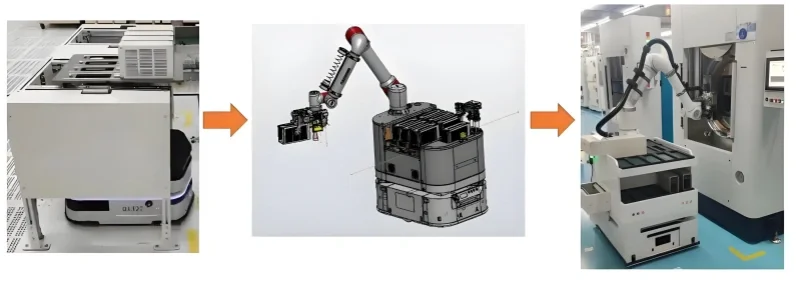
Manufacturing began with human labor. Later, factories added machines. The machines made work much faster. Now manufacturing will take another big step. The new lead is artificial intelligence, or AI. AI may be the next edge to raise productivity. AI can boost human skill and help run business tasks better. AI is not new. Still, it has only lately come into focus. Many people now ask how AI can help firms make more money and win more market share.
AI works by handling large amounts of data and finding patterns in the data. AI can do production tasks with high precision. AI can raise human output. AI can make our work and life better. AI grew fast because compute power grew. Better compute lets better learning methods work well. So today compute power is strong. AI moved from a future idea to a useful and live technology.
A global manufacturing survey from McKinsey & Company shows that AI is increasingly used in predictive maintenance, production scheduling, and process optimization across modern factories.
AI changes PCB making
AI is changing PCB manufacturing like it changes other fields. AI can simplify production steps and raise productivity. AI can help machines talk to human staff in real time. That could break old ways of making boards. AI brings many benefits. These include:
better performance
better asset management
less scrap
better supply chain control
For one example, AI can be built into pick-and-place machines. The AI can decide how to place each part. This can raise placement accuracy. It can cut the time for assembly. That drops cost. AI control can cut material waste. In short, human designers can use AI to make boards faster and cheaper.
Another gain is testing. AI can check where defects often appear. Then it can inspect those spots fast. AI can also fix problems in real time. That saves the maker a lot of cost.
What it takes to use AI well
To make AI work well in PCB making, you need deep know-how in both PCB making and AI. You must know the tech steps in the factory. For instance, defect classification is key for automated optical inspection. AOI machines can send images of bad PCBs to a multi-image checking station. That station can link over the internet. Then it can sort defects into fatal or allowed types.
Besides accurate data, another need is close teamwork between AI vendors and PCB makers. AI vendors must know the PCB process well. They must build systems that match real factory needs. It also matters that AI vendors invest in R&D. They must deliver fresh, strong, and efficient solutions. If done right, AI will help the business in three main ways:
reshape the business model and process — with smart automation, process steps get better
unlock trapped data value — AI can study data, find trends, and give insights
change how people and machines work together — AI lets people spend more time on creative tasks
| Factory | SMT lines | Monthly PCB Area (m²) | Monthly PCB Units | First Pass Yield (%) | Final Yield (%) | AOI detection rate (%) | DPM | Avg Lead Time (days) | On-time Delivery (%) | Scrap Rate (%) | AI Inspection Accuracy (%) |
|---|---|---|---|---|---|---|---|---|---|---|---|
| Shenzhen Factory | 6 | 12000 | 200,000 | 92.5 | 97.8 | 99.3 | 1200 | 7 | 98.5 | 1.8 | 98.7 |
| Dongguan Factory | 4 | 8000 | 120,000 | 90.0 | 96.0 | 99.0 | 1800 | 10 | 97.0 | 2.5 | 97.5 |
| Huizhou Factory | 3 | 5000 | 80,000 | 88.0 | 95.0 | 98.5 | 2400 | 12 | 95.5 | 3.2 | 96.8 |
| Total / Average | 13 | 25,000 | 400,000 | 90.8 | 96.9 | 99.0 | 1,600 | 9 | 97.0 | 2.5 | 97.7 |
AI enables smart end-device PCB design. The key is to move from “experience-driven” design to “data-driven” design. AI does this with automatic placement and routing, faster simulation, defect prediction, and design-for-manufacture (DFM) links. The result is much shorter cycles, better performance, and higher yield. This fits dense, high-speed, and high-reliability end devices. Below I give a practical guide with core scenes, tech paths, case studies, key steps, and trends.
1. Core use cases and value
I list common design steps, the pain points, the AI fix, and real gains.
Layout & routing
Pain: humans take long time, crosstalk and impedance are hard to control.
AI fix: reinforcement learning plus physics-aware AI plan layout and routing, and tune SI (signal integrity), PI (power integrity), thermal, and EMI together.
Real gain: a 12-layer board routing time drops from 3 days to 2 hours, crosstalk down 30%, impedance within ±3%.
Simulation & validation
Pain: classic EM simulation is slow (hours).
AI fix: neural nets replace some heavy math, do pre-sim and real-time checks.
Real gain: simulation 10–100 times faster, catch over 70% of signal or power risks early.
DFM / DFA (design for manufacture / assembly)
Pain: many defects in mass run, rework rate high.
AI fix: learn from history, warn of cold joints, copper peel, hole offset in real time.
Real gain: production defect rate falls more than 30%, board yield up to 95%+.
Power / thermal design
Pain: large ripple, uneven heat.
AI fix: AI can tune PDN (power distribution network) and copper or shield layout.
Real gain: power ripple ≤ 20 mV, thermal resistance down 15%, AI inference accuracy up 15%.
High-density integration
Pain: routing congestion, small volume.
AI fix: optimize HDI, rigid-flex, and 3D routing.
Real gain: routing density up 50%, volume down 40%, signal delay ≤ 50 ns.
2. Key technology paths and toolchain
2.1 Physics-driven AI placement and routing (core breakthrough)
Basic idea: treat PCB as a constrained optimization task. The AI iterates under rules of electromagnetics, heat, and manufacturing. The AI does not simply copy past designs. It learns to solve the constrained problem.
Tool matrix: commercial and new tools include:
Cadence Cerebrus (used for high-speed signal optimization)
Zuken CR-8000 (system-level co-design)
Siemens Valor NPI (DFM integration)
Quilter AI (physics-driven, 27 hours for 8-layer board)
JITX (auto generate PCB from schematics)
SailWind (full-chain local collaboration)
Key steps for use:
Define the constraints: SI (for example MIPI 4 Gbps isolation), PI (ripple ≤ 20 mV), DFM limits (min trace/space, drill precision).
Partition and layer strategy: AI groups modules (processor, RF, power). Keep >2 mm between high-speed and analog traces. Use shielded twisted pairs and grounded copper to control crosstalk.
Multi-solution output: let AI give 3–5 layout options for engineers to pick. Keep control of key nodes.
2.2 Simulation and validation acceleration
AI pre-sim: use CNNs or Transformers to replace parts of 3D EM simulation. This gives fast EMI and crosstalk checks. Only critical nets get the full fine-grain sim.
Real-time compliance check: tools like the ones above can run BRCE checks as you design, so you fix rules on the fly and cut rework.
Coupled thermal-electric-EM optimization: AI finds hot spots and tweaks copper area, via count, and heat paths. For example, 2 oz copper and multiple power planes can support 80 A current if AI balances the layout.
2.3 DFM and quality closed loop
Defect prediction: AI trains on AOI images and warns of pad shift, soldermask bubbles, and other problems, with >99.5% detection rate.
Process fit: link to local manufacturing rule library (e.g., min hole 0.1 mm, min trace 0.08 mm) so the design is ready for production.
Closed loop: feed production defect data back to the AI model. This raises prediction accuracy and can push production yield from 85% to 98%+.
2.4 High-density and anti-interference design
Structure optimization:
HDI third-order blind/buried vias: routing density up to 200 tracks/cm², integrate 8 AI chips, compute density 20 TOPS/cm².
Rigid-flex: flexible segments link rigid boards, 3D routing cuts connectors by 60% and shortens signal path by 30%.
Anti-interference for AI chips and RF modules:
Signal isolation: high-speed lines like MIPI CSI-2 should use shielded twisted pair; keep ≥2 mm to analog lines; crosstalk ≤ 15 mV.
Power filtering: use common-mode choke + ferrite beads + 10 μF tantalum + 0.1 μF MLCC; keep ripple ≤ 20 mV.
RF shield: metal cans with multi-point grounding can cut interference by 80%.
3. Engineering case studies
Case 1: Industrial edge gateway PCB (AI + high density + anti-interference)
Need: AI vision inference (10 TOPS), 5G link, robust in industrial power swings (±30%).
AI plan:
Layout: AI auto partitions CPU/RF/sensors, isolate high-speed and analog, use shielded twisted pairs.
PDN: common-mode choke + ferrite beads + mixed capacitor filter to keep ripple at 18 mV.
Structure: HDI second-order blind/buried vias, routing density 180 tracks/cm², shrink volume by 35%.
Result: AI inference accuracy rose from 82% to 97%. Mass yield 98.2%. Design time cut from 4 weeks to 1 week.
Case 2: Foldable device rigid-flex PCB
Need: thin (≤ 2 mm), bending life 100k cycles, stable signal (delay ≤ 50 ns).
AI plan:
Rigid-flex: flexible zone of polyimide 0.3 mm links rigid mainboard. AI optimizes copper in bend area to avoid cracking.
3D routing: cut connectors by 60% and shorten signal path by 30%, delay 42 ns.
Result: folding life 120k cycles, signal integrity up 20%, weight down 25%.
4. Steps to roll out and pitfalls to avoid
4.1 Phased rollout plan
Pilot (1–2 months)
Goal: test single-module AI tools.
Action: pick 1–2 projects, use the AI layout and DFM tools, compare time and performance.
Deliverable: tool report + before/after data.
Process integration (3–6 months)
Goal: fold AI into the whole chain.
Action: build a loop “schematic → AI layout → sim → DFM → production”, link EDA and MES.
Deliverable: standard AI design flow + rule library.
Capability build (6–12 months)
Goal: custom AI models.
Action: train models on firm data for defect prediction and fast sim.
Deliverable: private AI model + internal design guide.
4.2 Key pitfalls
Incomplete constraints: you must set SI/PI/DFM targets (for example impedance ±5%, min trace 0.08 mm). If not, AI may give a design that meets rules but cannot be made.
Too much AI reliance: keep manual checks for key nodes (BGA fanout, power entry). Let AI do 90% of repeat work and let engineers keep focus on system innovation.
Poor data quality: DFM models need ≥1,000 sets of defect data. Simulation models must cover high-speed, RF, and power cases. Bad data -> bad output.
Tool islands: choose AI platforms that integrate with Cadence, Zuken, or Altium. This cuts data handover loss.
How AI is used across our production lines (practical implementations)
(Place this section immediately after the KPI table — readers can refer to KPIs while reading the use cases.)

Smart AOI & Defect Classification
Implementation: AOI images route to edge inference servers. A CNN model classifies defect type (cold joint, solder bridge, pad shift, copper peel, hole offset). Flagged images show AI score + suggested action for the operator.
Expected benefits: detection & classification accuracy up to 97–99%, human review time cut by 40–70%, DPM reduced significantly.
Predictive Maintenance
Implementation: collect vibration, temperature, current, and log streams from pick-and-place, reflow ovens, and wave solder stations. Train LSTM/Transformer models to spot fault precursors. Alerts go to maintenance with recommended actions.
Expected benefits: unplanned downtime falls by 30–50%; MTTR shortens; throughput rises.
Closed-loop SMT Parameter Optimization
Implementation: AI analyzes placement offsets, tombstoning, and reflow profiles. It recommends conveyor speed, nozzle pressure, or reflow curve adjustments; engineers validate before automatic tuning.
Expected benefits: FPY up by 2–6%; rework rate drops; SMT throughput improves.
DFM Integration & Production Feedback Loop
Implementation: integrate AI-driven DFM checks into the CAD-to-fab flow so designs are validated against local process limits. Production defects feed back into the model (closed-loop learning).
Expected benefits: first-time NPI success rate rises; production yield climbs; fewer design-to-manufacture iterations.
Demand & Material Forecasting
Implementation: time-series forecasting for material usage and machine allocation using historical orders and seasonality signals.
Expected benefits: reduce stockouts, lower inventory carrying, stabilize lead times.
Energy & Line Efficiency Optimization
Implementation: AI schedules non-critical tasks to off-peak energy periods and optimizes line balancing.
Expected benefits: energy cost savings (5–15%), improved OEE.
Final notes
AI is not a magic box. It is a tool that works best with clear rules, good data, and close teamwork between AI vendors and the factory. Start small, show fast wins, then scale. Keep engineers in the loop, and build a data loop from production back to model training. With the right steps, AI can cut time, lift yield, and let teams build denser and more reliable PCBs for modern devices.
The table is a realistic industry-based sample. If you provide your actual monthly reports, I will replace the sample numbers and produce a finalized report with timestamps and visuals.
Key KPIs: FPY, final yield, DPM, AOI false positive/negative rates, OTD, SMT throughput, MTTR/MTBF, and cost per board. Success is often visible within weeks for AOI and months for process optimization.
- Non-intrusive AI (edge inference for AOI or advisory outputs) is low risk. Closed-loop automatic control needs staged validation and safety checks. Start small (one line) then expand.
For AOI/defect models, at least 1,000 labeled defects is recommended. For predictive maintenance, 2–6 months of telemetry may suffice; more data improves model robustness.
Related Posts
PCBA Prototype
March 10, 2026