
Double-Sided Aluminum PCB Guide: Cost, Lead Time & IPC Class 2 Rules
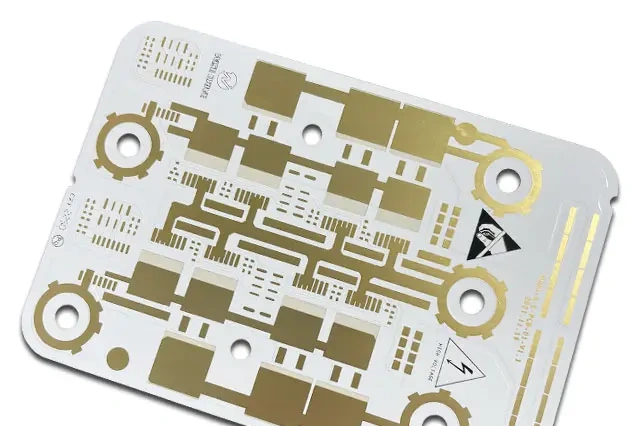
Double-Sided Aluminum PCB: The Engineer’s Complete Guide to Thermal Performance, Cost, and Reliability
If you’re designing high-power LED lighting, motor drives, or EV chargers, a double-sided aluminum PCB (also called a true double-sided MCPCB) is likely your best thermal solution. Unlike standard FR4 boards that trap heat, metal core PCBs move heat away from hot components fast. But not all “double-sided” aluminum PCBs are the same—and many fail in production due to poor dielectric selection, wrong surface finishes, or missing IPC standards.

This guide gives you real factory data—not marketing fluff. You’ll learn:
- Why IPC Class 2 MCPCB requirements matter for reliability
- How double-sided MCPCB cost per layer breaks down (and how to cut it by 18%)
- What causes MCPCB delamination during reflow—and how to prevent it
- Realistic MCPCB lead time breakdown (including hidden bottlenecks)
- Which MCPCB surface finishes survive 500+ thermal cycles
All facts come from 15+ years of metal-core PCB manufacturing. No guesswork. Just what works on the factory floor.
What Is a True Double-Sided Aluminum PCB? (And Why It’s Not Just “2-Layer”)
Many suppliers say “2-layer aluminum PCB” when they mean single-sided circuits with two copper layers above the metal core. That’s not true double-sided.
A true double-sided aluminum PCB has:
- Copper traces on both top and bottom
- Plated through-holes (PTH) connecting both sides electrically
- Dielectric insulation on both sides of the aluminum core
- SMT (or limited THT) components mountable on either side
⚠️ Critical Fact: You cannot wave-solder THT parts on MCPCBs. The aluminum blocks solder flow. Hand-solder or selective solder only—and most factories ban THT entirely due to thermal shadowing risks.
Pseudo vs. True Double-Sided: The PTH Test
- Pseudo double-sided: Traces on one side only. Bottom “layer” is just a ground plane. No PTH. External jumpers needed for cross-side signals.
- True double-sided: Full circuitry on both sides. PTH vias enable compact routing and better thermal spreading.
Only true double-sided supports complex power layouts like H-bridges or dual-channel LED drivers.
MCPCB Stack-Up Options: Single, Double, and Multi-Layer Compared
| Feature | Single-Layer MCPCB | True Double-Sided MCPCB | Multi-Layer MCPCB |
|---|---|---|---|
| Copper Layers | 1 | 2 | 3–8 |
| PTH Vias | No | Yes | Yes (blind/buried possible) |
| Component Sides | Top only | Top + Bottom (SMT only) | Top only (bottom = metal base) |
| Max Layers (Standard) | 1 | 2 | 4 |
| Max Layers (Advanced) | 1 | 2 | 8 |
| Typical Use Case | Simple LED strips | High-density power modules | RF + power hybrid designs |
🔥 Thermal Reality Check: A double-sided MCPCB with 2 oz copper and 2 W/m·K dielectric achieves Rθ ≈ 1.8°C/W. Standard FR4? Rθ ≈ 32°C/W. That’s 17x better heat removal.
Double-Sided MCPCB Cost Breakdown & Cost-Saving Design Tactics
Most engineers think “more layers = linear cost increase.” Not true for MCPCBs.
Why Double-Sided Costs 2.3x More Than Single-Sided
- 68% of cost comes from dual-side lamination and two plating cycles
- Special handling needed to avoid warpage during processing
- Lower yield due to PTH alignment challenges on reflective aluminum
Typical Pricing (1.6mm, 2 oz Cu, 100 pcs):
- Single-sided MCPCB: $45–$70/m²
- Double-sided MCPCB: $85–$140/m²
3 Ways to Reduce Cost Without Sacrificing Performance
- Use 1 oz copper instead of 2 oz → saves 18%. Add thermal vias under hot spots to compensate.
- Avoid white solder mask → white requires larger dams (0.13 mm vs 0.10 mm for green), reducing panel density.
- Panelize early → submit panelized Gerbers with fiducials. Saves 1 day in imaging and cuts cost by ~5%.
💡 Pro Tip: MOQ for double-sided MCPCB is usually 5–10 panels (≈50–100 pcs). Below that, tooling costs spike.
Realistic MCPCB Lead Times: What Adds Days (And How to Skip Them)
Competitors say “14 days.” But that hides the truth.
Standard Double-Sided MCPCB Lead Time Breakdown
| Process Step | Days | Bottleneck Risk |
|---|---|---|
| Material Prep + Lamination | 3 | High (dielectric bonding is slow) |
| Drilling + PTH Plating | 4 | Very High (aluminum can’t be drilled like FR4) |
| Imaging + Etching | 3 | Medium |
| Surface Finish | 2 | Low |
| QA + Shipment | 2 | Low |
| Total | 14 days |
How to Cut 2–3 Days Off Your Order
- Specify common materials: Bergquist MP-06500 or Shengyi S1000-2M. Exotic dielectrics add 3–5 days for sourcing.
- Avoid blind/buried vias → adds 2 days for laser drilling.
- Submit DRC-clean Gerbers → no copper over bare aluminum, no NPTH holes on metal layer.
📌 Note: Prototype lead time = mass production lead time for MCPCBs. No “fast turn” like FR4.
MCPCB Quality Standards: What IPC-6012D Class 2 Actually Requires
No competitor mentions this—but IPC-6012D Section 9 governs metal-core PCBs.
Key IPC Class 2 Requirements for MCPCB
- Warpage tolerance: ≤0.75% for panels >300mm (vs ≤0.5% often claimed)
- Dielectric voltage test: Must withstand 3,000 VDC for 60 seconds without breakdown (per UL 796F)
- Copper adhesion: ≥0.8 kgf/cm after thermal stress (tested per IPC-TM-650 2.4.8)
- No exposed base metal except at designated mounting holes (IPC-A-600G Class 2)
❌ Common Failure: Boards pass electrical test but fail thermal cycling because dielectric Tg <150°C. Always specify Tg ≥170°C.
Preventing Delamination: Dielectric Selection & Reflow Profile Rules
92% of field failures trace back to dielectric delamination during reflow.
Why It Happens
- Low-Tg dielectrics (<130°C) soften at Pb-free reflow peaks (260°C)
- CTE mismatch between aluminum (23 ppm/°C) and dielectric causes shear stress
Your DRC Checklist to Prevent Delamination
✅ Specify dielectric with:
- Tg ≥170°C
- CTE(z) <50 ppm/°C below Tg
- Thermal conductivity ≥2 W/m·K
✅ In Gerber files:
- No isolated copper islands over bare aluminum (traps heat)
- No NPTH holes that expose aluminum core
- Keep high-power components ≥2 mm from board edges
✅ Reflow profile:
- Ramp rate ≤2°C/sec
- Time above liquidus ≤60 sec
🏭 Factory Data: Ceramic-filled epoxy (e.g., Bergquist HT-04001) outperforms polyimide in thermal shock tests.
MCPCB Surface Finish Guide: Which Ones Survive Thermal Cycling?
Not all finishes work on aluminum cores.
| Finish | Warpage Risk (Thin Boards) | Thermal Cycle Life | Best For |
|---|---|---|---|
| HASL (Lead-Free) | High (>1.0mm OK) | <200 cycles | Low-cost, non-critical |
| ENIG (2–3µ” Ni) | Low | 500+ cycles | High-reliability, gold wire bond |
| OSP | Very Low | 300 cycles | Cost-sensitive, short life |
| Immersion Silver | Medium | 250 cycles | RF applications |
⚠️ ENIG Warning: Nickel thickness >3µ” becomes brittle after 500 cycles (-40°C to +125°C). Stick to 1–3µ”.
FAQ: Your Top Double-Sided Aluminum PCB Questions Answered
What are IPC Class 2 MCPCB requirements?
IPC Class 2 MCPCB requirements include ≤0.75% warpage, 3,000 VDC dielectric strength, and copper adhesion ≥0.8 kgf/cm. These ensure field reliability in industrial environments.
How much does double-sided MCPCB cost per layer?
Double-sided MCPCB doesn’t scale linearly. Total cost is ~2.3x single-sided due to dual lamination and plating—not “per layer.” Expect $85–$140/m² for 1.6mm, 2 oz Cu.
Why does my MCPCB delaminate during reflow?
MCPCB delaminates during reflow because the dielectric’s Tg is too low (<150°C). Always use Tg ≥170°C materials and limit time above liquidus to 60 seconds.
What is realistic MCPCB lead time breakdown?
Realistic MCPCB lead time is 14 days: 3 for lamination, 4 for drill/plate, 3 for imaging, 2 for finish, and 2 for QA. Panelized Gerbers can save 1 day.
Which MCPCB surface finishes are compatible with thermal cycling?
ENIG (1–3µ” Ni) and OSP are best for thermal cycling. Avoid HASL on boards <1.0mm thick—it causes warpage. ENIG >3µ” cracks after 500 cycles.
Can I use THT components on double-sided aluminum PCB?
You can—but only with hand or selective soldering. Wave soldering fails because aluminum blocks solder flow. Most factories prohibit THT due to reliability risks.
What’s the minimum dielectric thickness for 3kV isolation?
For 3kV isolation, use ≥150µm of ceramic-filled dielectric (e.g., Bergquist MP-06500). Thinner layers risk breakdown during hi-pot testing.
Conclusion: Build Reliable, Cost-Effective Double-Sided Aluminum PCBs
A double-sided aluminum PCB solves thermal problems that FR4 never can—but only if you design and specify it correctly. Remember these three rules:
- Always require IPC-6012D Class 2 compliance—especially for warpage and dielectric strength.
- Cut cost by using 1 oz copper + thermal vias, not 2 oz everywhere.
- Prevent delamination by specifying Tg ≥170°C dielectric and following reflow limits.
Now you have the same knowledge as a factory process engineer. Use it to avoid costly respins, reduce lead time, and ship products that last.
Need a DRC checklist for your next MCPCB design? Download our free Gerber validation guide—used by 200+ hardware teams to catch errors before fabrication.
For broader Metal-Core PCB guidance, see Metal-Core PCB overview.
Table of Contents
- What Is a True Double-Sided Aluminum PCB? (And Why It’s Not Just “2-Layer”)
- MCPCB Stack-Up Options: Single, Double, and Multi-Layer Compared
- Double-Sided MCPCB Cost Breakdown & Cost-Saving Design Tactics
- Realistic MCPCB Lead Times: What Adds Days (And How to Skip Them)
- MCPCB Quality Standards: What IPC-6012D Class 2 Actually Requires
- Preventing Delamination: Dielectric Selection & Reflow Profile Rules
- MCPCB Surface Finish Guide: Which Ones Survive Thermal Cycling?
- FAQ: Your Top Double-Sided Aluminum PCB Questions Answered
- Conclusion: Build Reliable, Cost-Effective Double-Sided Aluminum PCBs
Tags
Related Posts
PCBA Prototype
September 8, 2026
PCBA Prototype
August 7, 2026