
The Ultimate FPC Assembly Guide: Cost, and Design for Reliability
Introduction to FPC Assembly
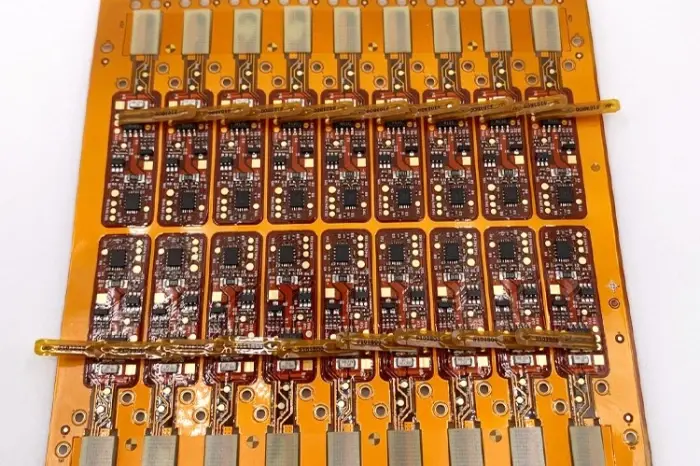
FPC assembly is the process of soldering electronic components onto a flexible printed circuit. It is a core technology for modern devices like smartphones, wearables, and medical equipment. But it is not the same as assembling a rigid PCB. The thin, bendable material creates unique challenges. If you don’t handle these challenges correctly, you will get low yield and field failures.
This guide will show you the real factory process. You will learn the detailed fpc assembly process steps that matter. We will explain the true fpc assembly cost drivers, including hidden NRE charges. We give you actionable fpc assembly design rules to prevent cracking. Finally, we help you evaluate fpc assembly manufacturers and flexible pcb assembly services with the right questions. Let’s begin.
Understanding FPC Assembly Cost and Lead Time
Everyone asks “how much does it cost?” but few get a clear answer. Here is the real breakdown from the factory floor.
The Real FPC Assembly Cost Drivers
The total fpc assembly cost has two main parts: Non-Recurring Engineering (NRE) and the unit price.
NRE (Jig and Tooling Cost): This is your upfront cost. You must pay it before production starts. The biggest part is the assembly carrier or jig. This fixture holds the floppy FPC flat during soldering.
Standard Aluminum Carrier: $1,500 – $3,000. Good for most projects with volumes up to 100k units.
Hardened Steel Jig: $5,000 – $10,000. Used only for ultra-high-volume runs (>500k units) because it lasts for over 1 million cycles.
Stencil Cost: An electroformed nickel stencil for fine-pitch printing adds $200-$500 over a standard laser-cut stencil.
Unit Price: This is the cost per assembled piece. Factories often quote “per panel,” not per individual FPC circuit.
Panelization is Key: Placing 20 small FPCs on one panel is far cheaper than assembling 20 individual pieces. Proper panelization can cut unit cost by 30% or more.
Cost Factors: The main drivers are component count, panel size, and solder joint quantity. A simple FPC with 10 parts costs very little per unit in volume. A complex assembly with a 0.3mm pitch BGA costs more.
FPC Assembly Lead Time Breakdown
Lead time is not one number. It has clear phases:
Fabrication (Bare FPC): 5-10 business days. This depends on layer count and special processes like impedance control.
Jig Fabrication: 1-2 weeks. This is often the critical path for your first order.
Component Procurement: 1-3 weeks. This depends on part availability. Long-lead items can delay everything.
Assembly & Test: 3-5 business days for a typical order.
Expedited Service: Many flexible pcb assembly services offer faster turns. But expect a 25-100% premium. Rushing jig fabrication is especially expensive.
The FPC Assembly Process: A Detailed Walkthrough
Here is the step-by-step fpc assembly process used in a professional factory. Each step has tricks that affect your yield.
Step 1: Material Prep & Moisture Baking
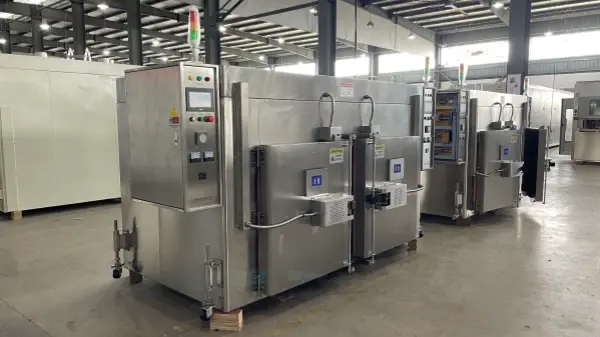
Not all FPCs need baking. You only bake them if their Moisture Sensitivity Level (MSL) exposure clock has run out. The rule is: if the dry-pack bag is sealed and the indicator is good, you can skip baking. If the bag has been open for longer than the MSL rating (e.g., 168 hours for MSL 3), baking is required. Typical bake: 125°C for 4-8 hours. Let it cool to room temperature before assembly.
Step 2: Mounting FPCs to the Carrier Jig
The FPC is placed into the custom jig. Vacuum holes or a silicone mat hold it perfectly flat. This step is critical. Any wrinkles or bubbles will cause solder paste printing defects. For prototypes or low volume, double-sided adhesive tape on a simple aluminum plate can work. For volume, a dedicated machined carrier is mandatory.
Step 3: Solder Paste Printing – The #1 Yield Killer
This step causes over 60% of all FPC assembly defects. The flexible surface is not perfectly flat, making consistent paste deposition hard.
Stencil Type: For fine-pitch parts (<0.4mm), use an electroformed nickel stencil. It gives better paste release than laser-cut steel, reducing bridges and opens by up to 15%.
Squeepee: Use a polyurethane blade (80-90 hardness), not metal. It conforms better to the FPC surface.
Paste: Standard SAC305 solder paste works. The challenge is the printing process, not the paste chemistry.
Step 4: Component Placement (Pick-and-Place)
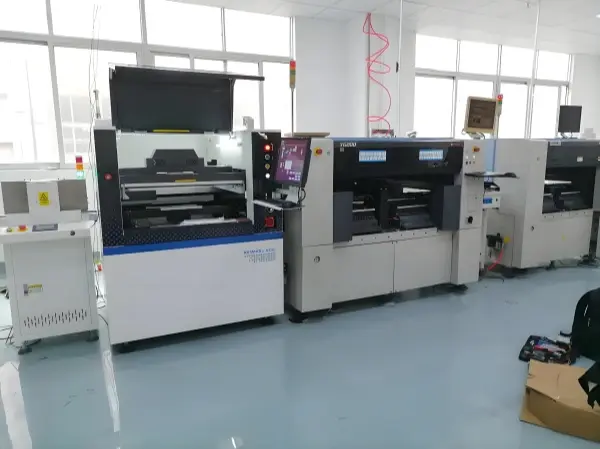
The FPC on its jig goes into the placers. The machines use vision to align to fiducials on the FPC. Key adjustments:
Z-Axis Force: Placement pressure must be reduced. Too much force will push the FPC into the jig cavity and damage components.
Nozzle Selection: Smaller, lighter nozzles are used to handle tiny components without shifting the FPC.
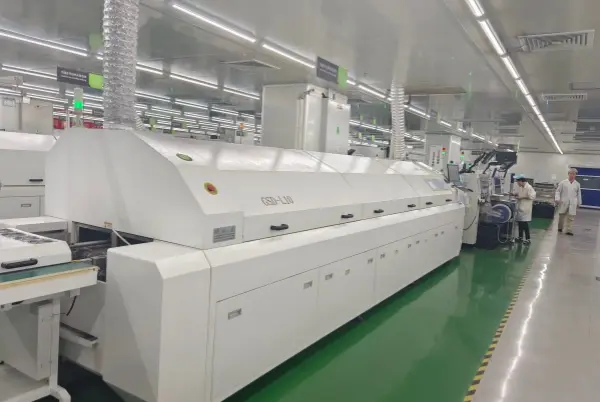
Step 5: Reflow Soldering with a Controlled Profile
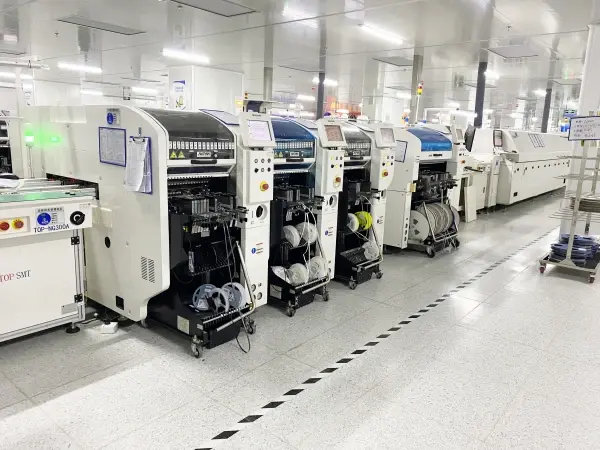
The assembly travels through a forced convection oven. The profile is gentler than for rigid boards.
Peak Temperature: Aim for the lower end of your solder paste spec (e.g., 235-240°C for SAC305).
Ramp Rate: Keep it slow, 1.5-2.0°C/second max. A fast ramp can cause warping.
Wind Speed: Use the oven’s lowest fan setting. High airflow can blow small FPCs around.
Step 6: Stiffener Attachment & Conformal Coating
After soldering, stiffeners are added for connector support. They are bonded using heat-activated adhesive (pre-preg) or pressure-sensitive adhesive (PSA) tape. Apply heat and pressure in a lamination press. For conformal coating, the FPC must be masked. The flexible material can soak up coating if not properly protected.
Step 7: Inspection and Electrical Testing
Automated Optical Inspection (AOI): The tan color of polyimide creates low contrast. Good AOI systems need special lighting to reliably find defects.
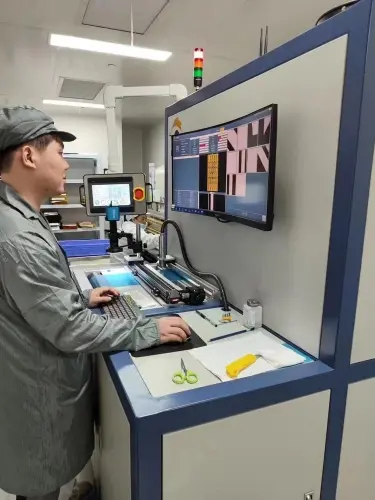
X-Ray Inspection: Used for BGAs and hidden joints. It is standard for any assembly with bottom-terminated components.
Electrical Test: Flying probe testers are most common. For high-volume, a custom bed-of-nails fixture is made. But designing a fixture for a flexible circuit is harder than for a rigid board.
Critical DFM Rules for Reliable FPC Assembly
Good fpc assembly design prevents failures. Here are the most missed rules.
DFM Pitfall #1: Vias in the Bend Area
This is the top cause of flex circuit failure. Vias are rigid points in a flexible material. Bending near them causes stress cracks in the copper barrel.
Rule: Keep vias out of the bend area. The via keep-out zone should be at least 5x the total flex thickness from the bend line. For a 0.1mm thick flex, keep vias >0.5mm away.
For Dynamic Flex: Specify filled and capped vias within 10mm of any bend area. This adds strength.
DFM Pitfall #2: Poor Pad and Stiffener Design
Pad to Bend Line: Keep surface mount pads at least 2mm from any bend line. Solder joints are brittle and can crack from repeated flexing.
Stiffener Adhesive: Do not specify 100% adhesive coverage under large components like connectors. Trapped air expands during reflow and causes bubbles or “pillowing.” Use a cross-hatch or perimeter-only adhesive pattern.
DFM Pitfall #3: Incorrect Material Specification
Copper Type: For circuits that flex in use (e.g., a robotic joint), you must specify Rolled Annealed (RA) copper. Standard Electro-Deposited (ED) copper will crack after a few bend cycles.
Polyimide Grade: Standard PI has a Tg of ~200°C. For high-reliability or lead-free assembly, specify high-Tg PI (Tg 250°C or higher) for better thermal stability.
Quality Standards and Inspection for FPC Assemblies
Forget vague claims of “high quality.” Demand specific standards.
Beyond “IPC Class 3”: What IPC-6013 & J-STD-001 Really Mean
If you need high reliability, you must call out these standards.
IPC-6013 (Performance Spec for Flexible Circuits):
Class 3 requires tighter coverlay registration (max 0.1mm misalignment vs. 0.15mm for Class 2).
It defines stricter requirements for plating integrity in bend areas.
J-STD-001 (Requirements for Soldering):
Class 3 requires perfect solder fillets. For a chip component, you must have visible heel, toe, and side fillets with no cracks. Inspection is done under 10x magnification.
How to Audit a Potential FPC Assembly Manufacturer
When looking for fpc assembly manufacturers, ask these questions:
“What is your first-pass yield for a 50-component FPC assembly?” (A good factory will say >98.5%).
“Can you show me your reflow profile data log for a recent FPC job?”
“What is your process for controlling solder paste printing height on flex?”
“Do you perform 100% electrical testing, or sample testing?” (For medical/military, it must be 100%). This due diligence is more important than just finding an “fpc assembly near me” locationally.
GreatPCB FPC Assembly
IPC-6013 Class 3 compliant
J-STD-001 Class 3 soldering
When reliability matters, details define quality.
At GreatPCB, our FPC assembly process is aligned with strict industry standards—from precise coverlay registration and plating integrity in bend areas to flawless solder joints inspected under magnification.
Frequently Asked Questions (FAQ)
What is the typical MOQ for FPC assembly?
MOQ is usually based on panel cost, not unit count. Many manufacturers offer low MOQs (e.g., 5-10 panels) because they can panelize multiple customer designs together. For dedicated tooling, expect a higher MOQ to cover the jig NRE cost.
How do you handle FPC assembly rework?
Rework is delicate. We use a pre-heater under the FPC to prevent thermal shock. Then, we use a focused hot air pencil for the component. The key is to support the FPC area around the joint with a silicone pad to absorb pressure and prevent pad lifting.
What are the most common FPC assembly defects?
The top three are: 1) Solder Bridges/Opens from poor paste printing, 2) Pad Lifting from excessive rework heat or mechanical stress, and 3) Coverlay Bubbling from moisture or trapped air under stiffeners.
What is the main difference between FPC and rigid PCB assembly?
The core difference is mechanical support. Rigid PCBs are self-supporting. FPCs require a carrier jig throughout the SMT line to remain flat and stable. This adds a tooling step and changes how every machine interacts with the board.
How do you ensure impedance control on flexible circuits?
Impedance control on flex is harder. The dielectric constant of polyimide can vary. We control it by carefully modeling the stack-up and using laser ablation to achieve precise trace widths. Expect a tolerance of ±10% for flex, compared to ±7% for rigid FR4.
Conclusion
Successful fpc assembly requires understanding the process, design, and cost as a connected system. Remember these three points: First, your biggest cost lever is smart panelization to maximize the panel. Second, your design must enforce a strict via keep-out zone in bend areas. Third, quality is defined by specific IPC standards like 6013 and J-STD-001, not vague claims.
When you engage with flexible pcb assembly services, use the technical questions in this guide. It will separate the true experts from the rest. This will lead to a reliable product, on-time delivery, and a manageable fpc assembly cost.
Tags
Related Posts
PCBA Prototype
September 8, 2026
PCBA Prototype
August 7, 2026