
IC Board Components and IC Board Design: A Complete Guide
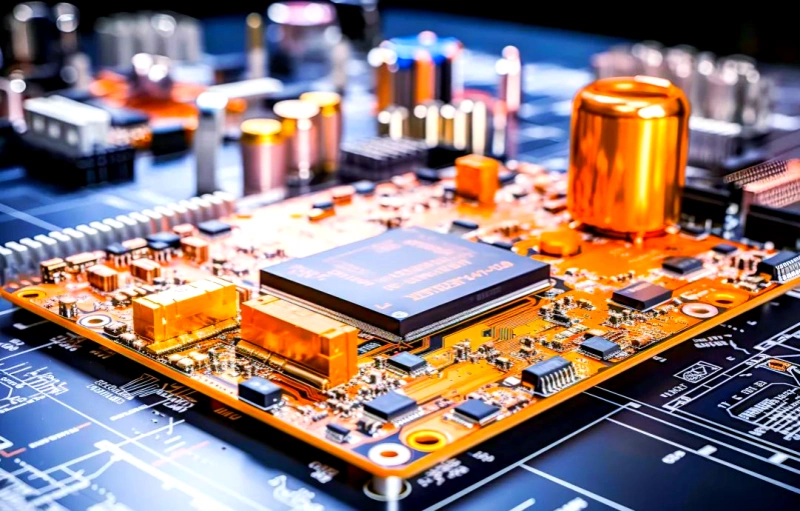
An IC substrate (also called an IC base board) is a special type of circuit board used to package a bare IC chip and connect it to a larger PCB. It sits between the chip and the main circuit board and serves as an intermediary. In other words, the IC substrate is like a little circuit board that holds the chip, with internal wiring that connects the chip to the main PCB. According to industry sources, “the IC substrate…serves as a link between the IC chip and the PCB” and has key functions such as housing the chip, providing internal wiring, and acting as a heat sink to protect and cool the chip[1]. In simple terms, an IC substrate’s main jobs are to hold the IC chip, connect it to the PCB, and protect and cool the chip.
For example, EFPCB explains that an IC substrate (IC packaging board) “serves multiple aims”[1]: it “houses the semiconductor IC chip”, it “connects the chip to the PCB via internal wiring”, and it “can shield, reinforce, and sustain an IC chip while also acting as a heat sink”[1]. This means the substrate provides support and thermal relief in addition to the electrical connections. An IC substrate can also route power and signals, help manage heat, and make sure the chip’s signals remain strong and clear.
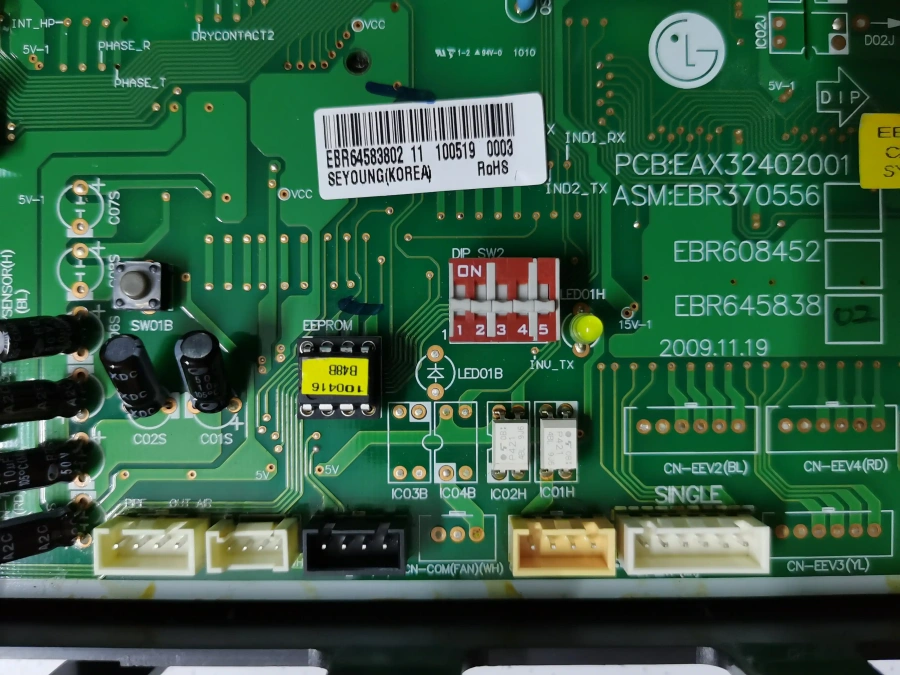
IC board components cover all the electronic parts used on this little board. Common IC board components include the IC chips themselves, plus other parts like resistors, capacitors, inductors, connectors, and so on. As GreatPCB notes in its PCB blog, “electronic components needed for the assembly of printed circuit boards [include] IC chips, resistors, capacitors, inductors, transformers, connectors, displays, sensors and so on”[2]. In practice, an IC board may have small passive parts (resistors, capacitors) near the chip for stability, plus any connectors or jumpers needed. The board may also include tiny bridges or bond wires if the chip is wire-bonded to the substrate. In any case, the components on an IC substrate board are the parts that let the chip communicate and work with the larger system, and these must be carefully chosen and placed in the board design.
When talking about IC board design, the layout and stack-up of the substrate are key. IC board design involves designing the internal wiring, choosing layer count, and placing any required vias or thermal pads. Good design ensures the chip’s signals travel with minimal interference and that heat can flow out through the substrate. For example, designing the IC board requires creating a layout that meets the device’s requirements – as GreatPCB explains, designing a printed circuit assembly involves “creating a layout for the components and circuitry on a PCB to meet the functional requirements of the electronic device”[3]. In practice, IC board design covers how traces route between the chip and board, how many layers are needed (often high-density interconnect), and where thermal relief areas go. It also involves planning for manufacturing: because IC substrates are often very thin and fine-pitched, the design must account for manufacturing capabilities.
Overall, an IC substrate or IC base board is a bridge between a bare chip and a larger circuit board, with the functions of holding the chip, wiring it to the PCB, and protecting and cooling it[1]. IC board components include the chip(s) and all the small parts (resistors, capacitors, connectors) on the board[2]. In the next sections, we look at types of IC substrates, materials, assembly methods, applications, and design considerations.
Packaging Types of IC Substrates
IC substrates are often classified by the chip packaging type they use. Each package type defines how the chip’s pins or pads connect to the substrate. Common packaging types for IC substrates include:
- SO (Small Outline) Packages:These are small packages with relatively few leads, used for lower-pin-count chips. They are often for memories and small ICs. The Chinese standard names include SOP (narrow, ~8–40 pins), SOL (wider, ≥44 pins, used in RAMs), SOW (wide, ≥44 pins, often for EEPROMs), as well as miniaturized variants like SSOP and TSOP. SO packages use gull-wing (wing-shaped) leads on the sides (some memory chips use J-leads called SOJ). Typical lead pitches include 1.27 mm, 1.0 mm, 0.8 mm, 0.65 mm, or 0.5 mm. SO packages allow basic connection to an IC substrate and are relatively simple.
- QFP (Quad Flat Package):A QFP has leads on all four sides in an “L” shape. This is a common surface-mount package for medium to high pin-count ICs like microcontrollers, FPGA chips, or audio/video ICs. The base may be plastic, ceramic, or metal (plastic being most common). The lead pitch varies by type: 0.3 mm up to 1.27 mm. For example, a 0.65 mm pitch QFP can have up to about 304 pins. Some QFPs include buffers on corners (called BQFP or QFP with “corner pads”) to protect the pins during handling. These packages can be mounted on a substrate or directly to a socket.
- PLCC (Plastic Leaded Chip Carrier):A PLCC is a square or rectangular package with J-shaped leads (pins bent inward under the package). It often has 20–124 pins with 1.27 mm pitch. Many programmable memories used PLCC (because the chip can be plugged into a socket). PLCCs can be socketed or soldered onto the board. It comes in JEDEC MO-047 (square, 20–124 pins) or MO-052 (rectangular, 18–32 pins). Because the leads are J-shaped, surface-mount PLCCs need care in soldering.
- LCCC (Leaded Ceramic Chip Carrier, sometimes called leadless CC):This is a ceramic surface-mount package with no protruding leads. Instead, metalized pads (in a castellated “castle” pattern) are on the sides and bottom. For square LCCC, pins might be 16, 20, 24, up to 156. Rectangular LCCC can have 18–32 pins. Pitch is usually 1.0 mm or 1.27 mm. Ceramic carriers allow very reliable connections and better high-frequency performance (shorter paths, low inductance). They are fully sealed and very reliable (often military use), though expensive. Because of the CTE match issues, thermal expansion has to be carefully managed.
- PQFN (Power Quad Flat No-leads):A PQFN is a leadless package where the bottom has a large exposed metal pad (for heat) and surrounding pads for electrical connections. It is usually square or rectangular. Because there are no long side leads, the electrical paths are short (low inductance and resistance) and thermal conductivity is high. PQFN packages are small, lightweight, and ideal for power and RF chips. They are used widely in mobile devices (phones, cameras, etc.) due to their good performance in a small form factor.
- BGA (Ball Grid Array):In a BGA, the chip’s contacts are on the bottom surface as a grid of solder balls. This allows many pins in a small area (the entire bottom surface can be used, not just edges). A BGA can have hundreds of pins easily. For example, if you had a large QFP chip with 400 pins on the edges, a similar BGA could use a 20×20 grid of balls and fit in a much smaller square area[4]. Because the balls are typically ~0.3–1.5 mm apart, you get high pin count without huge board area. Also, because the balls are at one height, BGA assembly tolerances are easier (the chip can self-align during soldering). The shorter distances (balls to die) improve high-speed signals[4]. BGA is now very common for high-pin-count ICs (memory, CPUs, FPGAs, etc.). There are many varieties: plastic BGA (PBGA), ceramic BGA (CBGA), and micro-BGA (sometimes called CSP if very small). Ball pitches can be 1.5 mm, 1.27 mm, 1.0 mm, down to 0.3 mm for micro-BGA.

- CSP (Chip Scale Package):A CSP is essentially the smallest possible package, almost the same size as the chip itself. By IPC standards, it must be ≤1.2× the die area. Typical CSPs have very short connections (almost die-size) and can pack even more pins than a similarly sized TSOP or BGA. For instance, a TSOP might max at ~304 pins, a normal BGA ~600 pins, while a CSP could theoretically support 1000+ pins (because it uses wafer-level packaging)[5]. CSPs are extremely compact and thin, so they reduce impedance and signal loss. They also have a very short thermal path (the die-pad is only ~0.2 mm from heatsink). Today CSPs are mostly used for memory chips and portable devices (phones, tablets). In the future, CSPs will be even more common for high-density electronics[5].
Each of these package types requires the IC substrate to match. For example, a BGA IC substrate will have an array of landing pads for the balls. A CSP substrate is often made using wafer-level techniques. The choice of package affects the IC board design: e.g., BGA requires more layers or microvias to fan out many pins.
Classification by Material
IC substrates are also categorized by the material of the base board:
- Rigid Substrate:Made of epoxy (FR-4), BT resin, ABF (Ajinomoto Build-up Film), or other rigid laminates. The thermal expansion (CTE) is typically around 13–17 ppm/°C. Rigid substrates are common for many ICs.
- Flexible Substrate:Made of flexible materials like polyimide (PI) or PE (polyester). These allow bending or very thin form factors. Their CTE is usually 13–27 ppm/°C (can expand a bit more). Flex substrates can conform to shapes and are used when boards need to bend or fit in tight spaces.

- Ceramic Substrate:Made of ceramic (alumina Al2O3, aluminum nitride AlN, silicon carbide SiC, etc.). These have very low CTE (about 6–8 ppm/°C). Ceramic substrates handle heat very well and are often used in high-frequency or high-power ICs (like some RF or military applications). Because of the low expansion, they better match certain chip materials, reducing stress.
Choosing substrate material depends on needs: ceramic for high heat/density, flex for bendy or lightweight needs, rigid epoxy for standard use.
Bonding and Assembly Methods
IC substrates connect the chip to the substrate using different bonding techniques. Common methods include:
- Wire Bonding:Thin wires (often gold or aluminum) are used to connect chip pads to substrate pads. This is the most traditional and common method, especially for BGA or QFP style packages. Wires loop from the die out to pins or pads.
- Tape-Automated Bonding (TAB):Wires are pre-fabricated on a thin polyimide tape. The tape holds the wires in place, and the chip is bonded to them. TAB is used for some high-pin-count or specialized IC assemblies.
- Flip-Chip (FC) Bonding:In flip-chip, the IC die is flipped so its pads face down onto the substrate. The chip is aligned and attached directly to bumps or pads on the substrate (often with solder). This eliminates bond wires and can give shorter electrical paths and better high-frequency performance. Flip-chip IC substrates are built to accept the flipped die. Flip-chip is common in processors, GPUs, and very high-performance chips.
Each bonding method requires the substrate to have matching features (bonding pads, under-bump metal, etc.). In the design, one must plan pads and glue underfill if needed.
IC Board Applications
IC substrate PCBs are found in virtually all modern electronics that require high performance or compact size. They are particularly common in:
- Smartphones and Tablets:These devices need very light, thin, and high-density boards. IC substrates inside these devices (for CPUs, baseband chips, memory) help achieve small size and high speed.
- Laptops and Notebooks:Many small circuits or memory modules use IC substrate boards.
- Telecom Equipment:High-speed networks and telecom gear use multi-layer IC substrates for processors and FPGAs.
- Medical Devices:Portable medical electronics rely on compact, reliable IC substrates for their chips.
- Industrial Control:Robotics and control units often use IC substrates in their controllers for robust performance.
- Aerospace and Defense:The high reliability and performance of ceramic or rigid-flex IC substrates are used in satellites, avionics, and military systems.
In general, any application needing lightweight, high-speed electronics tends to use IC substrates. As one source notes, the use of IC substrates (including advanced HDI and rigid-flex PCBs) has “exploded in demand” and is now common in telecommunications and digital devices[6]. Modern Rigid PCB technology has advanced through HDI (high-density interconnect) and even SLP (substrate-like PCB, a thin rigid build-up board similar to semiconductor processes) to meet these needs.
Manufacturing Challenges
Making IC substrates is more difficult than making standard PCBs. Some key challenges include:
- Very Thin Boards and Warpage:IC substrates are often extremely thin (sometimes <0.2 mm). Thin boards tend to warp or bend easily during fabrication. As EFPCB notes, ultra-thin core boards “are extremely slim and easily deformed. Warpage and laminating thickness of ultra-thin core boards can only be properly managed when processing methods (such as board expansion and lamination parameters) have been improved”[7]. In practice, this means manufacturers need new lamination equipment and strict control of materials to keep the board flat.
- Microvias and Fine Features:Modern IC substrates use very small vias (drilled holes) and very fine copper traces. For example, microvias may be on the order of 30 µm diameter[8]. Achieving these requires precise laser drilling and fine plating processes. The copper plating thickness for IC substrates must be very accurate (around 18 ± 3 µm) and uniform (about 90% consistency)[8]. Even small errors can cause shorts or opens at these scales. The solder mask also must be very flat (height differences <10 µm) and aligned to the pads.
- Advanced Processes Needed:Traditional subtractive etching (used for normal PCBs) cannot achieve the needed line widths/spacings (often below 30 µm). Instead, processes like Additive or Modern Semi-Additive (MSAP) plating are used. These processes build up the copper only where needed and allow ultra-fine lines. MSAP is now the most common method to make IC substrates[9].
- Quality and Testing:Because IC substrates are so specialized, factories need new testing and QA methods. Many quality checks (like thermal tests or high-frequency tests) go beyond normal PCB tests. In short, building IC substrates requires very advanced equipment and processes.
Because of these challenges, only advanced PCB manufacturers can make IC substrates well. They must invest in specialized lamination machines, plating lines, and inspection tools. In comparison to an ordinary PCB, an IC substrate fabrication line is much closer to a semiconductor fab environment.
How to Select a Suitable IC Board
Choosing the right IC substrate (and board) depends on matching the chip’s performance to the system’s needs. Here are some guidelines:
- Match Performance to Application:For industrial or rugged applications, pick ICs and boards rated for wide temperature ranges and high noise immunity. In consumer devices (phones, cameras), low power consumption is often crucial to extend battery life. For quickly-changing products (gadgets, IoT devices), use popular or widely available components to ease supply chain management.
- Consider Packaging and Pin Count:Determine how many pins the IC needs. If the chip has a very high pin count, you might need a BGA or CSP, and the substrate must accommodate it. For medium pins, a QFP or PLCC substrate might suffice.
- Check Thermal Requirements:If the IC dissipates a lot of heat, choose a package like PQFN or thermal BGA and a substrate with good heat sinks (copper cores, metal layers, thermal vias).
- Review Electrical Specs:Make sure the substrate material and layer stack meet the IC’s speed and impedance needs. High-speed ICs often need controlled impedance traces and multiple layers.
- Balance Cost vs. Complexity:Rigid substrates (epoxy FR-4) are cheapest. Flex or ceramic substrates cost more but may be needed for special needs (bending or extreme reliability). Chip Scale Packages (CSP) are expensive but allow maximal miniaturization.
By understanding the chip’s packaging, voltage, frequency, and environment, engineers can choose the right IC substrate and balance performance, cost, and reliability. Always discuss requirements with your PCB supplier.
Choosing a PCB Manufacturer (GreatPCB Example)
Once you know your IC board’s design, the next step is finding a capable PCB manufacturer. Look for a company with experience in advanced PCB and IC assembly. For example, GreatPCB is a leading manufacturer of PCBs and PCBA in China. GreatPCB has over 15 years of experience and offers one-stop services from PCB fabrication to assembly[10]. They can produce PCBs from 1 up to 20 layers and handle IC programming and testing[10].
- Experience:Founded in 2002 (PCB) and expanded in 2008 (assembly), GreatPCB has more than 15 years of expertise[10].
- One-Stop Service:They offer design support, component sourcing, PCB fabrication (including rigid, flex, HDI, etc.), assembly, and testing all in-house[10].
- Quality:GreatPCB maintains strict quality control – they report a 99% quality pass rate and 97% on-time delivery[11]. This shows reliability.
- Capacity:They have multiple high-speed SMT lines (FUJI, PANASONIC, YAMAHA machines), reflow ovens, wave soldering, X-ray and AOI inspection[12] (as described on their site), which are important for small-pitch assembly like BGA or CSP.
Choosing a reputable manufacturer like GreatPCB means your IC board design can be realized with fewer mistakes and better support. You should share your design files (Gerber, BOM, layout) with them for a quote. GreatPCB’s engineers can also advise on DFx (Design for Manufacturability) to avoid common issues in IC substrate fabrication.
Summary: To build an IC board, define exactly what the board needs to do and which chip it uses. The IC substrate (IC base board) acts as an intermediary that holds the chip and connects it to the main PCB[1]. It must have the right components (IC chip, small passives, connectors, etc. [2]) and be designed with the appropriate package type (QFP, BGA, etc.) and material (rigid, flex, or ceramic). Designing the board involves laying out high-density traces, vias, and pads for the chip and ensuring thermal/mechanical needs are met. Because IC substrates are extremely thin and fine-pitched, they pose manufacturing challenges like warping and tight tolerances[7][8], so it’s crucial to work with an experienced PCB maker. Finally, choose a full-service PCB manufacturer such as GreatPCB (https://greatpcb.com) for fabrication. GreatPCB’s long experience and high-quality standards[10][11] mean they can handle the complexities of IC board production.
An IC substrate is the foundation of a modern high-performance PCB. It lets the bare chip interface with the world. By understanding the types of IC packages and design requirements, you can create an IC board that is compact, reliable, and suited to your device. Work with experts and follow best practices in design and manufacturing to achieve the best results.
FAQ
Q1: What exactly is an IC substrate (IC base board)?
A: It is a special thin PCB used to package and connect a bare IC chip. It “serves as a link between the IC chip and the PCB,” housing the chip and routing its connections, as well as providing support and heat dissipation[1]. In simpler terms, think of it as a small board that the chip sits on and that connects the chip to the larger circuit board.
Q2: What are common IC board components?
A: Besides the IC chip(s), IC boards typically include passive parts like resistors and capacitors, connectors or sockets, and sometimes inductors or filters. A GreatPCB blog lists many PCB assembly components: “IC chip, resistors, capacitors, inductors, transformers, connectors, buttons, displays, sensors, and so on”[2]. The exact parts depend on your chip’s needs (e.g. decoupling caps, bias resistors, etc.).
Q3: What does IC board design involve?
A: IC board design means planning the layout of the substrate: where each pad, via, and trace goes to connect the chip to the PCB. It involves making a schematic and PCB layout that meet the device’s functional requirements[3]. Designers must ensure signal integrity (short trace lengths, proper impedance) and thermal paths. For example, designing a printed circuit assembly “involves creating a layout for the components and circuitry on a PCB to meet the functional requirements” of the device[13]. It also means choosing how many layers the board needs and how to place and route the fine-pitch connections.
Q4: Why use BGA or CSP packaging on an IC board?
A: BGA and CSP allow more connections in less space. A BGA package uses solder balls on the bottom, so you can fit many pins across the chip surface. As Wikipedia notes, “a BGA can provide more interconnection pins than can be put on a dual in-line or flat package” by using the whole bottom area[4]. This also means shorter signal paths (since the balls connect directly under the die) and better high-speed performance[4]. A CSP is even more compact – it’s almost the same size as the chip itself. CSPs are “light, compact, and identical to IC in mass and dimensions”[5], which is great for tiny electronics. The trade-off is more complex manufacturing.
Q5: How do I choose a PCB manufacturer for an IC board?
A: Look for a manufacturer with proven experience in fine-pitch and multilayer boards. GreatPCB is one example – they have 15+ years in PCB/PCBA manufacturing and offer one-stop service[10]. Check that they have the right certifications (ISO9001, etc.) and equipment (laser drills, fine-line plating, high-speed assembly). Also review their quality record. GreatPCB reports quality pass rates of 99% and on-time delivery of 97%[11]. Make sure to share your board specs and get feedback from the manufacturer on DFx (design-for-manufacturing) improvements before fabrication.
Table of Contents
Related Posts
PCBA Prototype
September 8, 2026
PCBA Prototype
August 7, 2026