
The Role and Considerations of Serpentine Traces in PCB Design
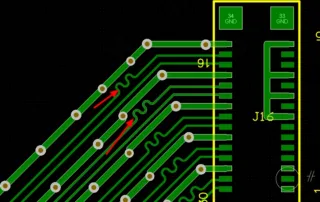
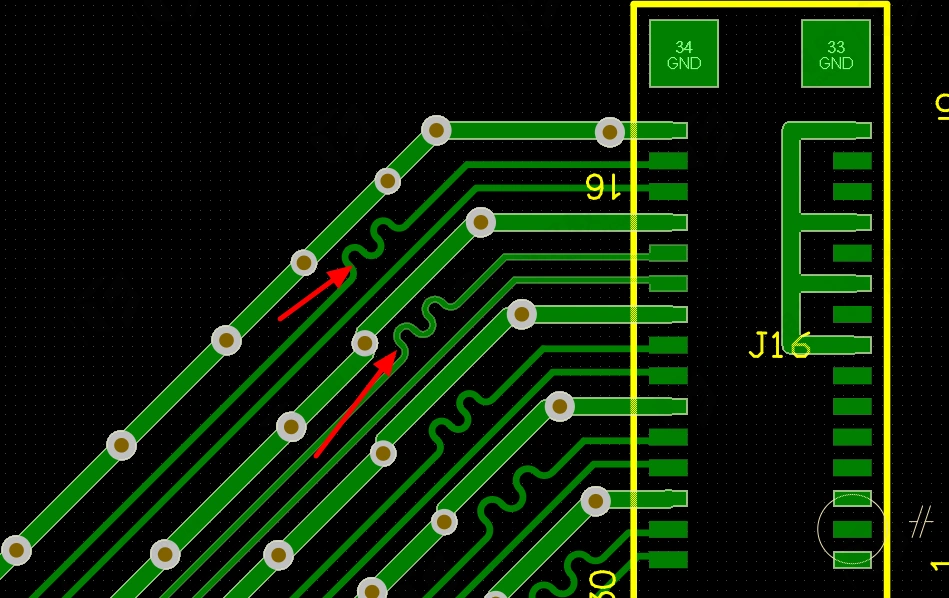
Any trace on a PCB that carries high-frequency signals can cause signal delay. The main purpose of serpentine traces is to compensate for parts of a group of related signals [...]
PCBA (Printed Circuit Board Assembly) involves placing various types of electronic components onto a bare PCB board. These small and precise components, when arranged and soldered correctly, form the core [...]
Why are most PCBs green? Is there a scientific reason behind it? What we see as the PCB color is actually the color of the solder mask covering the board’s [...]
You've followed the schematic provided by the chip manufacturer, but your PCB still has issues. It may be unstable, not hitting performance targets, or failing EMC tests. Is it human [...]
What is Dead Copper on a PCB? Dead copper refers to areas on a copper layer of a printed circuit board (PCB) that are unable to conduct electrical current. These [...]
PCB Design Requirements for 5G Applications In 5G applications, the key PCB design requirements include high-frequency, high-speed materials, high-density interconnects (HDI), impedance matching, layer stack-up planning, signal integrity for trace [...]
LEDs are increasingly used in areas like indicators and displays due to their long lifespan and low energy consumption. When replacing traditional lighting sources with LED technology, factors such as [...]
PCB reverse engineering refers to the process of obtaining a physical PCB and conducting research to analyze its characteristics and wiring layout. In earlier reverse engineering efforts, the primary focus [...]