The Ultimate Guide to High-TG PCBs

When electronics get hot, they fail. A High-TG PCB is your first defense against heat. This guide explains what it is, when you need it, and how to choose the right one. You will learn not just the basics, but the expert details that other guides miss. We will cover real factory processes, material trade-offs, and how to save money without risking reliability.
What Is a High-TG PCB?
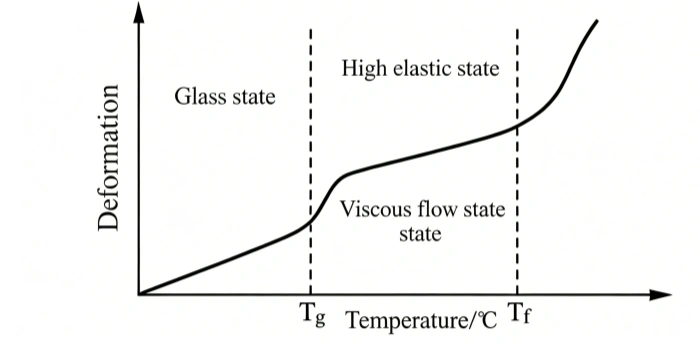
Every PCB starts with a base material, like FR4. This material has a key property called the Glass Transition Temperature, or Tg. Tg is the temperature where the material softens. Think of it like ice melting. Below Tg, the board is rigid and solid. Above Tg, it becomes rubbery and weak.
A standard FR4 PCB has a Tg of about 130°C to 140°C. A Medium Tg PCB is above 150°C. A High-TG PCB has a Tg of 170°C or higher. Most experts use 170°C or 180°C as the minimum to be called “High-TG.”
But Tg is only part of the story. For true reliability, you must also know two other things:
- Decomposition Temperature (Td): The temperature where the material chemically breaks down and produces gas.
- Coefficient of Thermal Expansion (CTE): How much the material expands when heated, especially in the Z-axis (thickness).
A true High-TG material improves all three: higher Tg, higher Td, and lower Z-axis CTE.
Property | Standard FR4 (Tg140) | High-TG FR4 (Tg180) | Why It Matters |
Tg | ~140°C | ≥180°C | Defines the maximum functional operating temperature. |
Td | ~300-320°C | ~340-370°C | Prevents delamination during hot lead-free soldering (peak ~260°C). |
Z-CTE (below Tg) | ~70 ppm/°C | ~50 ppm/°C | Less stress on copper plated through-holes, fewer breaks. |
Why and When Do You Need a High-TG PCB?
You need a High-TG board for two main reasons: high operating temperature or a tough assembly process.
1. High Operating Temperature
If your device runs hot, the PCB must stay stiff. A soft board can cause parts to shift, solder joints to crack, and circuits to short. The old rule is to pick a Tg at least 20-25°C above your max operating temperature. But this is just a start. You must also consider internal hotspots. A processor might make a local spot on the board 20°C hotter than the air around it.
Common high-temperature applications:
- Automotive Under-Hood: Engine control units (ECUs) and transmission modules.
- Power Electronics: Solar inverters, motor drives, and UPS systems.
- Aerospace & Defense: Avionics in non-climate-controlled bays.
- Industrial: Drills, pumps, and machinery controls.
2. Lead-Free (Pb-Free) Soldering Process
Modern electronics use lead-free solder. This solder melts at a higher temperature. A standard reflow oven cycle can peak at 260°C. This is far above the Tg of standard FR4. Even though the exposure is short, it stresses the board. A High-TG material with a higher Td resists this better. It prevents blistering and delamination during assembly.
Expert Insight: The Tg vs. Td Duo
Always check both numbers on the laminate datasheet. For lead-free assembly, your material’s Td should be at least 30-40°C higher than your reflow peak temperature. A material with a Tg of 170°C but a Td of only 320°C might fail. A material with a Tg of 150°C but a Td of 350°C could be a more reliable and cost-effective choice for many lead-free boards.
Choosing the Right High-TG Material
Not all High-TG materials are the same. Here are the common grades and what they mean for your project.
1. Standard High-TG FR4 (Tg170 / Tg180)
- Examples: IS410 (Tg170), FR408HR (Tg180), IT180A, S1000-2.
- Best For: Most applications needing better heat resistance. This includes automotive electronics, advanced computing, and multi-layer boards. Tg180 is the sweet spot for many high-reliability industrial uses.
2. Very High-TG & Specialty Materials (Tg200+)
- Examples: Polyimide, BT Epoxy, some advanced FR4 variants.
- Best For: Extreme environments. This includes down-hole drilling equipment, aerospace systems, and some military hardware. Polyimide handles continuous high heat very well but is more expensive and harder to process.
3. High-Speed/Low-Loss High-TG Materials
- Examples: Rogers 4350B, Isola FR408HR (also good for RF).
- Best For: Radio frequency (RF) or high-speed digital circuits that also generate heat. These materials control the signal integrity (with a stable Dk/Df) while providing high thermal reliability.
Cost-Performance Trade-Off
A Tg180 PCB can cost 15-30% more than a standard Tg140 board. A Tg200+ or Polyimide board can be 2-3 times more expensive. Do not over-spec. For many lead-free assemblies, a Tg150 material with a high Td (>350°C) offers the best balance of performance and cost.
The Impact on Manufacturing (DFM Tips)
High-TG materials are tougher to work with. Your factory must adjust its process. If they don’t, you risk failure.
1. Lamination
High-TG prepregs need higher heat and pressure to flow and cure. The lamination cycle is often longer. This requires more precise press control. A bad lamination cycle can lead to poor resin fill or layer separation.
2. Drilling and Via Formation
High-TG materials are harder and more abrasive. They wear out drill bits faster. This can lead to rough hole walls. Rough holes make it harder to plate copper evenly inside the via. For microvias in HDI designs, this is critical. Poor plating can cause via barrel cracks during thermal cycling.
Expert Insight: Z-Axis CTE – The Silent Killer of Vias
This is the most important mechanical property. When the board heats up, it expands. If the Z-axis expansion is too high, it pushes and pulls on the copper lining of every via. Over many cycles, this causes fatigue, leading to an open circuit. High-TG materials have a lower Z-CTE. This directly translates to longer product life in thermal cycling environments. Always ask your supplier for the Z-CTE data from the laminate datasheet.
3. Lead-Free Soldering Compatibility
Confirm your factory’s soldering profile. Even with High-TG materials, you must ensure the peak temperature and time above liquidus (TAL) do not exceed the material’s Td rating. A process audit should check this.
How to Buy High-TG PCBs: A Procurement Checklist
Here is what to ask for when you request a quote. This separates professional suppliers from the rest.
1. In Your RFQ (Request for Quote):
- Specify the Exact Material: Do not just write “High-TG FR4.” Write “Isola FR408HR (Tg180)” or “Shengyi S1000-2 (Tg170).” This locks in the performance.
- Reference the Standard: For high-reliability, add “Board must be built and tested to IPC-6012 Class 3 requirements.” Class 3 is for harsh environments like aerospace or medical life-support.
- Request Certifications: Require a material certification sheet from the laminate manufacturer. This proves the Tg, Td, and CTE.
- Define Testing: Ask for T288 test results (time to delamination at 288°C) if your assembly is very hot. For high-humidity, high-voltage apps, ask about CAF (Conductive Anodic Filament) resistance testing.
2. For Factory Audit/Qualification:
- Ask to see their lamination press profiles for High-TG materials.
- Ask about their drill bit change schedules for abrasive materials.
- Review their quality reports for microsection analysis of plated through-holes after thermal stress testing (like IPC-TM-650 2.6.8).
Expert Insight: The Hybrid Stack-Up Strategy
You can save money. You do not always need High-TG material for every layer. Use it only where the heat is. For example, in a 12-layer board with a hot processor on layer 4, specify High-TG cores for layers 3-5. Use standard TG material for the outer layers. This “mixed” stack-up cuts cost but keeps performance. Your fabricator can help design this.
Frequently Asked Questions (FAQ)
Q1: How much more does a High-TG PCB cost?
A: Typically 15-30% more than standard FR4. The exact cost depends on the material grade (Tg170 vs. Tg200) and the board size/thickness.
Q2: Can I use High-TG PCB for LED lights?
A: Yes. High-TG FR4 is a common, lower-cost alternative to aluminum core PCBs for high-power LEDs. It manages the heat well enough for many applications.
Q3: Is High-TG necessary for all lead-free assemblies?
A: Not always. If your board is simple, single-sided, and has few components, standard FR4 might survive the reflow process. But for complex, multi-layer boards, High-TG is strongly recommended to prevent delamination.
Q4: What is the difference between Tg and maximum operating temperature?
A: Tg is a material property. The maximum operating temperature is how hot the board can get in use. You should always operate below the Tg. The standard safety margin is 20-25°C below Tg.
Q5: Can I mix High-TG and standard materials in one board?
A: Yes. This is called a hybrid or mixed-Dk stack-up. It is common to save cost. You must clearly define this in your stack-up drawing and confirm your fabricator can process it.
Q6: How do I verify the Tg of my finished PCB?
A: You cannot test it easily yourself. You must rely on the material certification from your PCB supplier. The factory uses a test called DSC (Differential Scanning Calorimetry) to measure Tg.
Conclusion
Choosing a High-TG PCB is an important engineering decision. First, know your real operating temperature and assembly process. Second, look beyond just the Tg number. Always check the Decomposition Temperature (Td) and the Z-axis CTE.
For reliability, specify the exact material by brand and grade in your order. Work with a factory that understands the special manufacturing needs. Use a hybrid stack-up to control costs. Finally, use the procurement checklist to ensure you get what you pay for.
By understanding these details, you can build electronics that are reliable, durable, and cost-effective, even in the hottest environments.
Table of Contents
Tags
Related Posts
PCBA Prototype
September 8, 2026