
How to Choose the Right PCBA Manufacturer
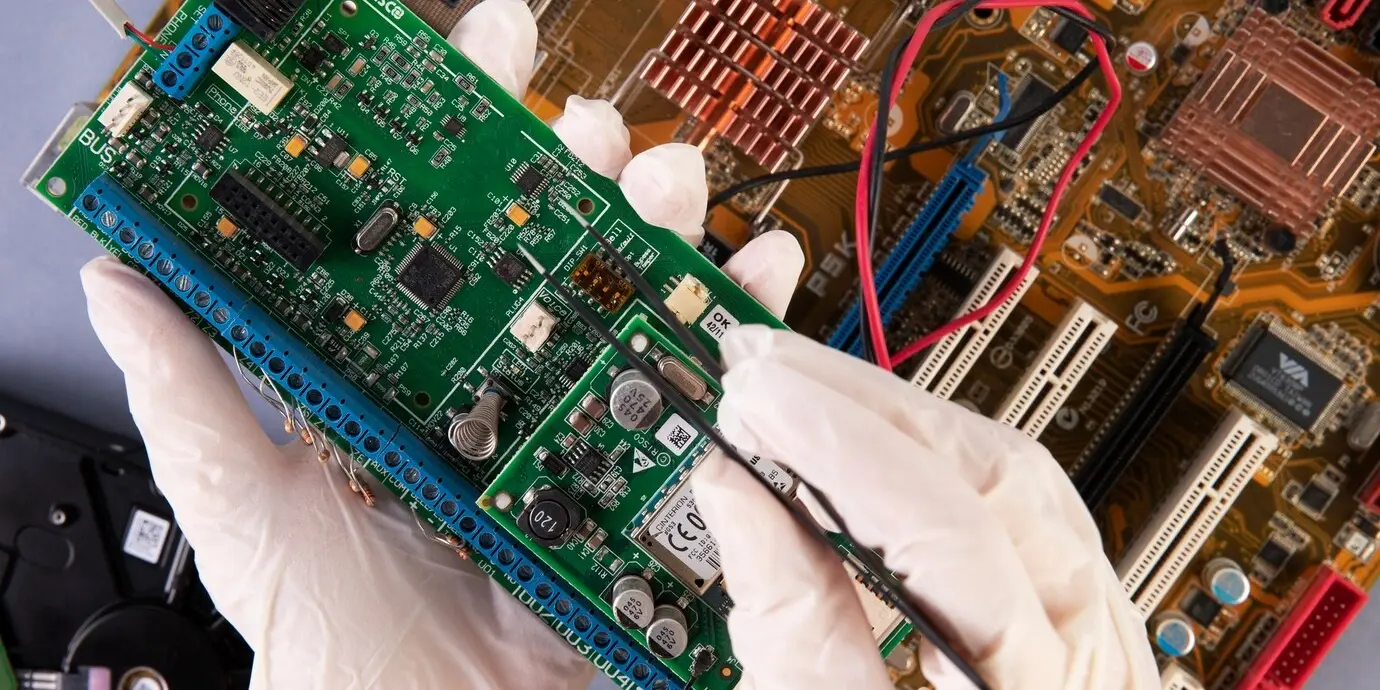
Choosing a PCBA manufacturer is a manufacturing-risk decision, not a price-comparison exercise. The supplier that wins on piece price can still be the wrong choice if its process window is too narrow for your component mix, its BOM controls are weak, or its test and traceability systems cannot support a product recall or design change.
For electronics engineers, OEMs, and procurement teams, the practical question is: can this manufacturer repeatedly turn our released data into conforming, testable assemblies at the volume and cost we need? The answer comes from evidence: a technical review of the design, a controlled pilot build, defined acceptance criteria, and a commercial model that includes the cost of yield loss, shortages, rework, and schedule disruption.
Short answer: Choose the PCBA manufacturer whose documented process controls match your board's actual risks. Compare DFM feedback, BOM and component controls, SMT process evidence, inspection and test coverage, traceability, NPI discipline, yield definitions, and total landed cost before comparing unit prices.
What a PCBA manufacturer is responsible for
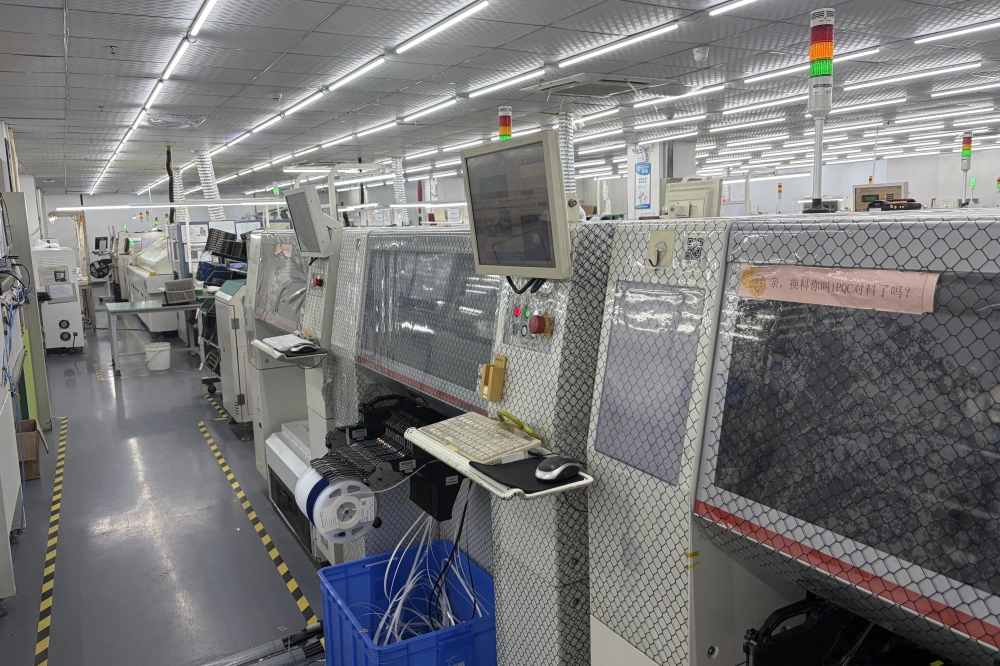
PCB fabrication produces the bare board. PCBA manufacturing adds components and processes such as solder-paste printing, SMT placement, reflow, through-hole assembly, inspection, and electrical or functional test. Depending on the supplier, the scope may also include component procurement, programming, box build, and logistics.
That scope matters when comparing quotations. A board-only quote, a consignment assembly quote, and a turnkey quote are different risk packages. A low assembly price may simply exclude stencil, programming, test fixtures, material handling, or non-recurring engineering. Compare like with like before judging the number at the bottom of the quotation.
Start with a capability-fit review, not a factory tour
Ask the manufacturer to review your actual build data. A capability statement is useful for screening, but it does not prove that the supplier can run your board.
The review should cover:
| Area | Evidence to request | Why it changes the decision |
|---|---|---|
| Board construction | Layer count, dimensions, thickness, surface finish, controlled impedance, flex or rigid-flex requirements | A supplier may fabricate a board type but still outsource or constrain a critical step. |
| Component technology | Smallest package, fine-pitch BGA/QFN, bottom-terminated parts, connectors, press-fit parts, and through-hole mix | Package capability affects stencil design, placement accuracy, thermal profile, inspection coverage, and rework risk. |
| Production profile | Prototype quantity, monthly demand, high-mix/low-volume or repeat production, panelization | A line optimized for long, stable runs may be a poor fit for frequent changeovers. |
| Product risk | Industrial, automotive, medical, safety-related, or consumer use; operating temperature and life expectations | Risk class determines test depth, documentation, process controls, and acceptance criteria. |
| Special processes | Conformal coating, selective soldering, wire harness, programming, calibration, or box build | "One-stop" only helps when the special process is controlled and documented. |
Request a written list of exceptions and assumptions. A capable manufacturer will identify an unavailable package, a questionable land pattern, a missing drawing, or an unrealistic lead-time assumption before quoting. Silence at quotation stage is not proof of capability.
For a first screen, Great PCB's PCBA manufacturing and assembly capabilities and SMT capability pages provide useful starting points. Treat those pages as a capability map; confirm the limits against your own Gerbers, centroid file, BOM, drawings, and test requirements.
1. Evaluate DFM/DFA and NPI engineering
A PCBA supplier should contribute engineering judgment before the first board reaches the line. Design for manufacturability (DFM) checks whether the board can be fabricated and assembled within a repeatable process window. Design for assembly (DFA) looks at placement, orientation, access, soldering, and downstream handling. The objective is not to make the design "easy" at any cost; it is to expose choices that create avoidable yield loss or service problems.
Ask for a sample DFM/DFA report, with sensitive customer data removed if necessary. It should show specific findings, not just a green "passed" status. Useful findings include:
- pad-to-mask and courtyard conflicts around fine-pitch parts;
- insufficient spacing for the stencil aperture or squeegee direction;
- copper balance, panelization, fiducial, tooling-hole, or board-support concerns;
- BGA escape, via-in-pad, or warpage risks;
- polarity and reference-designator issues that increase assembly or inspection error;
- test-point access and fixture constraints;
- parts whose package, moisture sensitivity, or thermal limits conflict with the proposed process.
The timing matters. A DFM report issued after tooling and material purchasing is a correction loop, not front-end engineering. Great PCB's article on how PCB DFM affects manufacturing and final yield is a useful companion when reviewing whether a supplier is discussing physical yield drivers rather than only software rule checks.
NPI should have explicit gates: data review, DFM closure, material readiness, stencil and program release, first-article build, inspection/test review, and production release. Ask who owns each gate and what evidence is retained. If engineering changes are handled informally by email, expect revision escapes later.
 "
"GreatPCB provides design-for-manufacturability review and NPI engineering support for PCBA projects. Explore our capability pages to understand the scope of our manufacturing services.
2. Treat the BOM as a supply-chain risk model
For many products, component availability and authenticity create more risk than the placement operation. A manufacturer should be able to distinguish an approved manufacturer part number from an acceptable substitute, a last-time-buy situation, and a broker-sourced part with uncertain provenance.
Clarify the commercial model:
- Turnkey: the manufacturer buys all or most components. Confirm approved-vendor rules, alternates, lot control, counterfeit screening, and excess/obsolete material ownership.
- Consigned: you supply the components. Confirm incoming inspection, moisture handling, reel traceability, shortage responsibility, and reconciliation of unused material.
- Hybrid: each party buys a defined portion. Write the boundary into the BOM and purchase order.
Ask for a BOM risk report that identifies single-source parts, long-lead items, NCNR terms, minimum order quantities, lifecycle status, and proposed alternates. Any alternate needs engineering approval; "form-fit-function equivalent" is not enough when tolerance, thermal behavior, firmware, EMC, or regulatory documentation changes.
GreatPCB's component procurement and sourcing page can help a buyer understand the sourcing scope to discuss. The important qualification question is not whether a supplier can buy parts, but whether it can show the controls around what it buys.
3. Look for a controlled SMT process, not an impressive machine list
SMT capability is a chain. A fast placement machine cannot compensate for unstable printing, poor board support, or an unvalidated reflow profile.
Solder-paste printing
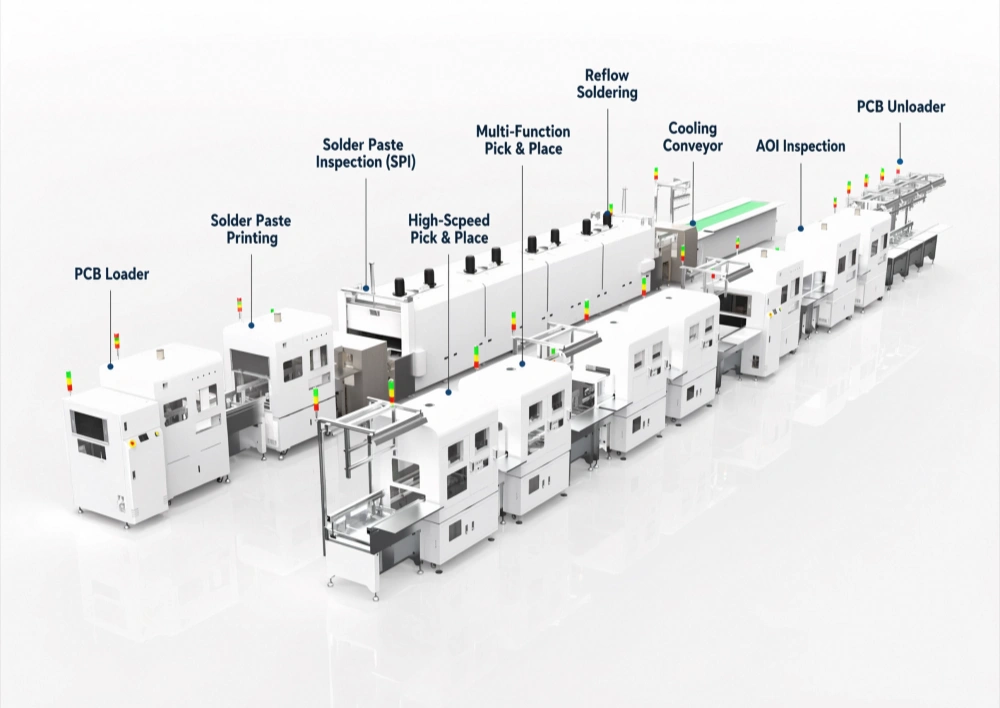
Ask how the supplier controls stencil thickness and aperture design, paste storage and thaw time, print pressure and speed, under-stencil cleaning, and solder-paste inspection (SPI). SPI data should be used to correct the process before defects reach placement and reflow. For fine-pitch, QFN, and thermal-pad designs, aperture reduction and segmentation are engineering decisions that should be documented.
Placement and reflow
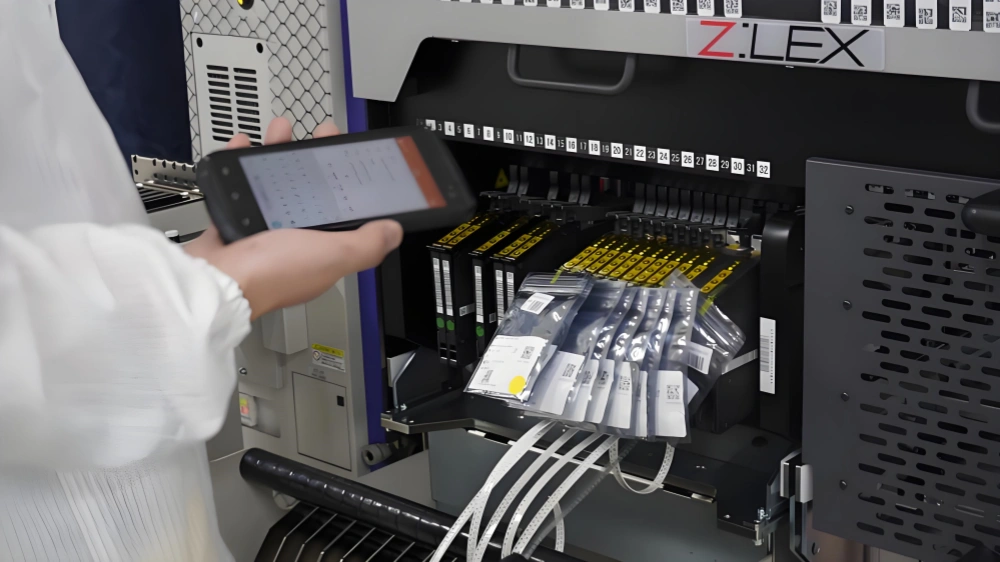
Confirm how feeders, component verification, nozzle selection, fiducials, and first-off checks are controlled. Then ask for the reflow-profile method: thermocouple attachment, profile limits by component and board zone, profile approval, and what happens when a board or alloy changes. A generic oven recipe is not a qualified profile.
For mixed technology, ask how the sequence handles SMT, through-hole, selective or wave soldering, and hand operations. Each transition adds opportunities for polarity errors, solder bridging, thermal damage, and handling contamination.
Process capability in context
Do not compare "CPH" or placement accuracy in isolation. Ask for demonstrated capability on your smallest package, pitch, board size, component height, and mix. A supplier that can place 0201 parts on a stable product may not have the same yield on a large, thermally uneven board with heavy connectors and bottom-terminated devices.
4. Require an inspection and test strategy tied to failure modes
Inspection is not the same as quality, and no single inspection method covers every defect.
- SPI finds paste-volume and print-registration problems before placement.
- AOI can detect many presence, polarity, placement, and solder-joint anomalies, but its coverage depends on library quality and viewing access.
- X-ray is useful for hidden joints such as BGA and some bottom-terminated packages, plus voiding or through-board conditions that optical systems cannot see.
- ICT checks node-level electrical behavior when the board and fixture support it.
- Functional test (FCT) verifies the product's intended behavior and often catches integration faults that structural inspection misses.
- Visual inspection and workmanship acceptance remain necessary, with the applicable product class and acceptance standard agreed in advance.
Ask for a written control plan that maps each critical characteristic to a method, sampling level, limit, reaction plan, and retained record. A test name in a quotation is not a test strategy. GreatPCB's PCB testing overview and ICT/FCT comparison are relevant references when deciding which combination fits your product.
For workmanship, put the applicable IPC acceptance class in the purchase documentation rather than saying "IPC compliant." IPC describes IPC-A-610 as a set of requirements for the acceptance of electronic assemblies; it does not replace product-specific drawings, test limits, or reliability requirements. GreatPCB's IPC-A-610 acceptance guide explains why the class and inspection method need to be agreed before production.
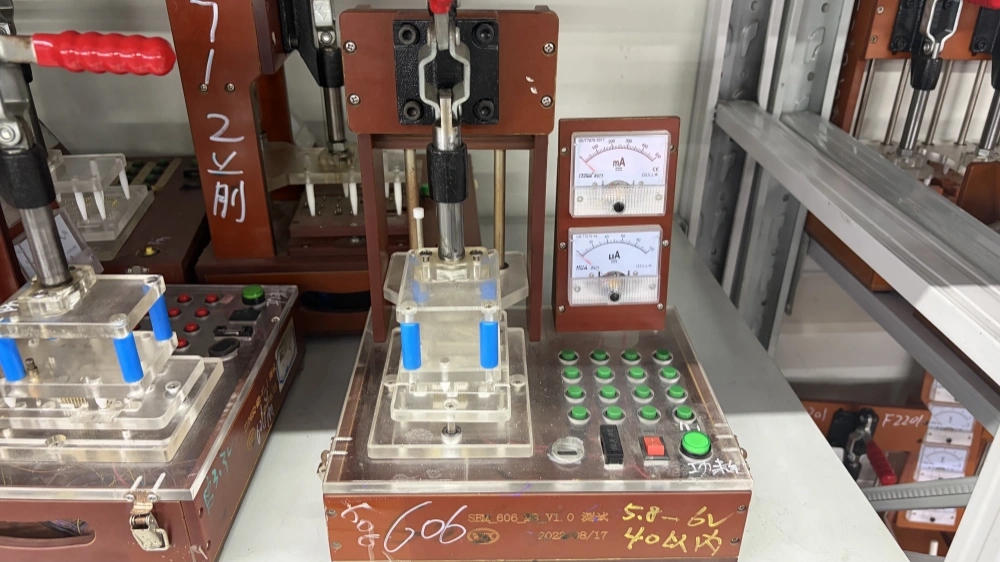
GreatPCB provides SPI, AOI, X-ray, ICT, and functional test support as part of its PCBA manufacturing services. Review our testing capabilities for more information.
5. Verify traceability, change control, and containment
Traceability should connect the finished serial number or lot to the PCB revision, BOM revision, component lots, programs, stencil, machine line, reflow profile, inspection records, test results, and rework history. The exact depth depends on product risk, but the principle is simple: when a defect appears, can the manufacturer isolate affected material quickly?
Ask to see a redacted traveler or digital record. Also ask:
- How are customer approvals recorded for BOM alternates and process deviations?
- How are obsolete programs, drawings, and BOM revisions prevented from being used?
- What is the notification and approval path for a process, material, site, or sub-tier supplier change?
- How are nonconforming boards identified, segregated, repaired, and re-tested?
- Can the supplier provide a corrective-action report with containment, root cause, and effectiveness verification?
These controls matter more than a polished factory video. A manufacturer that cannot show revision discipline will eventually make a board to the wrong instruction, even if its equipment is excellent. For products sold into the European market, also confirm the applicable substance restrictions and supplier evidence under the European Commission's RoHS Directive.
6. Compare yield and total cost, not only unit price
The relevant cost is the cost of accepted product delivered on time. A simple model is:
Total cost = quoted assembly + materials and tooling + test/fixture cost + freight and duty + expected rework/scrap + shortage and delay exposure + engineering-change cost.
You do not need to pretend that expected loss is precisely known. Use a sensitivity range and ask the supplier for the assumptions behind its quote. Check whether the price includes:
- stencil, programming, test fixtures, and first-article/NPI charges;
- component substitutions, excess material, and cancellation liability;
- setup and changeover time for high-mix production;
- rework limits and repair pricing;
- packaging, moisture protection, labeling, and serialization;
- inspection reports, test data, and documentation;
- expedited freight or split shipments when a shortage occurs.
Yield should be discussed by defect mechanism and stage, not as one unqualified percentage. Ask how first-pass yield is calculated, whether rework is counted as a pass, what Pareto data is available, and how recurring defects are closed. A high "final yield" that includes extensive manual repair may still be a poor manufacturing process.
7. Qualify the supplier with a controlled pilot
Shortlist two or three manufacturers, then use the same package and scorecard for each. Send the released Gerbers, ODB++ or equivalent data, centroid file, BOM with approved alternates, assembly drawings, fab notes, test requirements, labeling rules, and forecast. Mark every file with a revision and date.
Score the response on:
- technical questions raised before the quote;
- completeness and assumptions in the quotation;
- component-risk findings and alternate approval discipline;
- DFM/DFA quality and closure time;
- first-article yield and defect Pareto;
- inspection/test evidence and traceability;
- communication speed and change-control behavior;
- total landed cost and credible production lead time.
The pilot should be large enough to expose setup and process issues but small enough to contain risk. Before release to volume, close the first-article report, approve the golden sample or test baseline, confirm packaging and labeling, and define the escalation path for defects. For a product with meaningful field or regulatory risk, consider an on-site or remote process audit focused on records and reaction plans rather than a tour of equipment.
Common selection mistakes
Choosing the lowest quote before normalizing scope
If one supplier includes turnkey procurement, testing, and documentation while another excludes them, the prices are not comparable.
Treating certificates as proof of product capability
A management-system certificate can support confidence in documented processes, but it does not prove a supplier can assemble your BGA, control your reflow profile, or meet your test coverage. Verify the product-specific evidence.
Asking for "100% inspection" without defining the method
One hundred percent AOI does not mean one hundred percent electrical coverage. Define what is inspected, what is tested, and what is sampled.
Accepting substitutions to protect schedule without engineering review
An alternate part can change electrical performance, thermal margin, firmware behavior, compliance, or long-term availability. Put substitution authority in writing.
Confusing capacity with responsiveness
Large equipment counts do not guarantee that engineering will answer a clarification, contain a defect, or protect your revision. The pilot and change-control process reveal those behaviors earlier.
A practical decision rule
Choose the PCBA manufacturer that can demonstrate the best fit between your product's failure risks and its control system. If two suppliers are technically equivalent, use total cost, lead time, communication, and geographic or supply-chain considerations to decide. If they are not technically equivalent, a lower quote is usually a deferred cost rather than a saving.
The final procurement file should contain the approved capability review, DFM/DFA report, BOM and alternate approvals, process and test plan, acceptance criteria, traceability expectations, change-control terms, pilot results, and commercial assumptions. That record turns "we selected a supplier" into a repeatable manufacturing decision.
Connect with GreatPCB for PCBA manufacturing, assembly, component sourcing, and testing support. Our engineering team can review your build data and provide a capability-fit assessment.
FAQ
Send released fabrication and assembly data, a complete BOM with approved alternates, centroid data, assembly drawings, panelization details, test requirements, programming files, packaging/labeling requirements, forecast volumes, and target delivery dates. State what is turnkey, consigned, or hybrid, and identify any controlled or safety-critical characteristics.
Neither model is automatically better. Turnkey can reduce procurement workload and consolidate accountability, but it requires strong controls for alternates, provenance, lifecycle risk, and excess material. Consignment gives the OEM more control over parts, while shifting incoming inspection, kitting, shortage, and material-handling responsibilities to the project team.
Ask for a sample DFM/DFA report and require the supplier to review your actual data before quoting. Look for specific findings about pads, stencil apertures, board support, fiducials, panelization, test access, thermal constraints, and component handling. A generic rules-pass report is weak evidence.
That depends on the failure modes and product architecture. SPI and AOI support process control and assembly inspection; X-ray can inspect hidden joints; ICT provides node-level checks when fixture access exists; FCT verifies intended operation. Define coverage, limits, sampling, records, and reaction plans in the control plan.
It should identify the applicable product class and revision, the inspection responsibility, and any customer-specific workmanship requirements. IPC-A-610 acceptance criteria are not a substitute for electrical test limits, reliability testing, drawings, or regulatory requirements.
Normalize the BOM basis, component ownership, tooling, programming, testing, inspection reports, packaging, freight, duties, rework, and lead-time assumptions. Then compare pilot results, yield definitions, change-control terms, and shortage handling. Unit price is only one input to total cost.
Sources and technical references
- IPC-A-610 overview, IPC.
- ISO 9001 quality management systems, International Organization for Standardization.
- RoHS Directive, European Commission.
GreatPCB offers PCB manufacturing, PCBA assembly, component sourcing, and testing services. Visit our service pages to learn more about our capabilities and how we can support your product from prototype to volume production.
Table of Contents
Tags
Related Posts
PCBA Prototype
October 19, 2026
PCBA Prototype
August 14, 2026