
PCB Manufacturer in China: A Buyer’s Guide

Choose a PCB manufacturer in China by checking four things together: whether the actual production site can build your board, whether the quotation covers the required construction, whether inspection and testing match the acceptance criteria, and whether approved requirements will carry through to repeat orders. A low price is useful only after those points are clear.
Start with a released fabrication package and ask suppliers to identify assumptions, exceptions and outsourced operations. Compare the offers on the same usable-board quantity and delivery basis, then use a trial order to check both the boards and the supplier’s handling of documentation, changes and problems.
Bare PCB manufacturing produces the unpopulated circuit board. PCB assembly, or PCBA, adds components and assembly operations. If you need assembled products, define that additional scope separately; a bare-board electrical pass does not validate an assembled product.
Choose the Right Type of PCB Supplier
A supplier that is excellent at inexpensive prototypes may not be the right choice for a tightly controlled production program. Start by deciding whether you need rapid design iterations, a repeatable manufacturing process, specialist construction, or a combined fabrication and assembly service. The purchasing route should follow that requirement.
Prototype platforms and production fabricators
An online ordering platform can make standard boards convenient to buy. Published options help you select layer count, thickness, finish and quantity, and a familiar ordering workflow can reduce the effort of repeated design iterations. The important question is what happens when your drawing falls outside those standard options. Ask whether engineering can review the exception and whether the quoted service actually includes it.
For repeat production, look beyond the ordering interface. Ask which manufacturing site will run the job, how the approved material and stackup are retained, and how process or supplier changes are communicated. A production fabricator should be able to discuss your expected volumes, manufacturing route, inspection records and recurring delivery requirements. Prototype and production services can exist within the same organization; the labels do not establish how a particular order will be controlled.
| Supplier model | Useful when | Question to resolve before ordering |
|---|---|---|
| Online prototype service | You need straightforward ordering and frequent revisions within published options | Which drawing requirements override the order form, and who reviews exceptions? |
| Production-oriented fabricator | You need recurring orders with defined materials, records and change control | Will the approved build use the same site and controlled construction on reorders? |
| Specialist board manufacturer | Your design uses demanding materials, vias, mechanical features or reliability requirements | Can the supplier demonstrate the relevant combination of processes, rather than each feature separately? |
| Sourcing coordinator | You need access to several manufacturing routes through one commercial contact | Which factory makes each board, and who manages deviations and corrective action? |
| PCB assembly or EMS supplier | You need populated assemblies or a broader manufacturing scope | Who fabricates the bare boards, and are fabrication requirements preserved through procurement? |
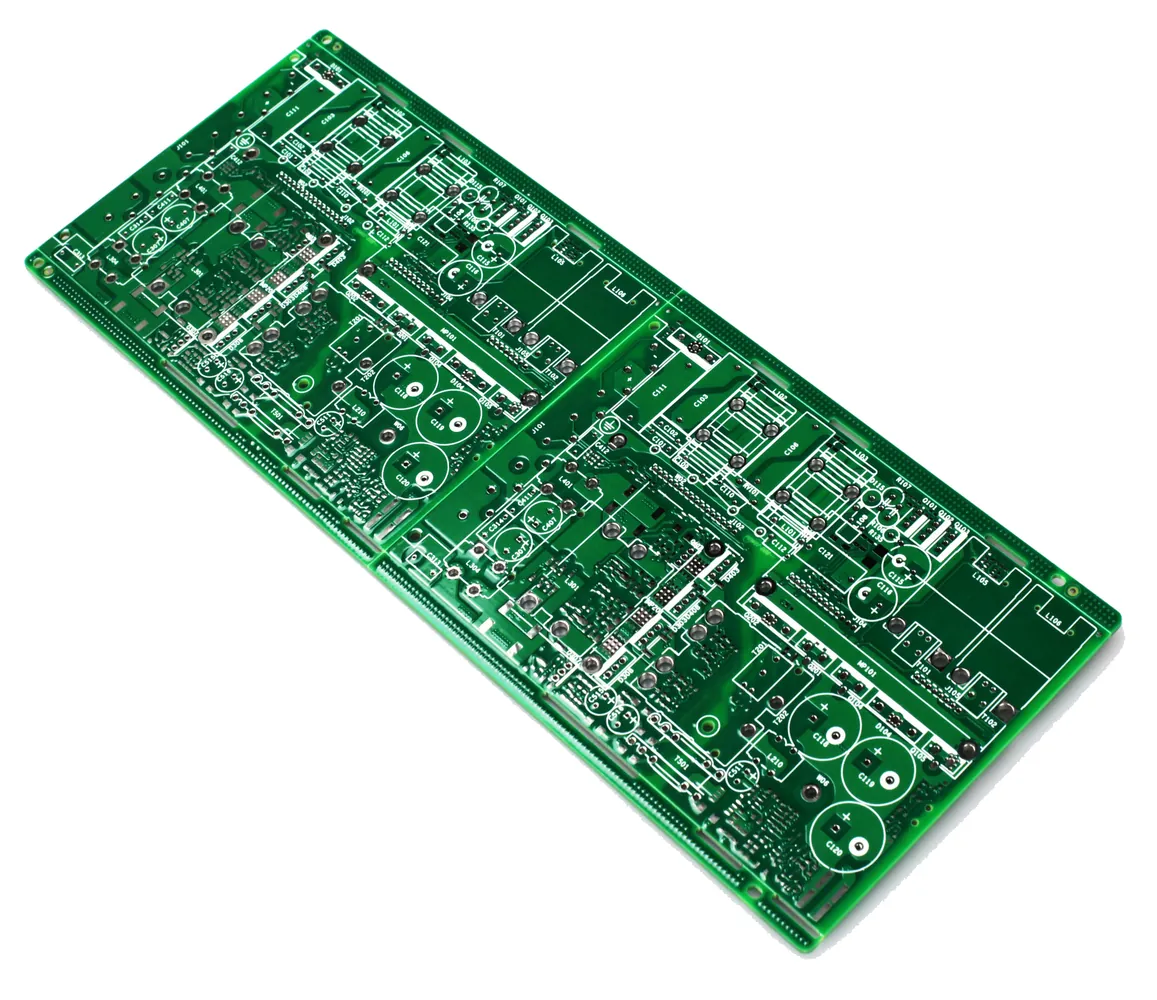
Fabrication and assembly are separate scopes
A PCB manufacturer makes the bare board. A PCB assembly supplier adds components and assembly operations. One company may coordinate both, but a quote for assembly does not automatically identify the board fabrication site or include every board-level test you require.
A coordinator is not automatically a weaker option than a direct factory. It can provide access to suitable specialists and manage communication effectively. What matters is disclosure: the manufacturing route, responsibilities and approval process should be clear. Equally, calling a business a factory is not evidence that every advertised process happens at the same site.
Shortlist suppliers against the work you actually need. Keep enough candidates to compare meaningful technical responses and comparable offers, while leaving time to qualify each one. A long list of logos is less useful than a small set of suppliers willing to resolve the same drawing questions.
Match Materials and Process Capability to Your Board
A PCB manufacturer in China may list fine lines, high layer counts, controlled impedance, and microvias. Those labels do not establish it can repeatedly build your exact stackup, via construction, copper distribution, and finished dimensions. Qualify the construction, then request evidence of comparable builds.
Define the construction, not just the headline capability
Describe the board in manufacturing terms: layer count and sequence; finished thickness; starting foil and finished copper by layer; finished hole sizes; via types and connections; whether vias are plated, filled, capped, or open; and any controlled-depth drilling or sequential lamination. Ask which line and process route will make each critical feature, what design rule applies to your geometry, and how the supplier verifies it. A published minimum is not proof of process margin for a production panel.
Be precise about copper. “One-ounce copper” may describe starting foil; outer layers gain copper during plating, so finished thickness differs. Label each value as starting foil or finished copper and confirm it on the stackup drawing. For plated holes, specify finished diameter and barrel requirements, and ask how drill compensation accounts for plating. This avoids confusing nominal drill size with the finished dimension.

Specify laminate by grade and validate the stackup
“FR-4, high Tg” is not a complete specification. Name the approved laminate grade and resin system, required core/prepreg construction, and acceptable alternates by exact grade. Request the stackup with dielectric thicknesses, copper weights, and material designations before CAM release. A listed grade is not proof it is stocked for your order or that an alternate is electrically equivalent. Laminate families distinguish electrical and thermal properties.
Tg alone is a poor proxy for thermal suitability. Td, coefficient of thermal expansion (CTE), moisture behavior, and assembly or service exposure matter differently. Match material properties to the application, then confirm the grade and alternates with the fabricator. Product data lists Tg, Td, CTE, Dk, and Df separately; none is a universal thermal rating. Isola’s Tachyon 100G data illustrates the distinction.
For high-speed or RF designs, specify the relevant Dk/Df basis and frequency, and ask which method or published data supports the value. Dk varies with method, frequency, resin content, and material versus design basis; confirm it with the datasheet and signal-integrity designer. Rogers explains these distinctions. Impedance depends on stackup, dielectric spacing, copper thickness, and finished trace geometry. Request the impedance proposal and designer approval before CAM changes trace width, spacing, or dielectric construction.
Choose surface finish around soldering process, component pitch, contact requirements, storage interval, and handling. Ask how it is specified and controlled, and whether it suits exposed contacts and your assembly sequence. No finish is best for every board; a default may conflict with storage or contact needs.
| Requirement to resolve | Ask the manufacturer | Evidence to request |
|---|---|---|
| Via and drilling construction | Can this exact via map and build sequence run on the intended production line? | Proposed stackup, drill table, and a comparable build record |
| Copper definition | Are these starting-foil or finished-copper values on each layer? | Layer-by-layer copper callout on the stackup drawing |
| Laminate | Which exact grade and core/prepreg combination will be used? What alternates require approval? | Manufacturer datasheet and order-specific material declaration |
| Electrical properties | What frequency, method, and material basis support the stated Dk/Df? | Datasheet reference and impedance calculation for the proposed stackup |
| Surface finish | Does the finish meet assembly, contact, and storage requirements? | Finish specification and confirmation of the applicable process |
Resolve these details before comparing quotes. Record proposed substitutions or stackup changes and obtain designer approval before releasing production data.

Verify Where and How the Boards Will Be Manufactured
A capability page or factory logo cannot tell you which company will build your order. Verify the contracting entity, production address, and route your boards will take. If processes are outsourced, establish who controls each handoff and answers for the finished boards.
Map the actual production route
Ask for the legal entity on the quotation and invoice, factory address, and a process map for your board. Mark each step as in-house or outsourced, name any subcontractor handling the order, and identify who approves that subcontractor and owns quality escalation. A clear description gives you a sound basis for qualification.
Confirm engineering will review your Gerbers, drill data, stackup, and fabrication notes before release. Ask for redacted CAM questions from a comparable order. How the supplier handles a mismatch, such as conflicting finished-hole and drill dimensions, shows whether it seeks your approval or makes an assumption. Require written resolution of open questions and approval of substitutions before release.
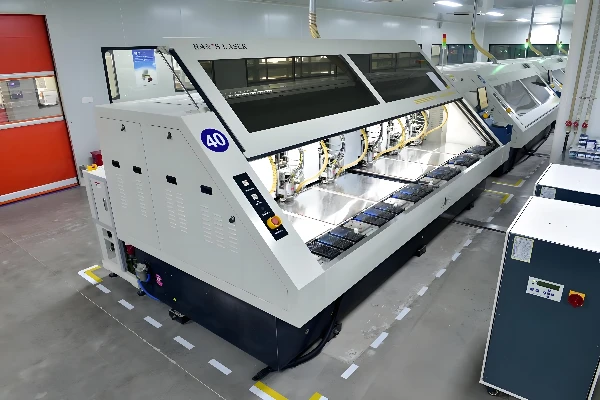
An equipment list does not establish that a process is qualified for your design or controlled on the assigned line. Ask how operators verify key settings, how measurement equipment is calibrated, and how the order is tracked. Request redacted traveler, calibration-status, and lot-traceability records linking incoming material to finished panels. A factory tour can show the production flow, while a quality-assurance overview suggests topics to discuss; neither verifies your order’s route.
| Ask | Record to request | What it helps establish |
|---|---|---|
| Which entity and address will take and build this order? | Quote identity, facility address, and order routing | Who is accountable and where work is assigned |
| Which steps are subcontracted, and to whom? | Process map naming subcontractors and escalation owner | Whether outsourced work is disclosed and controlled |
| How will engineering resolve data conflicts? | Redacted CAM questions or discrepancy record | Whether ambiguous requirements reach you before release |
| How are materials and production steps tracked? | Redacted lot traceability and traveler examples | Whether records connect incoming material to the order |
| How can I see the relevant site and line? | Live video tour or visit plan for the named facility | Whether the described workflow is visible and consistent |
A remote walkthrough can help when travel is impractical; a site visit adds context for a complex build. Treat either as one piece of evidence, then compare it with the route, records, and named responsibilities. This verifies who will do what; it is not a standalone verdict on board quality.
Check Certifications and Define the Acceptance Standard
Certification matters when it applies to the company, location and work being purchased. A badge in a website footer is only the starting point. Request the underlying record and check the legal entity, covered site, scope, issuing body and current status.
Verify the record behind the logo
ISO develops standards; independent certification bodies issue certificates. ISO’s certification guidance explains this distinction. Identify the issuer on the document and check its verification service. For accredited management-system certificates, IAF CertSearch can provide status, scope and certified-location information. If a search is inconclusive, ask the issuer to resolve it rather than assuming the supplier is either qualified or fraudulent.
Check that the document covers the manufacturing operation involved in your order. An address belonging to a sales office or an assembly operation may not answer a question about bare-board fabrication elsewhere. When several facilities are involved, ask which certificates cover each relevant site and which company has responsibility for the delivered product.
| Evidence | What to verify | What it does not establish by itself |
|---|---|---|
| Management-system certificate | Issuer, standard, status, organization, scope and locations | That every proposed board construction meets your drawing |
| UL recognition or certification record | Relevant product or material category and construction conditions | Approval of an entire finished electronic product merely because a board or material is recognized |
| IPC personnel training certificate | Individual, program and current qualification | Certification of every process at the factory |
| Order-specific inspection or test report | Board revision, lot, method, extent and acceptance criteria | Performance properties that the reported method did not evaluate |
UL Product iQ supports certification searches. For printed wiring boards, check the relevant construction and material conditions, not just whether a familiar company name appears. Ask the supplier to identify the record it believes covers your order.
Make “IPC compliant” specific
For rigid bare boards, IPC-6012 addresses qualification and performance requirements, while IPC-A-600 supports evaluation of visible and internally observable board conditions. IPC-A-610 addresses electronic assemblies. The official standards overview distinguishes these roles.
State the applicable document, revision, class and any project-specific requirements in the purchase documents. Have the manufacturer identify conflicts or exceptions before accepting the order. Avoid treating the most demanding class as a universal upgrade: the selection should follow the product’s engineering and customer requirements. Different constructions may need different specifications.
Keep a controlled copy of the agreed requirements with the manufacturing release. A general statement of compliance should never replace the measurable requirements and records needed to accept your particular boards.
Compare the Complete Quote, Including Panels and Test Scope
Two quotations are comparable only when they describe the same delivered boards. A lower unit price can reflect a different material, a relaxed tolerance, reduced test scope or a different counting basis. Ask each supplier to state exceptions explicitly, then compare the resulting offers line by line.
Separate construction costs from purchasing choices
Board area, layer structure, material selection, copper requirements, hole and via processing, surface finish and verification requirements all belong in the quotation baseline. A supplier may suggest a change that simplifies fabrication, but engineering should assess its effect before the revised construction becomes the price comparison.
Do not confuse starting copper foil with finished copper requirements. Likewise, a nominal board thickness is not a complete stackup specification. If one offer assumes standard material and another prices an exact approved grade, the difference needs to be resolved before negotiating the unit price.
| Quote item | Confirm in every offer |
|---|---|
| Board construction | Release revision, stackup, material grade, copper, vias, finish, tolerances and proposed exceptions |
| Quantity and delivery format | Finished-board count, boards per panel, panel dimensions and whether the price is per board, set or panel |
| Inspection and electrical testing | Methods, board coverage, agreed limits, records and separately priced checks |
| Engineering and tooling | One-time charges, fixture or setup costs, ownership and reuse conditions |
| Packaging and shipment | Packaging requirements, shipment size, freight, insurance and the agreed delivery basis |
| Reorders and revisions | Which charges recur, how price validity is defined and what changes trigger a new review |
Panel counts and marked-out boards can change the calculation
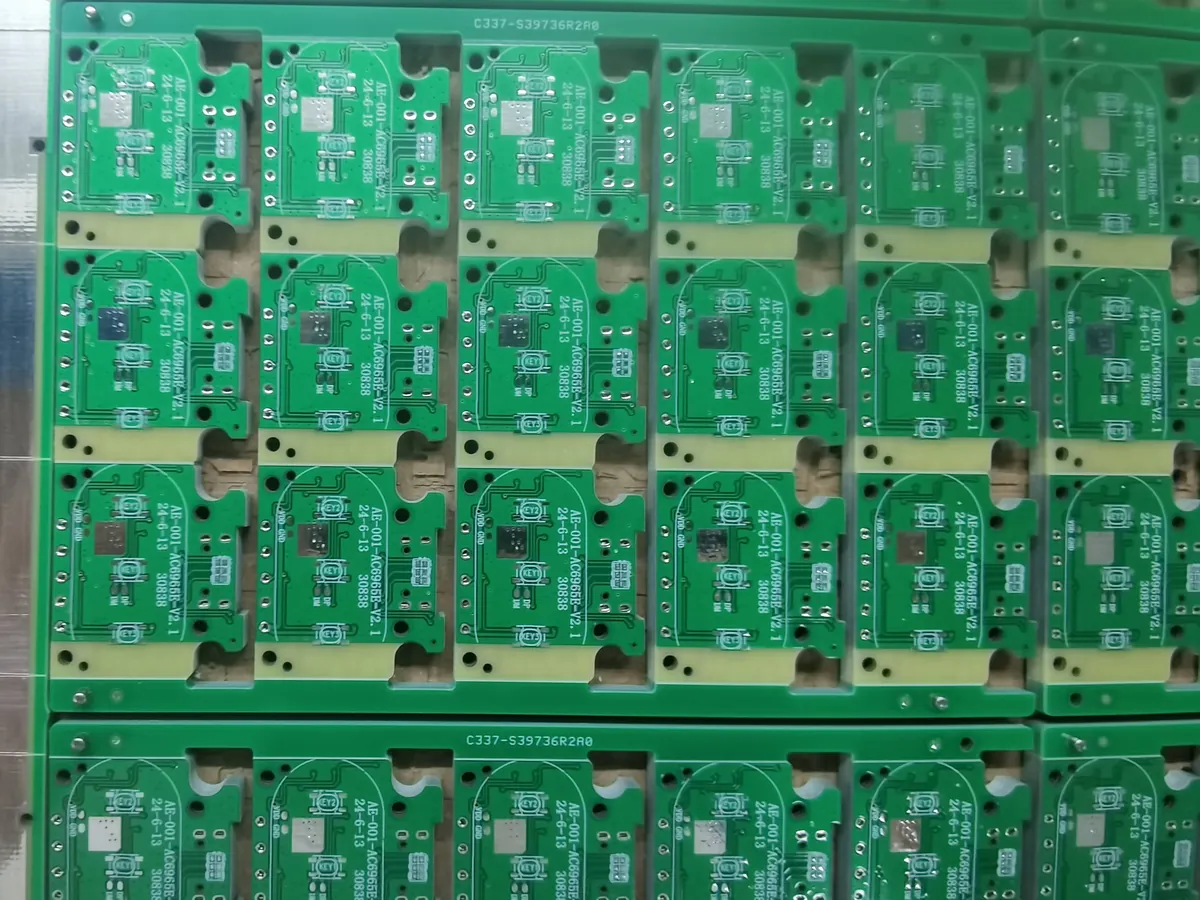
Specify whether you want individual boards or assembly panels. Panel rails, fiducials, separation features and handling requirements should match the downstream assembly process. A panel that is economical to fabricate can still create problems for the assembly line if its mechanical design is unsuitable.
Also ask whether panels containing marked-out defective units are permitted. Such panels are often called X-out panels. If they are accepted, agree how defective positions are identified, how usable units are counted and whether the assembler can exclude those positions. If they are prohibited, put that requirement in the RFQ. Do not compare the number of shipped panels without checking the usable board count.
Calculate delivered cost without hiding assumptions
Include fabrication, agreed inspection and testing, allocated tooling, packaging, freight, insurance and applicable import costs in the comparison. Then divide the known total by the number of accepted boards. Before receipt, use the planned acceptable delivery quantity and make that assumption visible; update the calculation when actual results are available.
Suppose two suppliers quote panels containing four boards. One permits panels with marked-out units, while the other prices panels containing only usable units. Equal panel counts do not necessarily deliver equal numbers of boards. Compare the promised usable quantity, identification rules and replacement arrangement, not the panel price alone.
Ask what a one-time charge buys and when it can be reused. A design revision, changed panel or different manufacturing route may require new engineering or tooling. Written assumptions make those later conversations easier than an unexplained “repeat-order discount.”
Specify Inspection and Electrical Test Coverage
A board can look clean and still contain an open or unintended connection; an electrical pass can miss physical defects and dimensional errors. Specify inspection and electrical checks separately. Ask what defines a pass, how much of the order is covered, and what records you will receive. “100% tested” does not mean every reliability property has been verified.
| Method | What it checks | Limit to agree | Evidence to request |
|---|---|---|---|
| Automated optical inspection (AOI) | Visible conductor patterns and selected surface features | Depends on accessible surfaces and programmed criteria; cannot prove continuity | Inspection stage, criteria, sample report or defect image |
| Electrical continuity and isolation | Opens and shorts against a defined netlist and thresholds | Specify voltage, resistance limits, test level, and board coverage | Lot/revision pass summary and test data source |
| Flying-probe test | Electrical access with moving probes, often without a dedicated fixture | Cycle time varies with design and quantity; confirm access and exclusions | Method, coverage, thresholds, and lot results |
| Fixture-based electrical test | Electrical checks through a purpose-built fixture | Agree fixture cost, lead time, access, and revision-change handling | Fixture and program revisions, coverage, results |
| Impedance coupon measurement | Impedance on a test coupon made with the panel | Represents the coupon location and structure, not every board trace | Coupon location, target/tolerance, measured values, instrument details |
Confirm whether “100% electrical test” means that every delivered board is tested, and ask what the agreed test program covers. Request the net-access strategy and any excluded connections. Testing every board does not establish every physical property or rule out every latent failure mechanism. Ask whether coverage is based on the supplied CAD netlist or the manufacturer’s CAM data, and whether the CAM test data was compared with the released design data where available. A mismatch can otherwise make a wrong interpretation appear internally consistent. The IPC-9252B contents identify test levels, test parameters, source data, and test records as separate planning topics; the IPC document revision table lists the document as “No Longer Maintained,” so name the agreed standard and revision in the purchase requirements instead of calling it the latest requirement.
Choose probes or a dedicated fixture based on design and expected order pattern. Probes avoid custom tooling but can take longer; fixtures require upfront setup and may suit repeat runs. There is no universal break-even quantity. Ask for tooling and setup charges, test time, and revision-change costs. Define “all boards” as each delivered board tested to the agreed netlist and thresholds, with exceptions listed.
Impedance testing matters when controlled impedance is specified and the designer approves a coupon structure and target. Request results and the coupon’s relationship to the stackup and panel. A cross-section provides localized evidence of copper, plating, or dielectric construction; it samples one cut location. Agree sample count and location.
Set limits and record requirements in the RFQ and confirm them on the order. Review the available bare-board testing methods with the supplier, then record the project-specific coverage and exclusions. An electrical pass is evidence about specified checks, not product validation or a field-reliability guarantee. Keep AOI, test, coupon, and cross-section records distinct so each record’s scope is clear.

Use the Trial Order to Qualify Repeat Production
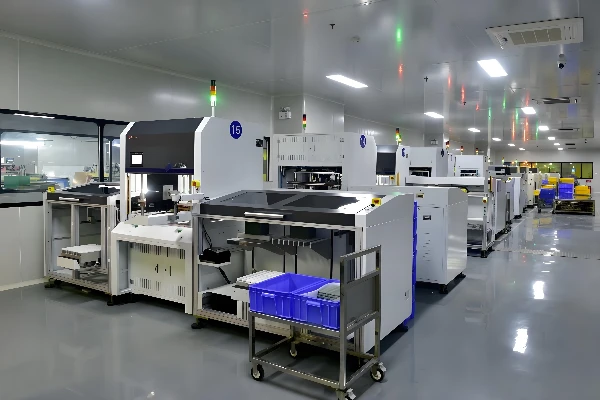
The first order should answer whether the supplier can deliver the agreed construction and supporting evidence. Receiving a few boards that assemble successfully is useful, but it does not settle every question about materials, process control, traceability or production transfer.
Approve the manufacturing package before cutting material
Review the supplier’s proposed stackup, engineering questions, panel arrangement and any requested deviations together. Confirm which files and drawing notes control the build. If a manufacturing adjustment changes a critical feature, the responsible engineer should approve it before the factory proceeds.
Keep the approved answers with the release package. A change buried in a chat message is difficult to carry into a later order. Use a revision identifier and a single record of accepted exceptions so the supplier and your receiving team work from the same requirements.
Separate board acceptance from product validation
Check the received boards and reports against the agreed criteria: identity and revision, dimensions, construction details, specified electrical results and any additional evidence requested for the application. Link results to the sample lot. Record what was inspected or tested, rather than treating the presence of a report as sufficient.
Your engineering team must still evaluate the board in the intended product. Assembly fit, signal performance, thermal behavior and environmental reliability may need separate validation. DFM feedback concerns manufacturability; a successful continuity test concerns the tested electrical connections. Neither replaces the product-level evaluation.
Agree trial quantities and sampling on the basis of the project’s risks and intended decision. There is no universally correct number of samples that qualifies every board. A few selected measurements also cannot establish a production yield or long-term process capability by themselves.
Confirm what changes between prototype and production
Ask whether the production order will use the same site, material grade, stackup, via processing, panel format and verification route. A prototype service may use a different manufacturing arrangement from the one proposed for volume work. That can be acceptable, but the change should be visible and assessed.
Before releasing repeat production, close the following points:
- The sample revision and construction match the approved release, including documented exceptions.
- Required reports identify the relevant boards or lot and show the agreed criteria and results.
- Assembly and application checks required by your product team are complete.
- Nonconforming results have an agreed disposition and any required corrective action is verified.
- The production site, manufacturing route and controlled material specification are confirmed.
- The supplier knows which future changes require approval and who can authorize them.
For an important new supply relationship, consider a controlled pilot build before committing to the full recurring schedule. Use that build to examine communication, records and delivery performance as well as the boards themselves. Base the next release on the evidence collected, not on the assumption that every later order will match the first sample.
Plan Production Time, Packaging and Delivery Separately
A quoted fabrication lead time is not the date boards arrive at your assembly line. Build the schedule around engineering release, material readiness, production, agreed verification, packing, dispatch and transit. Ask the supplier which events start its lead-time clock and which are excluded.
Identify the conditions that can hold the order
Open engineering questions, unapproved substitutions, unavailable material and incomplete order requirements can delay release. Confirm when the manufacturer will notify you of a hold and who must respond. An urgent order needs a clear decision path, not only a fast quotation.
Have the factory confirm capacity for your actual construction and quantity. Ask about shutdowns, holidays and subcontracted-process availability in the intended order window. Use a documented plan for that order rather than a general claim about how many days the supplier usually takes. When a deadline is tight, identify the last point at which a decision or missing approval will affect dispatch.
Put packaging requirements in the order
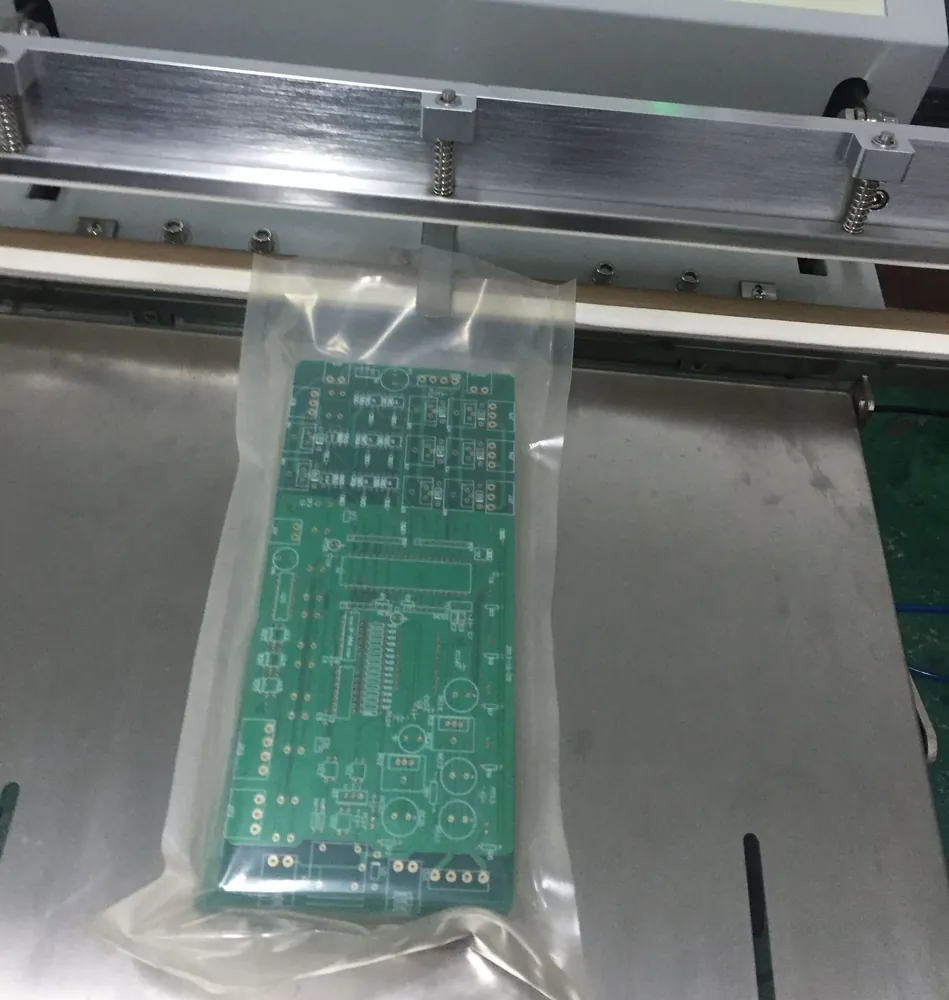
Specify how boards should be separated and protected during handling and transport, and what identification must remain on each pack. Agree board part number, revision, lot, quantity and any marked-out positions. Packing information should let receiving staff reconcile the shipment with the purchase order without opening every package unnecessarily.
Ask the manufacturer to propose moisture protection and storage instructions appropriate to the material, finish and intended assembly interval. Where dry packing, desiccant or a humidity indicator is required, define the arrangement and labeling. Avoid a universal storage period or baking instruction for every PCB: the relevant construction, finish and assembly requirements should govern those decisions.
Agree whether small shipments and consolidated production shipments need different handling. Panels also need protection against mechanical damage; the shipping carton and internal support should suit their size and format. Request packing photographs when they will help resolve a specific handling question.
Clarify the delivery basis and the named place
When using Incoterms, state the rule, named place and edition, and confirm the resulting responsibilities with the parties arranging shipment. ICC explains that these rules allocate obligations, costs and risk; the place of contractual delivery is not always the destination where the buyer expects physical arrival. See ICC’s explanation of delivery and risk transfer.
Confirm who arranges freight, handles the relevant customs formalities, supplies shipment documents and manages a transport claim. Obtain destination-specific import-cost information from your logistics adviser or broker rather than assuming a factory quotation covers it. No single duty rate or shipping method applies to every PCB order.
Finally, agree a receiving check. Reconcile quantity and identification, inspect packaging damage and quarantine anything that needs investigation. Record photographs and shipment details promptly so the supplier and carrier can distinguish a transport issue from a manufacturing nonconformance.
Agree on Change Control and Quality-Problem Resolution
Supplier qualification continues after the first approved order. The relationship needs a way to control changes and investigate problems without losing the connection between a delivered board, its manufacturing records and the agreed requirements.
Define the changes that require approval
Agree which changes must be submitted before implementation. Depending on the project, these can include material grade, manufacturing site, subcontracted operations, stackup, via processing, surface finish, panel arrangement or test plan. Ask the supplier to explain the proposed change, affected orders, reason and verification needed.
Do not rely on “equivalent material” as a complete approval request. Engineering needs enough information to compare the relevant properties and construction. If a change affects drawings or fabrication data, issue a controlled revision and identify when it takes effect. Also define how older stock will be distinguished from the new build.
Investigate defects with evidence
When a problem is found, preserve the affected boards and their identification. Provide photographs, failure observations, test setup, board revision, lot and affected quantity. A report that a board “does not work” is much harder to investigate than a repeatable description of an open connection, dimensional mismatch or other observed condition.
Agree the immediate containment step: which stock is held, which shipments may be affected and whether the supplier should stop or inspect work in progress. Establish a named contact and response milestones for initial findings, investigation and disposition. The time required for analysis can vary, but an unexplained silence should not be the communication plan.
| Stage | Decision or record to agree |
|---|---|
| Containment | Affected lots and stock, shipping holds and immediate screening |
| Investigation | Evidence needed, responsibility for testing and a method for resolving conflicting results |
| Disposition | Return, replacement, agreed repair, concession or another documented outcome |
| Corrective action | Identified cause, action taken and evidence that it addresses the problem |
| Closure | Confirmation of accepted replacement or disposition and release of any held work |
Keep commercial remedies in the purchase terms, including the handling of returns and transport costs. Do not assume a supplier’s general warranty automatically covers assembly loss, line downtime or every downstream expense. Agree the relevant responsibilities before the order, then apply them to the facts of a reported issue.
Track recurring performance by construction and site where possible. Delivery reliability, accepted quantity, record completeness, repeated defects and the effectiveness of corrective action are more useful than a single overall supplier score with no explanation. Use that history to decide whether the next order needs closer review or whether the approved relationship can support a larger commitment.
Prepare an RFQ That Leaves Fewer Questions Unanswered
Package the quotation request as one controlled release. Include Gerber and drill data, the fabrication drawing or notes, the required stackup and material specification, requested quantities, acceptance requirements and shipment destination. Add panel or assembly-interface requirements when the delivered boards must fit a downstream process.
Ask suppliers to answer with a construction proposal, itemized quotation, proposed schedule and an explicit list of deviations. Name the person authorized to resolve technical questions. Agree the working time zone, normal response window and contact for an engineering hold so a routine clarification does not become a production delay.
Before sending a purchase order, answer these final questions:
- Is the quoted manufacturing site and supplier role clear?
- Are material substitutions and drawing changes subject to the approval you require?
- Do the price and quantity refer to the same usable boards or panels?
- Are the inspection, electrical testing and delivered records defined?
- Are production-start conditions, packing and shipment responsibilities clear?
- Is the transition from the approved sample to production documented?
- Is there an agreed process for changes, nonconforming deliveries and reorders?
Is the lowest quotation necessarily a bad choice?
No. Standard construction, efficient panel use and a suitable production route can produce a competitive offer. Investigate differences in scope before drawing a conclusion from price alone. The concern is an unresolved exception, not a low number by itself.
Do I need to visit the factory before ordering?
A visit is useful when the manufacturing route or project risk calls for direct observation. It does not replace order-specific evidence, and verified records and focused technical discussions may be sufficient for some purchases. Choose the qualification effort to match the decision being made.
Can one supplier handle PCB fabrication and assembly?
Yes, but define both scopes. Identify the bare-board manufacturing route, preserve the board specification through procurement and agree the additional sourcing, assembly and test requirements. A one-stop commercial service still needs clear responsibility for each stage.
To discuss a GreatPCB build, review the PCB manufacturing services and send the approved files and requirements for a project-specific engineering review. A useful quotation should make the proposed construction and remaining decisions clear before you commit to the order.
Table of Contents
- Vyberte si správného dodavatele desek plošných spojů
- Přizpůsobte materiály a procesní možnosti vaší desky
- Ověřte, kde a jak budou desky vyrobeny
- Zkontrolujte certifikace a definujte standard akceptace
- Porovnejte kompletní cenovou nabídku, včetně panelů a rozsahu testování
- Specifikujte krytí inspekcí a elektrických testů
- Použijte zkušební objednávku k kvalifikaci opakované výroby
- Plánujte dobu výroby, balení a dodání samostatně
- Dohodněte se na řízení změn a řešení problémů s kvalitou
- Připravte si RFQ, která ponechá méně nezodpovězených otázek
Tags
Related Posts

PCBA Prototype
September 4, 2026
PCBA Prototype
September 4, 2026