PCB Grounding Design: Types, Tips, and Best Practices
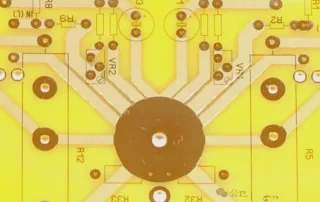
PCB grounding is a topic that PCB layout engineers always care about. For example, how should an effective grounding system be planned on a board? Should all the analog ground, [...]
In the field of electronic circuits, the impedance matching of SPI signal lines is of utmost importance, especially in high - speed application scenarios. SPI (Serial Peripheral Interface), as a [...]
One crucial rule in PCB design that cannot be emphasized enough is: Never route signals across split planes. This principle has been stressed in many PCB design tutorials, but unfortunately, [...]
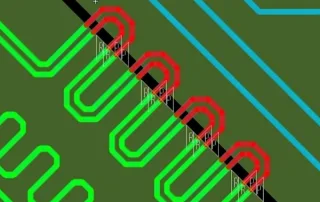
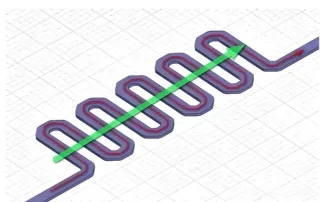
Any trace on a PCB that carries high-frequency signals can cause signal delay. The main purpose of serpentine traces is to compensate for parts of a group of related signals [...]
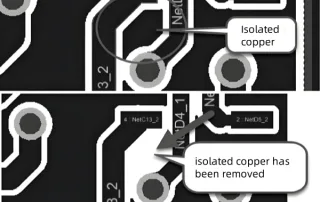
What is Dead Copper on a PCB? Dead copper refers to areas on a copper layer of a printed circuit board (PCB) that are unable to conduct electrical current. These [...]
PCB Design Requirements for 5G Applications In 5G applications, the key PCB design requirements include high-frequency, high-speed materials, high-density interconnects (HDI), impedance matching, layer stack-up planning, signal integrity for trace [...]
Can Signal Attenuation Occur Even in PCB Traces with Near-Zero Resistance? When designing high-speed PCBs, signal integrity is a key concern. Signal integrity refers to the ability of a [...]
3W Rule To reduce crosstalk between traces, the spacing between them should be sufficiently large. When the center-to-center distance between traces is at least three times the trace width, approximately [...]