
PCB Assembly Lead Time: How Long Does It Take?
A simple PCB prototype may be assembled in a few working days once the bare boards, components and production files are ready. A turnkey order takes longer when PCB fabrication, component sourcing or additional testing must also be arranged. If a required part is unavailable, the complete order can extend into weeks even when the assembly work itself is relatively quick.
Two questions make a lead-time quotation easier to understand: what does it include, and what must be ready before the quoted time begins? Start there before comparing suppliers or requesting a faster delivery.
Typical PCB Assembly Lead Times
Prototype, small-batch and production orders have different preparation needs. The sourcing arrangement and the work required before shipment matter as much as the number of boards.
| Order situation | Planning expectation | Confirm before ordering |
|---|---|---|
| Simple prototypes with usable boards, parts and files ready | Assembly may fit within a short window of working days. | The production slot and included inspection or testing. |
| Turnkey prototypes or small batches | The complete order can extend into weeks if boards or components still need to be sourced. | Material availability and the expected date for a usable kit. |
| Larger or repeat production orders | Completion depends on material commitments, capacity, batch size and test work. | Whether the schedule covers one shipment or staged deliveries. |
These are planning scenarios, not fixed service tiers. A complex prototype can take longer than a straightforward production batch. A familiar design can also take longer than its previous order if a required component is now difficult to obtain.
Assembly Time vs. Total Lead Time
Assembly turnaround is the agreed window for preparing and building the assemblies, including the inspection or test work covered by the quotation. Total order lead time can also include engineering clarification, bare-board fabrication, procurement and shipment preparation.
The stages do not always run one after another. Once the relevant information is approved, PCB fabrication and component procurement can sometimes proceed in parallel. Production still needs the appropriate boards, material and instructions before the affected assembly operations can begin.
Consider a planning example: the boards are ready on Monday, but a required IC arrives on Thursday. Faster PCB fabrication would not remove that wait. The useful question is whether the component will be accepted and ready for the available assembly slot.
Adding every stage estimate together can therefore overstate the total. Looking only at the time spent placing components can understate it.
From Production to Delivery
A factory completion date, ship date and arrival date describe different milestones. Transit, customs clearance and local delivery can affect when the assemblies reach you after manufacturing finishes.
Confirm how working days, holidays and order cutoffs are counted. If a prototype must reach your laboratory by a particular date, provide that arrival requirement and the delivery destination when requesting a quotation.
What Determines PCB Assembly Lead Time?
These five factors help explain differences between assembly schedules. They are connected: a production slot is useful only when the work can proceed.
Component availability. A BOM with many available parts can still be held up by one required device. Distributor stock, material in transit and parts accepted for your build represent different levels of readiness. Exact manufacturer part numbers and approved alternatives help establish what can be supplied.
Bare boards and production data. The BOM identifies what to fit; placement data show where parts belong and how they are oriented. Those instructions must agree with the PCB design. A changed footprint, ambiguous polarity or outdated placement file can create an engineering question before assembly starts.
Assembly operations. Double-sided SMT, through-hole connectors and manual installation require different work from a straightforward single-sided build. Mechanical parts and additional processes also need a place in the production sequence. Board count alone does not describe this workload.
Quantity and suitable capacity. More units mean more processing and inspection, but preparation does not increase in direct proportion to quantity. Several different designs can require more changeovers than the same number of identical boards. The available capacity must suit the actual mix of operations.
Inspection, programming and testing. Soldering completion does not necessarily mean an assembly is ready to ship. Firmware loading, electrical checks and product-specific tests may follow. Define these requirements when requesting a PCB assembly quotation.
Why Complex Assemblies Take Longer
Some time is needed to establish the process and perform the work the product requires. This differs from an order waiting because an input is missing.
Setup and First-Board Checks
Before placement, components must be prepared for the equipment that handles them. Tape-and-reel, tube and tray packaging involve different feeding arrangements. Suitable preparation can reduce machine changeover time, but the preparation itself still has to happen.
The first boards provide an opportunity to check that the setup produces the intended result. At the appropriate inspection point, the team can compare the assembly with the released information and check issues such as component identity, position, polarity and orientation.
Finding a setup error early allows it to be corrected before the problem repeats throughout the batch. The affected work then needs another check before release. Sample quantities and inspection points follow the applicable quality plan; a single first-board sample size cannot be assumed for every order.
A repeat order can reuse suitable, validated information. Changes to the design, components or process may still require renewed preparation or verification.
Inspection and Test Requirements
Different checks answer different questions. Agreeing on coverage early gives the manufacturer time to prepare the necessary programs, connections and test arrangements.
| Method | What it helps assess | Scheduling consideration |
|---|---|---|
| Visual inspection or AOI | Observable placement and assembly features. | Settings must suit the board; optical inspection does not establish electrical function. |
| X-ray inspection | Certain joints hidden beneath packages such as BGAs. | Coverage depends on the package and method. X-ray CT is used for bottom-terminal solder-joint inspection. |
| Electrical testing | Defined connections or electrical conditions. | The selected method needs suitable access and preparation; fixture requirements vary. |
| Functional testing | Specified product functions under defined conditions. | Firmware, interfaces, equipment and acceptance criteria need to be available. |
Developing a custom fixture is separate from using it to test each board. Agree on the required connections and acceptance criteria early enough for any necessary development and validation. A prototype might use an agreed bench test instead; a dedicated fixture is not required for every project.
Other complexity comes from double-sided or mixed assembly, several designs in one order and specified operations such as conformal coating. Each can add preparation, handling or processing. None translates into a universal number of extra days. Discuss the actual process and assembly testing requirements for your product.
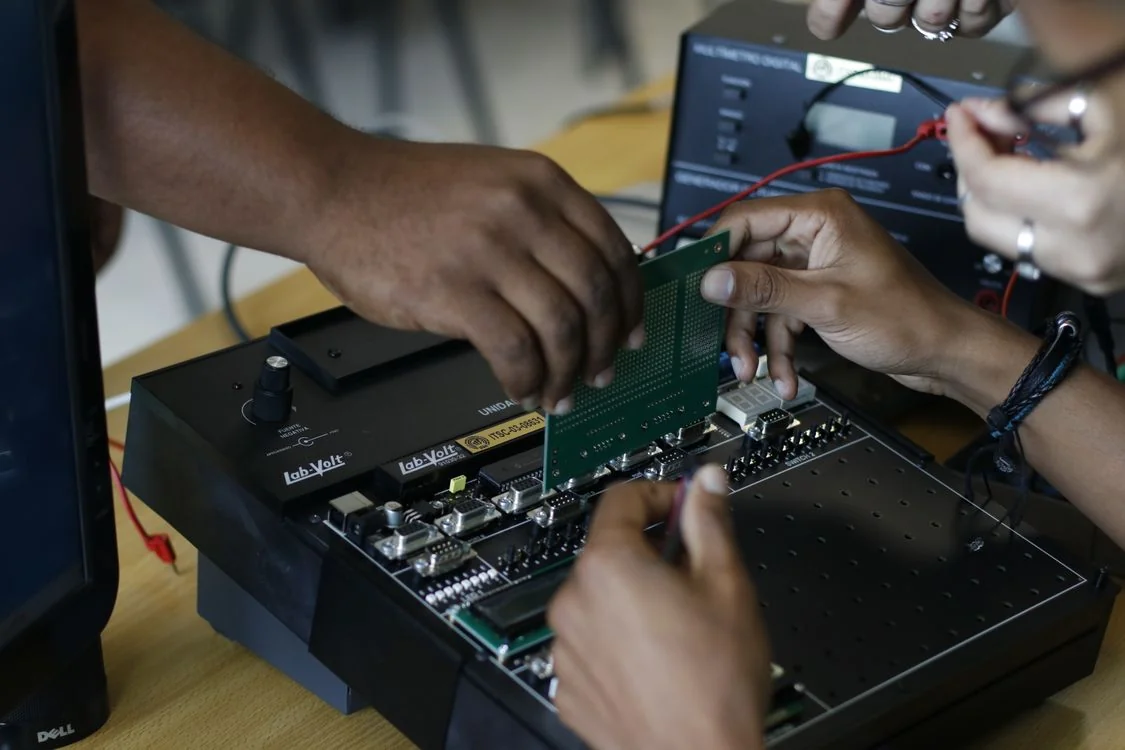
Hands-on assembly operations need time in the production plan. Illustrative photograph.
What Delays PCB Assembly Orders?
Avoidable delays arise when the next operation cannot proceed because an input is missing, inconsistent or awaiting a decision. Resolve these issues before the build becomes urgent.
An incomplete or unusable kit. Delivery to the factory is only one milestone. Material still needs to match the order in identity, quantity and acceptable condition. Poor identification, shortages or incorrect parts can require clarification or replacement. Agree on packaging and extra-parts allowances before dispatching customer-supplied components.
A substitute awaiting approval. Purchasing an available alternative does not establish that it suits the circuit. Package compatibility, electrical characteristics and product requirements need engineering review. Discuss acceptable alternatives before a shortage becomes an urgent approval request.
Conflicting revisions. A new PCB layout accompanied by an old BOM or placement file leaves the factory with inconsistent instructions. Identify the released package clearly and withdraw superseded files, rather than expecting the assembler to decide which version takes priority.
Changes after preparation starts. A revised component or layout may affect purchased material, boards, placement information or tooling. Some work may need to be repeated. The consequences depend on what changed and how far the order has progressed.
A problem found during first-board inspection. An incorrect part, reversed component or setup issue may require correction and another check before the affected batch continues. This differs from the planned inspection time. Skipping the check can spread the problem and create more rework later.
Missing programming or test inputs. Physically complete assemblies can still be waiting for firmware, an interface drawing or an acceptance limit. Planned test execution and waiting for information needed to perform the test are separate schedule items.
Unanswered engineering questions. Unclear orientation, unpopulated positions and special instructions all need decisions. Nominate a contact who can resolve questions or obtain the required approval.
How to Reduce PCB Assembly Lead Time
The best opportunities usually come from preparing inputs early and removing avoidable waits. Start with the work most likely to control the final completion date.
Before Ordering
Review the BOM for constrained, obsolete or project-specific components. Confirm exact part numbers and identify alternatives that engineering can accept. For a required long-lead device, decide whether to reserve material, revise the design or plan around its availability.
Choose the sourcing arrangement based on readiness. Customer-supplied parts can help when you already hold the correct material. Turnkey sourcing can simplify coordination when procurement is still needed. Neither service label guarantees a shorter schedule; the advantage comes from getting a usable kit ready for the build.
Define inspection, programming and functional test requirements at the same stage. Provide interface details, firmware responsibilities and acceptance criteria so preparation can begin before finished boards are waiting for them.
Before Production
Release one consistent package of manufacturing data, BOM, placement information and assembly instructions. Mark polarity, special handling and do-not-populate positions clearly. Resolve engineering questions before the relevant work is released.
For customer-supplied material, follow the assembler’s identification, packaging and quantity requirements. If sourcing is split between customer and factory, make responsibility for each item explicit. This prevents missing items and duplicated assumptions about who is supplying them.
Agree how first-board questions will be handled when customer input is needed. Keep the correct drawing or BOM available and identify who can approve a proposed correction. Prompt decisions can shorten the wait while preserving the required checks.
Confirm meaningful milestones: engineering release, material readiness, assembly completion, test release and shipment. Ask which item is outstanding and what action will move it forward.
An urgent assembly slot can help a ready kit. It cannot resolve an unavailable IC or missing test information. Before expediting a stage, check that shortening it would bring the delivery date forward.
To discuss a schedule with GreatPCB, send:
- Manufacturing data, BOM and pick-and-place information for the released revision.
- The assembled quantity and any proposed staged shipments.
- The division between customer-supplied and factory-sourced material.
- Assembly, programming, inspection and test requirements.
- The delivery destination and required arrival date.
These details provide a basis for evaluating the work, material readiness and a practical delivery plan.
FAQ
Does a 24-hour assembly quote include components and shipping?
Check the scope and starting conditions. A short assembly window may begin only after usable boards, components and approved information are ready. Procurement, fabrication, additional processes and transit can sit outside that window.
Is customer-supplied assembly always faster than turnkey assembly?
No. It can help when correct material is available, but an incomplete or poorly identified kit can create delays. Compare actual readiness and responsibilities rather than the service name alone.
Does a repeat order need first-board checks?
Reusing a validated setup can reduce preparation, but the applicable quality plan still governs verification. Design, material or process changes can affect the checks required. Confirm the requirements for the current build.
Can production start before every component arrives?
A deliberately partial build may be feasible, but it needs an agreed sequence. Missing parts can affect later access, soldering operations or testing. Ask the assembler to evaluate the limitations and expected benefit before assuming partial assembly will shorten delivery.
Related Posts
PCBA Prototype
August 14, 2026
PCBA Prototype
August 13, 2026