
Solder Mask vs. Conformal Coating: Can You Use Both on a PCB?
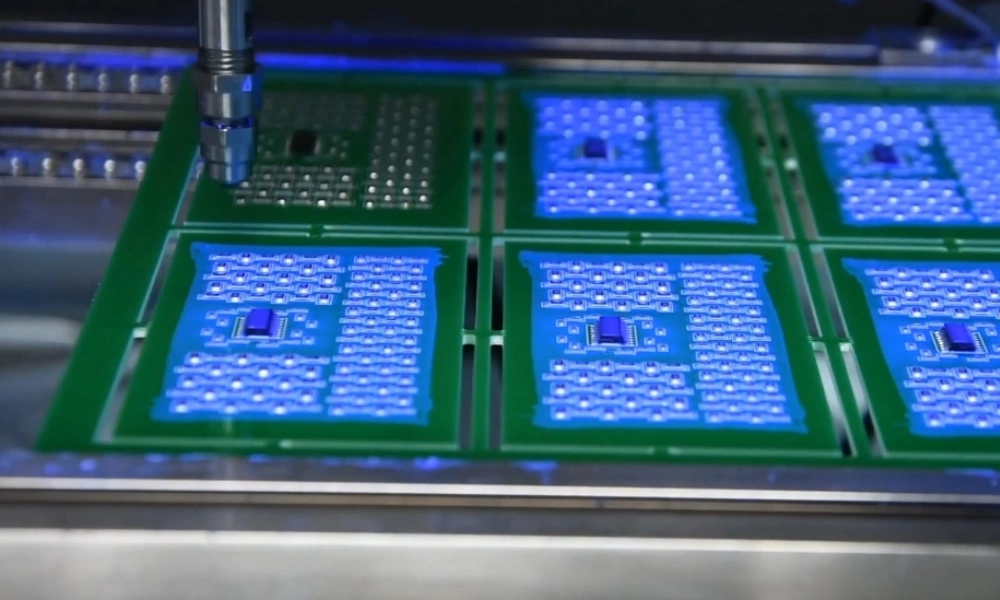
Yes. Solder mask and conformal coating can be used together on the same PCB, but they do different jobs. Solder mask is applied during board fabrication; conformal coating is normally applied after assembly to protect selected areas of the finished circuit. One does not automatically replace the other.
If your board operates in a controlled indoor enclosure, solder mask and a suitable surface finish may be enough for the intended design. If it may see condensation, contamination or corrosive gases, a conformal coating could provide additional protection. The choice depends on the exposure, the coating process and the parts that must remain accessible.
This guide explains how the two layers work together, what to leave uncoated and what to discuss with your assembly partner before production.
Solder Mask vs. Conformal Coating: The Quick Comparison
| Question | Solder mask | Conformal coating |
|---|---|---|
| When is it applied? | During PCB fabrication, before components are assembled | Usually after components are assembled and the required pre-coating checks are complete |
| What does it cover? | Selected areas of the bare board, including much of the copper circuitry | Selected areas of the assembled board, potentially including components and solder joints |
| Main purpose | Helps protect covered copper and reduces unintended solder bridging during assembly | Provides an additional protective barrier against specified environmental exposure |
| What stays exposed? | Designed openings for solder pads and other features | Connectors, contact surfaces and other areas specified as coating keep-outs |
| Does it make the board waterproof? | No | Not by itself; protection depends on the material, coverage and exposure |
| Can they be used together? | Yes | Yes, if the coating, residues and assembly are compatible |
What Is Solder Mask on a PCB?
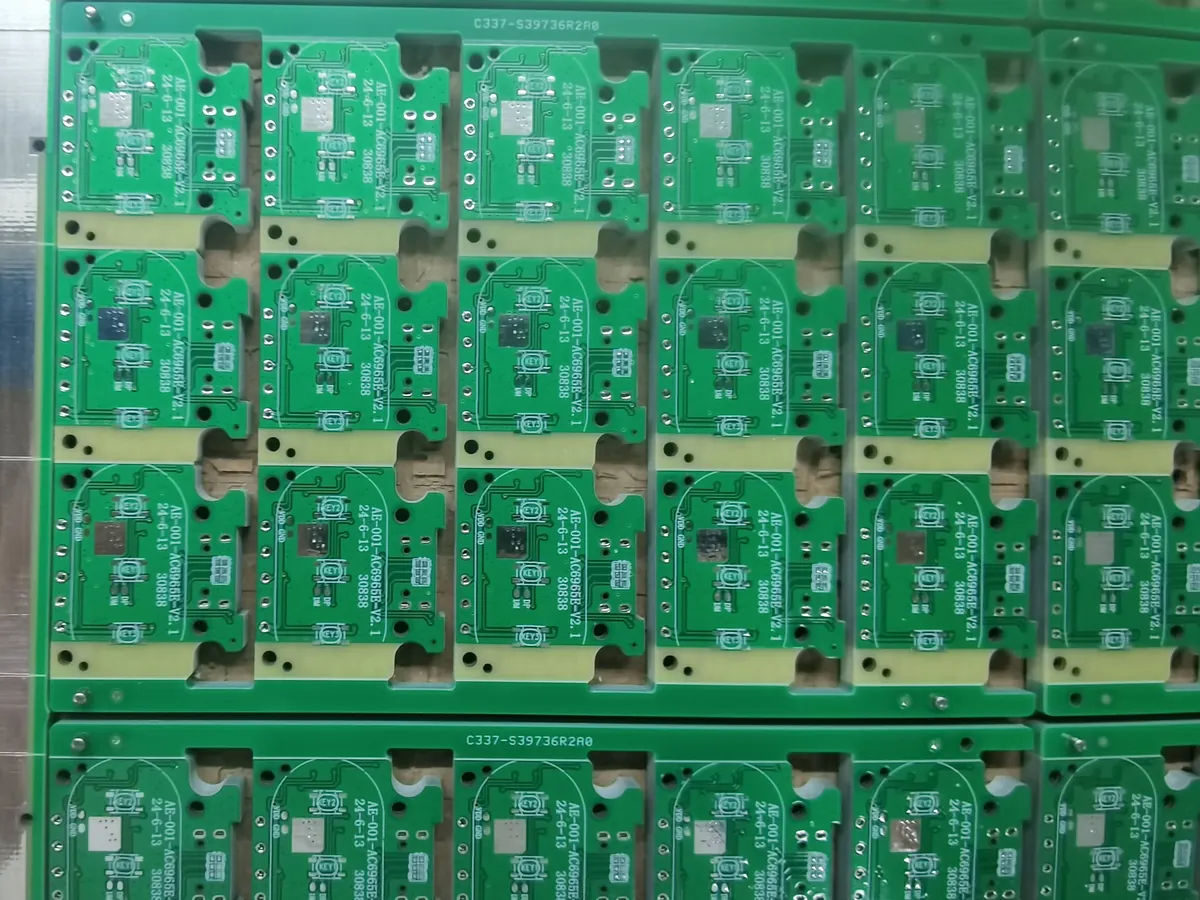
Solder mask is the insulating polymer layer applied over selected areas of a fabricated PCB. It is often green, although other colors are available. Openings in the mask leave designated pads and other features accessible for soldering or electrical contact.
During assembly, the mask helps separate neighboring solderable areas and reduces the chance of unintended solder bridges. It also protects covered copper from handling and environmental exposure. NCAB’s solder mask overview explains its role in board fabrication and assembly.
Solder mask is different from surface finish
Pads left open in the solder mask generally need an appropriate surface finish to protect solderable copper before assembly. HASL and ENIG are examples of finishes; the right choice depends on the components, soldering process and other project requirements. Learn more in our PCB surface finish overview.
Because the openings remain exposed, solder mask alone does not protect every solder joint, component lead or contact area on an assembled board. It should not be treated as a complete environmental barrier.
What Is Conformal Coating?
Conformal coating is a protective material applied in a thin layer to selected surfaces of an assembled PCB. Depending on the design and process, it can cover parts of the solder mask, solder joints, component bodies and leads.
The goal is to reduce exposure of vulnerable areas to conditions such as moisture, airborne contamination and some chemicals. The coating is selected for the expected operating environment; different chemistries behave differently under heat, vibration, humidity and solvent exposure.
A coating is not the same as a sealed enclosure
Coatings are not an automatic guarantee against water ingress or corrosion. Openings, thin coverage near component edges, trapped contamination and mechanical damage can all affect protection. If the product must survive immersion or a particular environmental test, the design needs an appropriate enclosure and a defined qualification plan as well as any coating.
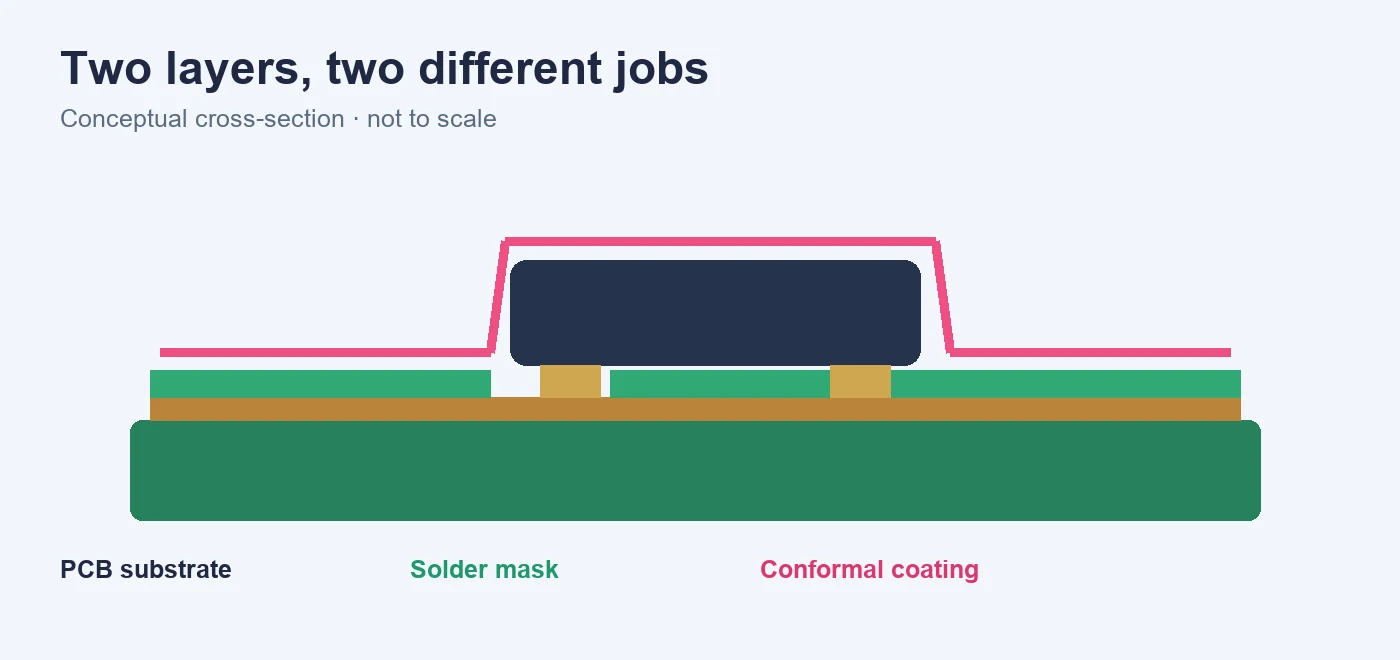
Solder mask and conformal coating cover different surfaces. Conceptual illustration; not to scale.
Can You Apply Conformal Coating over Solder Mask?
Yes. The coating can be applied over a suitable cured solder mask and other approved surfaces after the board is assembled. The complete surface condition matters: the mask, component materials, soldering residues and coating all interact.
A typical sequence is:
- Fabricate the PCB: apply solder mask and the specified surface finish.
- Assemble and inspect: place and solder components, then perform the checks required before coating.
- Prepare the surface: assess residues and clean or otherwise prepare the board as required by the selected process.
- Protect keep-out areas: temporarily mask the interfaces and features that must not be coated.
- Apply and cure the coating: use the material and process conditions specified for the assembly.
- Inspect and verify: check the required coverage and any agreed electrical or environmental criteria.
The order and checks should be adapted to the design. In particular, agree which tests must happen before coating and whether further testing is required afterward. Our PCB assembly testing guide explains how inspection and electrical tests address different questions.
Solder mask and temporary masking are not the same thing
The names are easy to confuse. Solder mask is a permanent part of the fabricated PCB. Temporary masking protects selected areas during coating and is removed afterward. A board can need both.
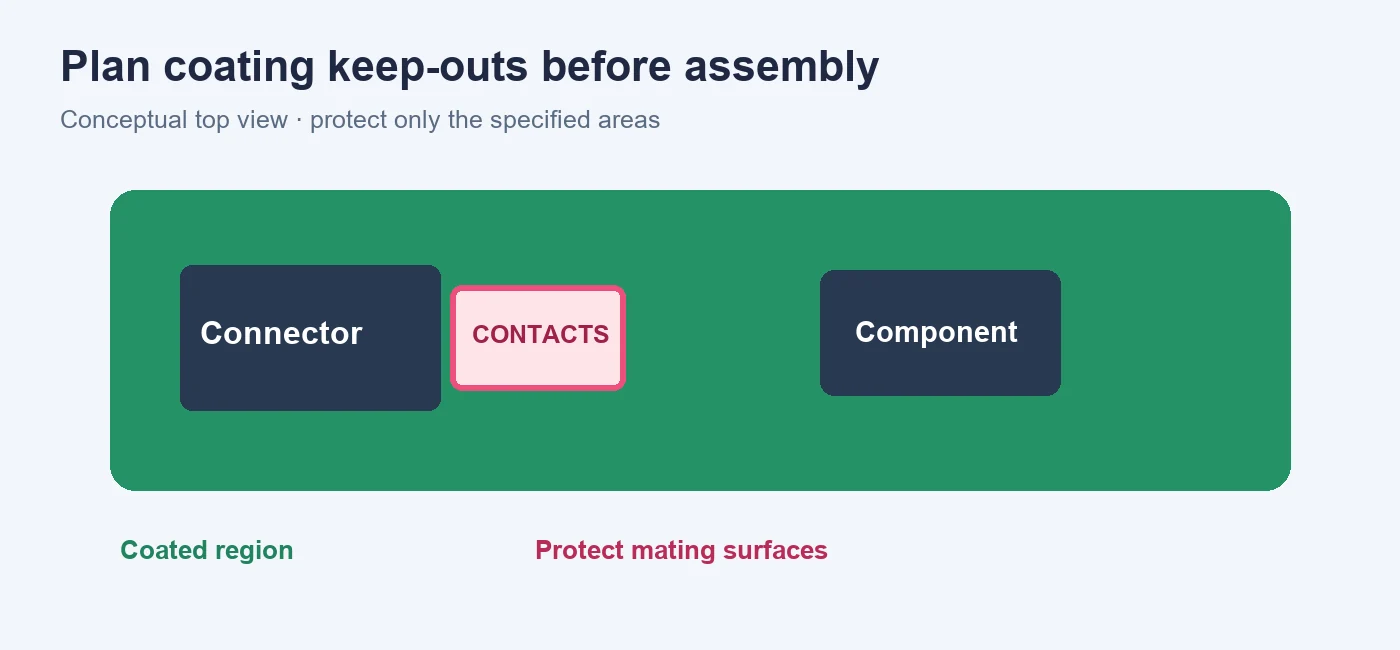
Mark the connector mating surfaces and other required keep-outs on the assembly drawing. Conceptual illustration.
Which Areas Should Be Kept Free of Coating?
The keep-out plan should identify the exact contact surfaces and components that must remain accessible. Common examples include:
- Mating surfaces inside connectors and edge contacts.
- Switch contacts, adjustable controls and removable parts where coating would interfere with operation.
- Test points that must remain accessible after coating.
- Sensors, openings or other features whose operation could be affected by a coating.
- Mounting or thermal interfaces where the design requires a defined contact surface.
Do not assume that every part of a connector or every test point must remain uncoated. Some test points may be used only before coating; some connector housings can be coated while their mating surfaces are protected. Mark the boundaries on the assembly drawing and agree how masking will be removed and inspected.
When Does a PCB Need Both Layers?
The decision begins with exposure and consequences, not with a blanket rule that every assembled PCB needs coating.
| Operating situation | What to review | Possible direction |
|---|---|---|
| Board inside a dry, controlled enclosure | Actual humidity, contamination and service conditions | Solder mask and a suitable finish may be sufficient if the product requirements allow it |
| Industrial controller exposed to condensation or airborne contamination | Condensation risk, vulnerable circuits, connector interfaces and service access | Evaluate a coating together with the enclosure and an appropriate verification plan |
| Assembly exposed to vibration or temperature changes | Material flexibility, adhesion and thermal expansion of the complete assembly | Compare candidate coatings and test the selected stack under representative conditions |
| Equipment exposed to chemicals or cleaning agents | Specific chemicals, concentration, temperature and exposure duration | Check chemical compatibility with the coating supplier and verify the finished assembly |
Example: a controller with several connectors
Consider a hypothetical controller installed in a cabinet where condensation is possible. The board has solder mask, several plug-in connectors and test points used during production.
A useful coating plan would identify the connector mating surfaces that must remain clean, whether each test point is needed after coating, and areas where low-clearance components may prevent consistent coverage. The plan would also specify how residue condition, coating coverage and adhesion will be checked. This example illustrates the decision process; it is not a description of a GreatPCB customer project.
How Do You Choose a Conformal Coating Material?
The material should be chosen with the operating environment, application equipment, component compatibility and repair requirements in mind. The following is a starting point, not a ranking of every product within each family.
| Coating family | Why it may be considered | Questions to ask |
|---|---|---|
| Acrylic | Often considered where accessible rework is important | Is the required chemical resistance adequate? Which removal method is compatible with nearby parts? |
| Silicone | Often considered for flexibility and temperature-related stress | Are adhesion, repair and contamination controls suitable for this assembly? |
| Urethane | Often considered for chemical and abrasion resistance | How will the material be removed for repair, and are the component materials compatible? |
| Parylene | Vapor-deposited coating can reach some areas that are difficult for liquid coatings to cover | Are masking, access for repair and the chosen deposition process practical for the design? |
Individual formulations vary. Review the actual product data sheet and verify the coating on a representative assembly. No single family is automatically best for every board.
What Can Cause Coating Problems on a Solder-Masked Board?
Residues and surface compatibility
Flux residues, handling contamination and other material on the assembly can affect the interface between the board and the coating. “No-clean” describes a soldering process; it does not by itself prove that every coating will adhere reliably over every residue.
That does not mean all no-clean assemblies must always be cleaned. In an AIM Solder study of coating over no-clean flux residues, the tested samples passed surface insulation resistance testing, while a particular coating and residue combination showed delamination after thermal cycling. The practical lesson is to evaluate the specific combination, including adhesion and environmental exposure, rather than relying on one test result.
If cleaning is needed, select the method with the assembly and material suppliers. Components, labels and connectors may have their own cleaning and drying limits.
Thin or incomplete coverage
Liquid coatings may pull back from sharp edges or leave difficult-to-reach regions less protected. Inspect around component leads, connector edges, tall parts and tight clearances where those areas matter to the design.
In a CALCE study published by IPC, researchers observed differences in local coverage and protection on particular component terminations among the coatings and test conditions studied. That finding is useful when planning inspection, but it does not establish a universal performance ranking for all products.
Rework and test access
Coating can make later probing, component replacement and cleaning more difficult. Plan the repair method before release, including how coating will be removed, how a repaired area will be cleaned and whether it must be recoated and inspected.
How Is a Coated PCB Inspected and Tested?
A board can look coated and still need other checks. Each method answers a different question:
| Check | What it can help establish | What it does not establish by itself |
|---|---|---|
| Visual inspection, including UV where the coating supports it | Visible coverage, missed areas, bubbles or unwanted coating in keep-outs | Long-term adhesion, electrical reliability or exact thickness |
| Thickness measurement | Whether measured locations meet the agreed thickness requirements | Coverage or thickness at every hidden or inaccessible point |
| Adhesion evaluation | Whether the coating adheres under the selected test method and conditions | Performance in every environment throughout the product’s life |
| Electrical and environmental testing | Whether specified performance is met under the selected test conditions | Performance under conditions outside the agreed test scope |
UV fluorescence can make a coating easier to see, but a bright, continuous appearance is not proof of correct thickness or reliable adhesion. Agree the inspection criteria, test locations and reporting requirements before production.
Does Conformal Coating Replace Creepage and Clearance?
Do not assume it does. Creepage and clearance requirements depend on the product, voltage, environment and applicable safety standard. Whether a coating may be considered in a particular insulation assessment depends on the relevant requirements and the qualified design.
Identify the applicable standard and insulation strategy early. A conformal coating should not be used as an informal substitute for required spacing, insulation or product certification.
What to Include When Requesting PCB Assembly and Coating
Clear instructions help the assembly team assess feasibility and prepare an appropriate quote. Share the following information where relevant:
| Information | What to provide |
|---|---|
| Board and assembly files | PCB fabrication data, BOM, assembly drawing and current revision |
| Operating environment | Expected humidity, condensation, temperature, chemicals and other exposure |
| Coating requirements | Required material or properties, application areas and any specified thickness |
| Keep-outs | Drawing showing connector contacts, test points and other areas to protect |
| Verification | Inspection criteria, test method, measurement locations and reporting requirements |
| Rework and quantity | Repair expectations, order quantity and whether repeat production is planned |
If a coating has already been selected, include its exact product and revision of the data sheet. If it has not, describe the exposure and acceptance requirements so the options can be reviewed for the project.
Frequently Asked Questions
Can conformal coating be applied directly over solder mask?
Yes, over a suitable cured mask and properly prepared assembly. Confirm compatibility with the particular coating, soldering residues and component materials, then verify the agreed coverage and adhesion requirements.
Is solder mask enough to protect a PCB from moisture?
Solder mask protects covered parts of the board, but it leaves openings and does not cover the complete assembled circuit. Whether additional protection is needed depends on the expected moisture exposure and the product design.
Is conformal coating waterproof?
Conformal coating can reduce exposure to moisture, but it does not automatically make an assembly waterproof. Immersion and other demanding conditions require an appropriate design and validation plan.
Does a no-clean assembly need cleaning before coating?
Not necessarily. The answer depends on the flux, coating, assembly process and reliability requirements. Evaluate the combination and agree on any required cleaning and verification.
Should connectors be coated?
Connector mating surfaces generally need to remain free of coating so they can make reliable contact. Whether other areas of the connector can be coated depends on the component and design; specify the required keep-outs.
Can a coated board be repaired?
Often, yes, but the removal and repair process depends on the coating and the components. Plan how the area will be cleaned, repaired, recoated and inspected before selecting the material.
Plan PCB Assembly and Coating Together
Solder mask supports board fabrication and assembly; conformal coating can add protection to selected areas of the finished assembly. The most effective plan considers the operating environment, surface condition, keep-outs, inspection and future repair as one connected process.
If you are preparing an assembly, share your design files and protection requirements with the GreatPCB team through our PCB assembly service. The coating method, material and verification scope can then be reviewed for your project.
Table of Contents
Tags
Related Posts
PCBA Prototype
October 27, 2026
PCBA Prototype
October 23, 2026