
How to Identify Counterfeit Electronic Components Before PCB Assembly
To identify suspect counterfeit electronic components, combine a source-record review, package and marking checks, and electrical measurements matched to the datasheet conditions. Use specialist examination when the remaining question concerns internal construction or materials. Keep a questionable batch separate while its identity and suitability are reviewed before assembly.
Counterfeit electronic components, often called fake electronic components, are parts misrepresented in identity, origin, condition, or grade. Examples include used devices sold as new and lower-grade parts relabeled as higher-grade products. A useful investigation connects what the supplier promised with what arrived and what the examination actually establishes.
What Makes an Electronic Component Suspicious?
An unusually low price becomes more concerning when it arrives with an unclear source, inconsistent packaging, or devices that behave differently from the ordered part. Examine the purchasing history, packaging, physical condition, and electrical behavior together.
Surface Condition and Terminations
Look for changes in surface texture, sanding marks, uneven coatings, damaged terminations, and inconsistent printing within the same identified lot. Reclaimed devices may carry signs of earlier soldering or handling. Photograph these features under consistent lighting so that surface finish and shadows can be compared accurately.
Package Markings and Manufacturer Differences
Check the full device marking against the package and manufacturer information for that part. A different logo, country marking, or font deserves investigation. Manufacturing changes can also affect appearance, so comparison material should match the device and relevant production period as closely as possible.
Include the device’s top and bottom, terminations, packaging, and labels in the photographic record. Identify the characters, dimensions, or surface features that caused concern so the reviewer can follow the comparison.
Unexpected Electrical Behavior
For a performance concern, record the complete part number, circuit or fixture, instrument settings, and measured result. Include how the expected result was obtained. This helps separate an identity question from a measurement or application problem.
Use “suspect” while an unexplained discrepancy is being investigated. This keeps the review focused on resolving the observation and prevents an early assumption from driving the final decision. ANAB’s explanation of suspect and counterfeit parts
Check the Source, Part Number, and Lot Records
Verify the Ordered Part and Supplier
Begin with the purchasing requirement. Compare the ordered manufacturer and full part number with the purchase order, supplier confirmation, packaging, and device identification. Resolve an unexplained difference before deciding which examination would be useful.
A source review should establish who supplied the material and what evidence supports its origin. Check a claimed authorized-distributor relationship through the component manufacturer’s own channel information.
TI explicitly recommends purchasing its products directly or through TI-authorized distributors. Its anti-counterfeit notice also explains that counterfeit labels can resemble genuine labels, and that purchases outside its authorized sources may be counterfeit or unreliable. TI anti-counterfeit notice
Keep Lot and Purchasing Records Together
Prepare one record that keeps the physical material connected to the transaction.
| Record | Information to retain |
|---|---|
| Ordered identity | Manufacturer, full part number, relevant drawing or specification, and approved substitutions |
| Transaction | Supplier identity, purchase order, invoice, shipping documents, quantity, and receipt date |
| Physical material | Packaging and device photographs, visible lot/date markings, and internal receiving identifier |
| Investigation | Observations, sample identifiers, test conditions, communications, and review decisions |
Keep these records with the material from the moment it arrives. They help establish which delivery is affected, what the supplier represented, and what was examined. Infineon requests this type of purchase information and photographic documentation when suspected counterfeits are reported. Check the manufacturer’s support policy before sending samples or expecting an authentication service. Infineon counterfeit-products guidance
For a PCB assembly order, agree on these sourcing requirements while preparing the BOM. Clear requirements for component sourcing make later discrepancies easier to investigate.
What Can Component Testing Actually Tell You?
Choose an examination around the unresolved question. A surface concern, an unexpected electrical result, and a missing source record each require different evidence.
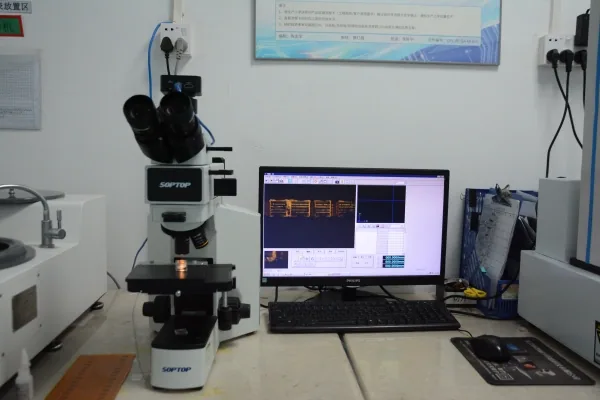
Optical examination helps document surface and marking details for comparison. Reference workstation photograph.
Compare Inspection Methods
| Method | What it can examine | What the review still needs |
|---|---|---|
| Optical inspection | Markings, surface condition, dimensions, and terminations | Reliable reference information and an explanation of significant differences |
| Targeted electrical testing | Behavior under the selected test conditions | Defined limits, suitable equipment, and an assessment of the tested coverage |
| X-ray inspection | Internal structure, including die and bond-wire features | Suitable comparison information and interpretation of observed differences |
| Decapsulation | Exposed die features, markings, and internal connections | A specialist plan, sample identification, and allowance for destructive examination |
X-ray is useful when the question concerns internal construction. Differences in die size or bond-wire layout can direct a closer investigation. Decapsulation exposes the die for detailed examination and consumes the selected samples. Select these methods with a laboratory that can interpret the findings against suitable reference information. CALCE component testing and screening
Match Electrical Measurements to the Test Conditions
A component tester reading becomes useful when the measured parameter and conditions are understood.
MOSFET capacitance provides a concrete example. TI explains that gate-to-drain and drain-to-source capacitances vary with voltage and applied frequency. Comparing a handheld tester reading with a datasheet entry therefore requires checking which capacitance was measured and the conditions used for each value. TI, Understanding Smart Gate Drive, Section 1.2
Use the same discipline for other parameters. Write down the applicable specification, test setup, limits, and result before deciding what a discrepancy means. If the setup cannot reproduce the relevant conditions, record that limitation in the assessment.
A device may operate at room temperature while its claimed grade, identity, or prior handling remains unresolved. Match the test coverage to the application, including the operating conditions that matter to the finished product. ACDi’s counterfeit-detection article
GreatPCB’s Recommendations for Sampling and Screening
For a new source or an unfamiliar lot, start with a structured comparison before committing the material to production. Separate different date codes, lot identifiers, and packaging conditions so that each group receives attention. Select samples across the delivery, including different reels or trays where relevant.
Set the Visual and Electrical Sample Scope
For an initial electrical comparison of a sufficiently large, reasonably uniform lot, 20–30 devices can be a practical starting set. Measure the same relevant parameters under consistent conditions and look for outliers or distinct groups of results. An unexpected spread should trigger investigation and a broader inspection plan before release. Small deliveries and mixed lots need their own sample allocation.
For a manageable delivery requiring closer visual inspection, a 10%–20% sample can be discussed as an initial inspection scope. State the actual number of devices and how they will be selected. For example, a 10% sample from 200 devices gives 20 inspection points. Select those points across the lot. The suitability of the plan also depends on the consequence of an escaped defect and the availability of better source information.
| Situation | Recommended next step |
|---|---|
| An unfamiliar lot with consistent packaging and available source records | Compare identity and appearance across selected samples, then choose electrical checks around the component’s important parameters. |
| Mixed markings, several date codes, or inconsistent results | Separate the groups, expand the investigation, and resolve differences before release. |
| A critical component with unresolved origin | Hold the affected material while purchasing and engineering assess specialist examination or replacement supply. |
| Concern about early operating failures | Consider a defined burn-in or operating test that addresses the expected failure mode and application. |
Consider Burn-in for Early Operating Failures
A 72-hour burn-in is one screening option to evaluate when early operating failures are the concern. Establish the temperature, bias or load, duty cycle, monitoring, and failure criteria before choosing the duration. Keep conditions within the approved screening limits for the device. Some investigations will be better served by targeted electrical testing or physical analysis.
Before testing begins, agree on what a failure will trigger and who can release the remaining material. The report should identify the samples, conditions, results, and disposition so that the production decision can be traced back to the examination.
What to Do When a Batch Looks Wrong
Give the affected material a controlled status while the concern is reviewed. ANAB describes segregation and controlled disposition among the measures used for suspect or confirmed counterfeit material. ANAB guidance on controlling suspect material
A practical internal sequence is as follows.
- Identify the affected material. Record the quantity, storage location, packaging identifiers, and any units already issued to production.
- Keep the evidence together. Preserve packaging, labels, transaction records, photographs, and test results. Maintain the relationship between each sample and its source batch.
- Assign the review. Give purchasing and quality personnel the same evidence package. Include engineering when the concern involves specifications or circuit behavior.
- Agree on further examination. Establish whether manufacturer clarification or specialist testing can address the unresolved issue. Confirm destructive work before samples are altered.
- Record the disposition. Document who approved the outcome, its supporting evidence, and any restrictions. Coordinate return, retention, or other disposition with applicable contractual and quality requirements.
If material has already reached assembled boards, preserve the link between component batches and affected assemblies. The investigation may then need both component evidence and PCBA receiving-inspection records.
Reduce Counterfeit Risk Before the Next Build
Set source requirements before a shortage forces a rushed purchase. Document acceptable manufacturers, full part numbers, approved supply channels, and the person responsible for approving an exception.
When a preferred source cannot supply the material, review the alternatives with engineering and purchasing before placing the order. A change of source and a change of component both need a recorded decision. The project’s component-shortage plan should make these responsibilities clear.
Customer-supplied material also benefits from an agreed receiving process. Identify what records will accompany it, how discrepancies will be handled, and who can authorize its release.
How GreatPCB Handles Sourcing and Receiving
BOM Review and Purchasing Approval
Our component-sourcing process connects the purchasing requirements with the assembly build. We review the BOM revision, part identification, quantities, and do-not-populate items, then raise incomplete specifications before purchasing.
Proposed component changes require customer approval. The approved BOM and purchasing requirements define what is ordered. Received components are checked against the agreed requirements and matched to the build. Shortages or discrepancies need resolution before the affected work proceeds.
Receiving Checks and Discrepancy Resolution
For incoming checks, we recommend matching the manufacturer, part number, package, and quantity to the purchasing list, then reviewing physical condition and the available supplier and lot information. Agree on project-specific traceability and additional verification before purchase so that the receiving team has clear acceptance requirements. GreatPCB component sourcing and incoming checks
If a label, device marking, or measured result raises a concern, our recommendation is to pause the affected material, preserve its packaging and records, and resolve the issue with purchasing, quality, and the customer’s engineering team. Depending on the finding, the next step may be supplier clarification, additional examination, or replacement material. Keep the decision connected to the affected BOM line and build quantity.
For an assembly inquiry, include the BOM, approved sources or alternatives, customer-supplied items, and required inspection reports. Identify any additional screening proposal so its scope, acceptance criteria, and delivery implications can be reviewed before the order proceeds.
FAQ
Does a sealed reel prove the components are genuine?
Sealed packaging alone cannot establish a component’s authenticity. Check the reel label, device markings, supplier identity, and purchasing records together. Counterfeit labels can resemble genuine labels, so preserve the packaging for any further review.
Does a different logo mean the part is counterfeit?
A logo difference is a reason to investigate. Compare the complete marking with manufacturer information for the exact part and relevant production period. Legitimate manufacturing changes can affect appearance, while inconsistencies within an identified lot deserve closer examination.
Can I check every part with a basic component tester?
A basic component tester can help detect shorts, open circuits, or unexpected characteristics within its measurement capabilities. It cannot establish the complete identity, grade, and history of a device. Compare its readings with appropriate datasheet conditions and use additional examination to resolve outstanding questions.
What if the board works with the suspect parts?
A working board shows that the assembly performed the functions exercised under those test conditions. Component origin, prior use, and performance outside that coverage can remain unresolved. Record the test conditions and complete the component review before releasing affected assemblies.
Table of Contents
Related Posts
PCBA Prototype
November 13, 2026

PCBA Prototype
November 5, 2026