Precision Requirements in PCB Manufacturing
In PCB design and manufacturing, Design Rule is crucial to the success of the PCB project. Every designer's intent and design functionality are driven and realized through these design rules. [...]
In the design and manufacturing process of PCBs, engineers need to prevent unexpected issues during production and avoid design errors. This article summarizes and analyzes common PCB problems, aiming to [...]
PCB design requires meticulous thought; the more thoughtful and experienced a designer is, the better the resulting board. 1. Preparation Stage: This involves preparing the component library and schematic. To [...]
Despite the increasing integration of semiconductors and the availability of off-the-shelf systems on chips (SoCs) for many applications, as well as the growing accessibility of powerful, ready-to-use development boards, many [...]
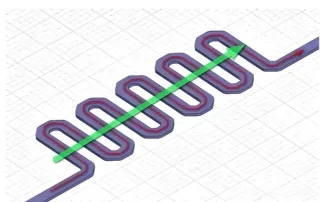
Any trace on a PCB that carries high-frequency signals can cause signal delay. The main purpose of serpentine traces is to compensate for parts of a group of related signals [...]
You've followed the schematic provided by the chip manufacturer, but your PCB still has issues. It may be unstable, not hitting performance targets, or failing EMC tests. Is it human [...]
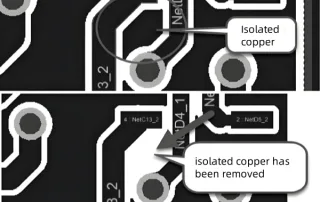
What is Dead Copper on a PCB? Dead copper refers to areas on a copper layer of a printed circuit board (PCB) that are unable to conduct electrical current. These [...]
Importance of Sufficient Separation in High-Frequency Signal Routing Signal routing on a PCB, especially for high-frequency digital signals, requires sufficient separation to minimize crosstalk. When the center-to-center spacing between traces [...]